

Reported by: Oahimire Omone Precious | Edited by: Oravbiere Osayomore Promise.
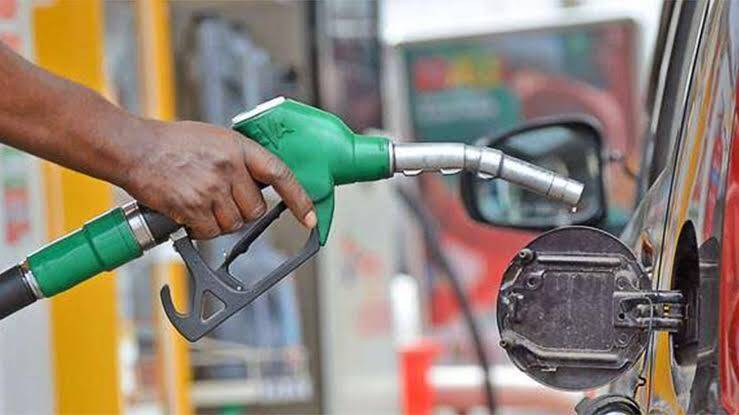
Nigerian households and businesses are bracing for a deeper cost‑of‑living crisis after the National Bureau of Statistics (NBS) reported that the average retail price of Premium Motor Spirit (petrol) soared to ₦1,532.93 per litre in April 2026, a 19 per cent month‑on‑month jump that has triggered parallel spikes in diesel, kerosene and cooking gas. The latest “Premium Motor Spirit (Petrol) Price Watch” released on Friday, 29 May 2026, shows that petrol climbed from ₦1,288.54 in March to ₦1,532.93 in April – an 18.97 per cent monthly increase – while year‑on‑year, the price is up 23.69 per cent from ₦1,239.33 recorded in April 2025. The NBS data also reveals that diesel (Automotive Gas Oil) experienced a staggering 50.16 per cent month‑on‑month surge, rising from ₦1,648.06 per litre in March to ₦2,474.69 in April. Kerosene followed a similar trajectory, climbing 22.49 per cent from ₦2,430.38 to ₦2,976.94 per litre over the same period.
The statistics bureau also released grim figures for Liquefied Petroleum Gas (cooking gas): the average cost of refilling a 12.5 kg cylinder jumped 13.89 per cent from ₦19,652.83 in March to ₦22,382.20 in April, while a 5 kg cylinder refill increased 13.73 per cent to ₦8,706.93. Spot checks in Lagos have since shown cooking gas prices exceeding ₦2,100 per kilogram in some retail outlets, pushing many low‑income families back to charcoal and firewood.
State‑level data from the NBS highlights extreme regional disparities in petrol pricing. Yobe State recorded the highest average retail price at ₦1,599.05 per litre, followed by Edo at ₦1,595.74 and Bauchi at ₦1,589.07. In contrast, Niger State paid the lowest average at ₦1,403.89, ahead of Sokoto (₦1,404.16) and Katsina (₦1,406.28). By geopolitical zone, the South‑South recorded the highest average at ₦1,566.76, while the North‑West saw the lowest at ₦1,508.81. The wide gap reflects ongoing infrastructure constraints, uneven distribution networks and the heavy reliance on long‑distance haulage, which itself is being squeezed by the 50 per cent rise in diesel costs. Energy analysts say the primary catalyst for the domestic spike is external: geopolitical tensions in the Middle East, especially the closure of the Strait of Hormuz and the US‑Iran conflict, have choked global energy shipping lanes, driving Brent crude prices sharply higher and raising the landing cost of imported refined products into Nigeria.
The sustained rise in energy costs comes exactly three years after President Bola Tinubu announced, during his inauguration on 29 May 2023, that “the subsidy is gone.” While the policy has eliminated the notorious fuel queues that once defined Nigeria’s filling stations and unlocked an estimated ₦4 trillion in annual savings, the transition has been brutal for households. Since that day, petrol has risen from around ₦185 per litre to over ₦1,530, while diesel and kerosene have followed in lockstep. On Thursday, 28 May, Senate President Godswill Akpabio led principal officers of the Senate on a traditional Eid‑el‑Kabir visit to President Tinubu in Lagos, where he reaffirmed the National Assembly’s support for the administration’s economic and security reforms, describing the removal of fuel subsidy, exchange rate harmonisation and tax reforms as “difficult decisions but necessary to stabilise the economy”. Akpabio had earlier argued that “there was a time that we were prepared to pay even N10,000 per litre for fuel, but they could not see the fuel,” adding that today there are “no fuel queues” because of strategic reforms in the petroleum industry.
However, for millions of Nigerians already struggling with record food inflation and a weakening naira, the April price surge has translated directly into higher transport fares, more expensive goods and a mounting cost of living. The NBS noted that price variations across states reflect differences in transportation expenses, depot proximity, infrastructure constraints and market competition within the deregulated downstream sector. A Nairametrics survey of major retailers and independent marketers showed that in the Federal Capital Territory and Nasarawa, petrol climbed to between ₦1,350 and ₦1,444 per litre at standard filling stations in May, while LPG prices remained stuck between ₦1,350 and ₦1,500 per kilogram, a level many households can no longer afford. With the International Energy Agency warning that global oil supply in 2026 is expected to fall by about 1.78 million barrels per day below projected demand, energy analysts say the pressure on household budgets is unlikely to ease anytime soon.
📩 Stone Reporters News | 🌍 stonereportersnews.com
✉️ info@stonereportersnews.com
📘 Facebook: Stone Reporters News
🐦 X (Twitter): @StoneReportNew
📸 Instagram: @stonereportersnews
Add comment
Comments