

Reported by: Ijeoma G | Edited by: Pierre Antoine
President Bola Tinubu has defended his administration’s decision to remove fuel subsidy, stating that the move prevented Nigeria from sliding into bankruptcy and has begun delivering economic benefits across the country.
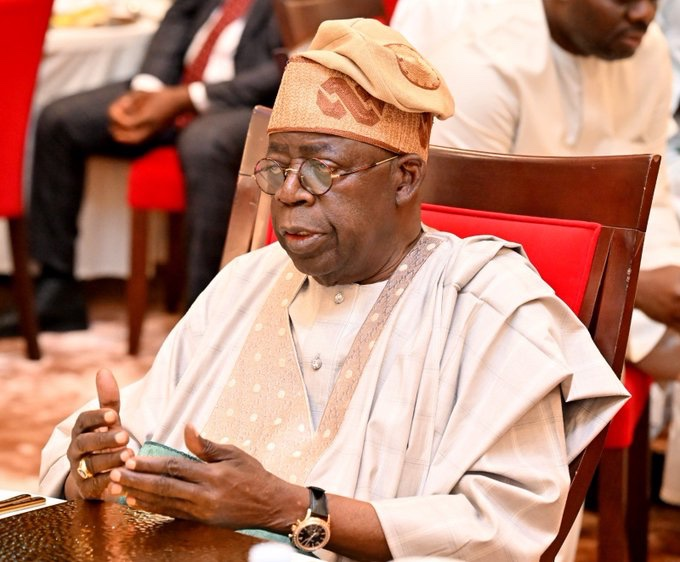
Speaking in Lagos while hosting state governors who visited him for the Eid-el-Kabir celebrations and the third anniversary of his administration, Tinubu said the controversial policy, announced within minutes of his inauguration on May 29, 2023, was necessary to rescue the nation from fiscal collapse and restore economic stability.
According to the President, Nigeria faced severe financial pressures before the subsidy was removed, with government resources being heavily drained by the cost of maintaining fuel price support. He said the decision, although painful, helped the country avoid an economic crisis.
“It was challenging at the time, but we survived. We faced litigation and accusations. We survived them. Instead of bankruptcy, Nigeria has survived. The economy has recovered. It is growing. Agriculture is booming,” Tinubu told the governors.
The President acknowledged the hardship many Nigerians have experienced since the implementation of the policy but insisted that the reforms were producing measurable results. He said states now have improved revenues and greater capacity to fund infrastructure and development projects.
Tinubu argued that for years, fuel subsidy payments consumed enormous public funds while providing limited long-term economic benefits. He maintained that ending the subsidy created room for investments in critical sectors such as infrastructure, agriculture, energy and social development.
The remarks came as the President marked three years in office and defended a broader package of economic reforms that also included foreign exchange liberalisation and reductions in electricity subsidies. Since 2023, those policies have been credited by the government with improving public finances and attracting new investments, but they have also contributed to a sharp rise in living costs and inflation.
In a separate anniversary address, Tinubu said the reforms had ended what he described as long-running fuel subsidy and foreign exchange arbitrage schemes that drained national resources. He disclosed that Nigeria previously lost an estimated N18.4 billion daily to fuel subsidies and about N8 trillion to foreign exchange distortions.
The President stated that the economy is showing signs of recovery, citing increased investor confidence, rising market capitalisation, ongoing road construction projects and growing investments in the oil and gas sector. He also pointed to improvements in domestic refining capacity, which he said have helped reduce fuel imports and ease pressure on foreign exchange reserves.
However, the reforms remain a subject of debate among many Nigerians. While supporters argue that subsidy removal was inevitable and necessary to stabilise public finances, critics contend that the policy was introduced without adequate social protections and has worsened the cost-of-living crisis facing households.
Despite those concerns, Tinubu urged Nigerians to remain patient, saying the foundation for long-term recovery has been laid and that the benefits of the reforms will become increasingly visible over time.
📩 Stone Reporters News | 🌍 stonereportersnews.com
✉️ info@stonereportersnews.com | 📘 Facebook: Stone Reporters News | 🐦 X (Twitter): @StoneReportNew | 📸 Instagram: @stonereportersnews
Add comment
Comments