

Reported by: Oahimire Omone Precious | Edited by: Oravbiere Osayomore Promise.
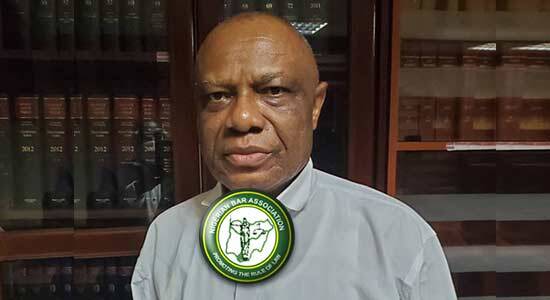
A Senior Advocate of Nigeria, Dr. Charles Mekwunye, has called for a radical overhaul of the country’s judicial accountability mechanisms, arguing that the current system protects corrupt judges while punishing whistleblowers. In a keynote address delivered at the 2026 Law Week of the Nigerian Bar Association (NBA), Agbor Branch, in Delta State on Monday, 1 June 2026, Mekwunye declared that Nigeria’s judiciary faces a “democratic threat” from judicial compromise and impunity.
Mekwunye’s most scathing critique was reserved for the National Judicial Council (NJC), which he accused of actively discouraging the public from reporting judicial misconduct. He argued that the existing NJC petition rules—which require complainants to disclose their identities, depose to affidavits, and file within six months of an alleged infraction—are designed to silence critics. “Most people with relevant information are inhibited by these rules,” he told the gathering. “They serve no useful purpose other than protecting the minority of judicial officers working against the interest of the judiciary and Nigeria.” He called for immediate amendments to the NJC’s complaint framework, including an extension of the limitation period from six months to three years and the establishment of robust whistleblower protections that would allow individuals to report misconduct without fear of intimidation or reprisal.
The senior lawyer was equally pointed in his criticism of the Supreme Court’s 2017 decision in Federal Republic of Nigeria v. Justice H.A. Nganjiwa, which held that serving judicial officers cannot be prosecuted for misconduct arising from their official duties unless they are first disciplined by the NJC. Mekwunye described the judgment as unconstitutional, arguing that it “effectively grants judges a form of immunity not recognised by the Constitution.” He maintained that anti‑corruption agencies such as the Economic and Financial Crimes Commission (EFCC) and the Independent Corrupt Practices and Other Related Offences Commission (ICPC) should be free to investigate and prosecute judicial officers accused of criminal conduct without first securing NJC approval. “The Constitution guarantees equality before the law,” he said. “Judicial officers should not enjoy a special shield against criminal investigation and prosecution.” He urged the Attorney‑General of the Federation to initiate legislative measures aimed at overturning the Nganjiwa decision if the judiciary itself fails to revisit the ruling.
Beyond the Nganjiwa case, Mekwunye proposed a series of tough, concrete measures to restore public faith in the judiciary. He called for the establishment of a “black book” by the NJC containing the names of judges found guilty of serious misconduct, and a similar register by the Legal Practitioners Privileges Committee for senior lawyers found guilty of professional misconduct. He recommended stricter sanctions for judges who issue orders outside their constitutional or statutory jurisdiction, particularly in election‑related disputes. “Judges who are found by superior courts to have deliberately exercised powers they do not possess should be dismissed and publicly blacklisted,” he said. “This will sanitise the judiciary, protect the integrity of honest judges and restore confidence in our democracy.”
The senior lawyer did, however, commend the recent actions of the Chief Justice of Nigeria, Justice Kudirat Kekere‑Ekun, who has ordered suspensions and compulsory retirements of several judicial officers. He described these measures as “encouraging” but insisted that much more needed to be done. “The actions taken by the Chief Justice of Nigeria are a step in the right direction,” he said, “but comprehensive reforms are necessary to rebuild public confidence in the judiciary.”
The Bar Association gathering, held under the theme “Future Proofing Nigeria’s Democracy: Credible Elections and the Legal Cross-Roads,” served as a platform for Mekwunye to deliver a pointed warning about the role of judicial officers in undermining democratic values. He accused some judges of issuing controversial rulings that negate the electoral choices of Nigerians, particularly in election‑related litigation. “There must be consequences for the behaviour of judicial officers who betray their oath and use their enormous powers to pervert the electoral will of the people. The era of impunity must end,” he declared. He also criticised what he described as controversial election judgments in Plateau State, alleging that decisions of appellate courts had imposed candidates rejected by voters on the electorate.
Mekwunye’s address will likely be read as a direct challenge to the leadership of the NJC and the Supreme Court, especially his call for a legislative override of the Nganjiwa decision. If acted upon, his recommendations would fundamentally alter the relationship between the judiciary, anti‑corruption agencies, and the public. The Attorney‑General of the Federation has not yet responded to the proposal, and the NJC has not commented on the criticism of its petition rules. But as Mekwunye noted in his closing remarks, silence is no longer an option. “Judicial compromise remains one of the greatest threats to Nigeria’s democratic development,” he said. “The era of impunity must end.”
📩 Stone Reporters News | 🌍 stonereportersnews.com
✉️ info@stonereportersnews.com
📘 Facebook: Stone Reporters News
🐦 X (Twitter): @StoneReportNew
📸 Instagram: @stonereportersnews
Add comment
Comments