

Reported by: Oahimire Omone Precious | Edited by: Oravbiere Osayomore Promise.
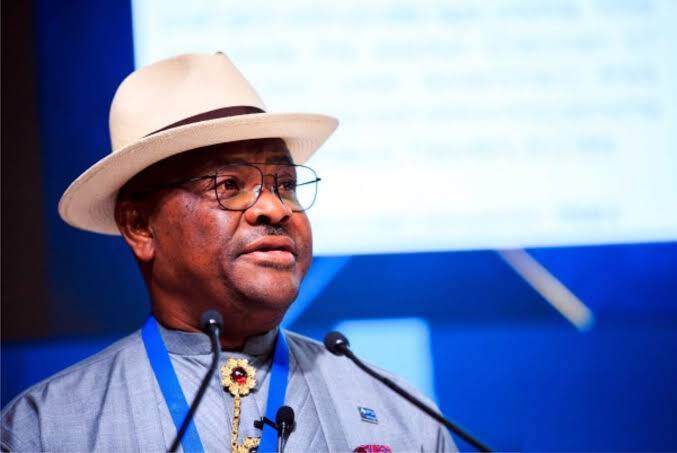
The Minister of the Federal Capital Territory, Nyesom Wike, has called on Nigerians to abandon the habit of incessantly criticising the government and instead adopt a more constructive approach by drawing official attention to societal problems and offering actionable suggestions. Wike made the appeal on Monday, 1 June 2026, during his monthly media briefing in Abuja, where he sought to recalibrate the relationship between the governed and those in power. “You can call our attention. Make your own suggestions to the government. The government does not know everything. I’m human,” Wike said, according to multiple news reports from the briefing. “It’s not by coming out to criticise and fault what the government is doing. Nobody has called my attention. What good citizens should do is to call the attention of the government.” The minister’s remarks came exactly 17 days after the mass abduction of 46 pupils and teachers from three schools in Oriire Local Government Area of Oyo State, a crisis that has triggered nationwide outrage and exposed deepening fault lines between citizens and their leaders.
Wike’s monthly media briefing, a regular feature of his tenure as FCT minister, covered a wide range of issues, from ongoing infrastructure projects in the capital to the federal government’s readiness for the 2027 election cycle. However, it was his plea for a shift in public behaviour that drew the most attention. The minister stressed that government officials are finite in their knowledge and cannot be aware of every challenge confronting citizens at all times. He urged Nigerians to play a more active role in governance by pointing out problems where they exist and offering constructive ideas for their resolution. By framing citizen engagement as a duty rather than an option, Wike implicitly pushed back against what he characterised as destructive criticism — commentary that, in his view, adds little value to policy formulation and public administration. He argued that the most effective way for Nigerians to express dissatisfaction is not through blanket condemnation but through targeted appeals that allow government agencies to respond effectively. He further suggested that the absence of such focused communication leaves officials unaware of specific shortcomings, making it impossible for them to address grievances in a timely manner.
The minister’s appeal, however, landed in a climate of profound public distrust. On 15 May 2026, about 12 armed men on motorcycles, dressed in military camouflage, simultaneously attacked Baptist Nursery and Primary School, Yawota; Community Grammar School, Ahoro‑Esinele; and L.A. Primary School, Esiele, in Oriire Local Government Area, Oyo State. The gunmen killed an assistant headmaster and a commercial motorcyclist before forcing pupils and teachers into the bush. A mathematics teacher, Michael Oyedokun, was later beheaded in a viral video that sparked national revulsion. Community leaders identified the abducted victims as 39 pupils and seven teachers, including a two‑year‑old toddler, Christianah Akanbi, and the principal of Community High School, Mrs. Rachael Alamu. As of Monday, 1 June, all 46 victims remained in captivity. The Nigeria Union of Teachers declared an indefinite strike in Oyo State on the same day as Wike’s briefing, shutting down public schools in protest. Civil society groups have held multiple demonstrations in Ibadan, and the National Association of Nigerian Students has mobilised for nationwide solidarity rallies.
In the face of this crisis, Wike’s call for citizens to “call the government’s attention” rather than criticise drew sharp reactions on social media, with many Nigerians questioning whether the government had been unaware of the deteriorating security situation in the South‑West and whether the abducted families had not already made their plight known through repeated appeals to the state and federal governments. One commentator wrote: “The government does not know that 46 children and teachers have been in the bush for 18 days? Who should call their attention? The victims themselves?” Others argued that the minister’s remarks reflected a broader culture of defensiveness within the administration, where criticism is often dismissed as politically motivated rather than treated as a legitimate expression of public frustration.
Nevertheless, Wike insisted that constructive engagement works. During the briefing, he disclosed that a Senior Advocate of Nigeria had drawn his attention to the poor condition of Ken Udezue Road in Abuja, and that the government had subsequently taken steps to address it. That example, he argued, demonstrated that when citizens channel their concerns through proper channels, tangible results can follow. He urged professional bodies, community leaders and ordinary residents to emulate that approach rather than resort to what he described as “destructive criticism”.
Wike also used the briefing to highlight the achievements of the Tinubu administration in the FCT, pointing to ongoing road construction projects, urban renewal programmes and the impending 31‑day commissioning spree set to begin on 8 June to mark President Bola Tinubu’s third anniversary in office. He also took responsibility for the continued presence of cattle on Abuja’s streets, apologised for the delay in addressing the nuisance, and vowed that the FCTA would do more to beautify the capital.
The minister’s call for a less confrontational political culture arrives at a time when many Nigerians are struggling with record inflation, skyrocketing fuel prices, widespread insecurity and a sense that their voices have been ignored for too long. The abduction of the Oyo schoolchildren has become a litmus test of the administration’s responsiveness. For the families of the captives, the question is not whether they have called the government’s attention — they have, repeatedly — but whether that attention will ever translate into rescue. As the teachers stayed away from their classrooms and the children remained in the forest, Wike’s plea for suggestions instead of criticism was met with silence from those who have already spoken and are still waiting to be heard.
📩 Stone Reporters News | 🌍 stonereportersnews.com
✉️ info@stonereportersnews.com
📘 Facebook: Stone Reporters News
🐦 X (Twitter): @StoneReportNew
📸 Instagram: @stonereportersnews
Add comment
Comments