

Reported by: Oahimire Omone Precious | Edited by: Pierre Antoine
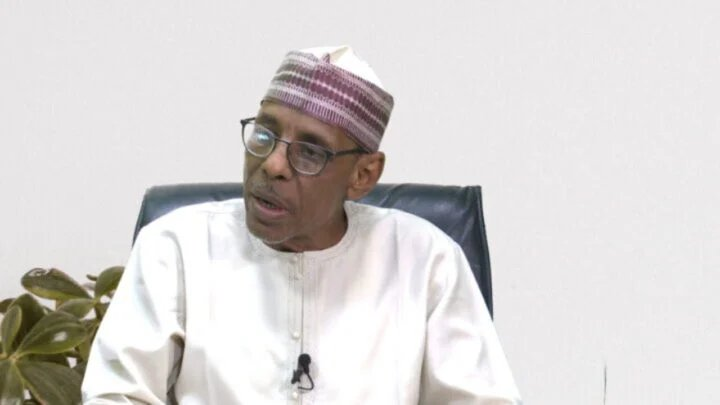
The National Chairman of the Peoples Redemption Party (PRP), Hakeem Baba-Ahmed, has criticised plans by the Federal Government to establish state police, arguing that the administration of President Bola Tinubu lacks the credibility and public confidence required to undertake such a major restructuring of Nigeria’s security system.
Baba-Ahmed made the comments on Friday, June 26, 2026, during an appearance on Politics Today, a programme on Channels Television in Lagos, Nigeria. The PRP chairman said the current moment was “the worst possible time” for the government to introduce state police, questioning whether the Tinubu administration could be trusted with such an important responsibility.
The debate over state police has become one of the most significant security and governance discussions in Nigeria as lawmakers consider reforms aimed at decentralising policing powers. Supporters argue that local control could make policing more responsive, while critics warn about possible political misuse.
Baba-Ahmed said the idea of state police itself was not the problem, acknowledging that Nigeria needs a major review of its security architecture. However, he argued that the government currently lacks the trust and legitimacy needed to manage such a sensitive reform.
The PRP chairman said policing is too important to be placed in the hands of a government that, in his view, has failed to convince Nigerians that it can manage existing security institutions effectively. He argued that reforms of this scale require broad public confidence.
The debate comes as Nigeria continues to face insecurity challenges, including kidnapping, banditry, terrorism and violent crimes in different parts of the country. Many Nigerians and political actors have increasingly questioned whether the current centralised police structure can adequately respond to local security threats.
Nigeria’s police system has traditionally been controlled by the Federal Government through the Nigeria Police Force. Under the current arrangement, state governors are often referred to as chief security officers of their states but do not have direct constitutional control over police commands.
For years, governors, lawmakers and security experts have called for constitutional changes that would allow states to establish their own police forces. They argue that state authorities understand local security challenges better and can respond faster.
The Federal Government’s push for state police has received support from some stakeholders who believe decentralisation could improve intelligence gathering and community policing.
However, opponents have raised concerns about possible abuse of power, especially if state governors gain control over armed security structures. Critics fear that state police could be used to intimidate political opponents or suppress opposition voices.
Baba-Ahmed’s criticism reflects these broader concerns, as he argued that political conditions must be considered before creating a new security structure. He warned that institutions must first be strengthened before transferring greater authority.
The PRP chairman said Nigeria requires leaders and institutions that can guarantee fairness, accountability and professionalism before implementing reforms that affect citizens’ fundamental rights.
The statement from the PRP came shortly after renewed legislative efforts towards establishing state police. The proposal has been discussed through constitutional amendment processes aimed at changing the existing security framework.
The issue has generated reactions across political parties, with some supporting the move as a solution to insecurity and others demanding stronger safeguards before implementation.
Baba-Ahmed argued that the Tinubu administration’s record on security and governance should be considered when evaluating whether it should lead such a reform. He said public trust was a necessary foundation for any major institutional change.
The PRP position comes amid wider criticism from opposition groups over the government’s handling of national security challenges. Some opposition figures have accused the administration of failing to adequately protect citizens.
The government, however, has maintained that it is taking steps to address insecurity and improve national safety. Officials have argued that reforms are needed to modernise security structures and respond to emerging threats.
The question of state police has been debated in Nigeria for decades. Previous administrations and constitutional reform committees have considered the issue, but concerns over funding, accountability and political control have slowed progress.
Supporters of state police often point to countries with decentralised policing models, arguing that local security agencies can improve response times and strengthen relationships between communities and law enforcement.
Opponents counter that Nigeria’s political environment presents unique risks, particularly because some public institutions have historically faced allegations of political influence.
Baba-Ahmed’s comments also highlight a broader issue in Nigeria’s democracy: the relationship between public trust and government reforms. Major changes often depend not only on legal authority but also on citizens’ confidence in those implementing them.
The PRP chairman has previously criticised the administration’s handling of national challenges, including insecurity and economic difficulties. He has called for stronger leadership and improved accountability.
The Tinubu administration has defended its policies, saying it inherited complex security and economic problems and has introduced measures aimed at addressing them.
The state police proposal is expected to remain a major political issue as Nigeria moves closer to the 2027 general elections. Political parties are likely to continue debating how security reforms should be implemented.
Analysts say the success of state police would depend on clear legal frameworks, professional recruitment, independent oversight and mechanisms to prevent political interference.
They argue that decentralising policing without accountability could create new problems, while maintaining the current system without reform could leave existing security challenges unresolved.
The controversy shows the difficulty of balancing the urgent demand for improved security with the need to protect democratic institutions.
For many Nigerians, the central question is not only whether state police should exist but whether the country has built enough safeguards to ensure that such a system serves citizens rather than political interests.
Baba-Ahmed’s remarks have therefore added another layer to the national conversation, shifting attention from the structure of state police to the credibility of those responsible for implementing it.
As discussions continue, lawmakers, security experts and civil society groups are expected to examine both the potential benefits and risks of the proposed reform.
The future of state police in Nigeria will depend on whether political leaders can reach agreement on a system that improves security while maintaining accountability and public confidence.
📩 Stone Reporters News | 🌍 stonereportersnews.com
✉️ info@stonereportersnews.com | 📘 Facebook: Stone Reporters News | 🐦 X (Twitter): @StoneReportNew | 📸 Instagram: @stonereportersnews
Add comment
Comments