

Reported by: Oahimire Omone Precious | Edited by: Oravbiere Osayomore Promise.
GENEVA — The United Nations Development Programme (UNDP) has warned that the ongoing Ebola outbreak in Central and East Africa could cost the continent as much as $3.6 billion in economic output and wipe out more than 328,000 jobs if the virus spreads beyond its current hotspots.
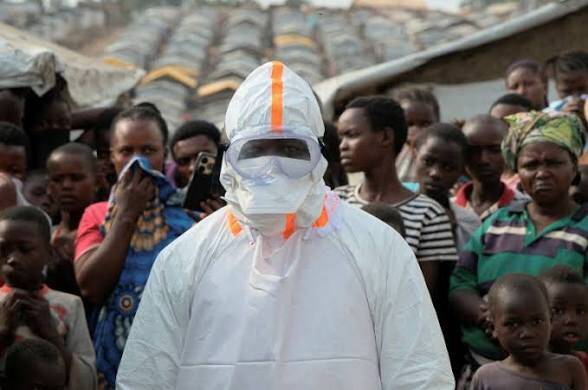
The warning, issued on Tuesday, June 30, 2026, came as the Democratic Republic of Congo (DRC) continues to battle the Bundibugyo strain of Ebola, for which there is currently no approved vaccine or proven treatment — a key factor that has heightened the risk of a prolonged crisis. Since the outbreak was declared on May 15, 2026, more than 1,300 people have been infected and over 370 have died, with the conflict-hit northeastern Ituri province serving as the epicentre. Uganda has also confirmed 20 cases, and one imported case has been recorded in France. According to the UN Development Programme, the epidemic is "sparking a far-reaching socioeconomic crisis which could push 985,000 more people into poverty".
The economic consequences will depend largely on how quickly health authorities can contain the virus. Under a baseline scenario where the outbreak remains largely confined to the DRC and Uganda, the DRC alone is projected to lose over $1 billion in GDP and 55,000 jobs . Even with transmission largely contained, trade disruptions, border restrictions, transport delays, and declining consumer confidence could reduce continental GDP by $2.37 billion.
The worst-case scenario is far more alarming. If the virus spreads to neighbouring countries such as Rwanda and Angola while coinciding with higher global fuel prices linked to geopolitical tensions, Africa's economy could lose $3.6 billion in GDP with an estimated 328,000 job losses. UNDP Resident Representative for the DRC, Damien Mama, stressed that stronger international response could still prevent the worst outcomes. "If we have the resources and we step up, we can contain this outbreak and prevent further losses," he said. But he cautioned: "If we do not, this health emergency risks becoming a much deeper and prolonged development crisis across the region and potentially the continent".
The UNDP assessment also highlights the disproportionate impact on women, who dominate the informal cross-border trade sector and constitute the majority of frontline health workers and primary caregivers. The crisis could also trigger a secondary health emergency, with disrupted medical services projected to cause up to 2,520 excess infant deaths in the DRC from non-Ebola causes.
To mitigate the devastating socioeconomic impact, the UNDP assessment proposes a multi-layered, gender-responsive policy framework, including direct cash transfers to the most vulnerable, shifting from blanket border closures to targeted screening protocols, and establishing emergency financing mechanisms to ensure maternal, reproductive and infant healthcare services can continue during the crisis. "Ebola does not stop at the hospital gate," said Ahunna Eziakonwa, UNDP's Africa regional director. "It affects livelihoods, education, food security, trade, public finances and trust. If we treat this Ebola outbreak solely as a health challenge, we risk missing the much larger development emergency unfolding around it".
As health authorities race against time to contain the outbreak despite funding shortages and the absence of an approved vaccine, the UNDP has warned that failure to act decisively could transform the health emergency into a much broader socio-economic crisis — one that could reverse fragile development gains and create long-term poverty across the continent.
📩 Stone Reporters News | 🌍 stonereportersnews.com
✉️ info@stonereportersnews.com | 📘 Facebook: Stone Reporters News | 🐦 X (Twitter): @StoneReportNew | 📸 Instagram: @stonereportersnews
Add comment
Comments