

Reported by: Ijeoma G | Edited by: Oravbiere Osayomore Promise.
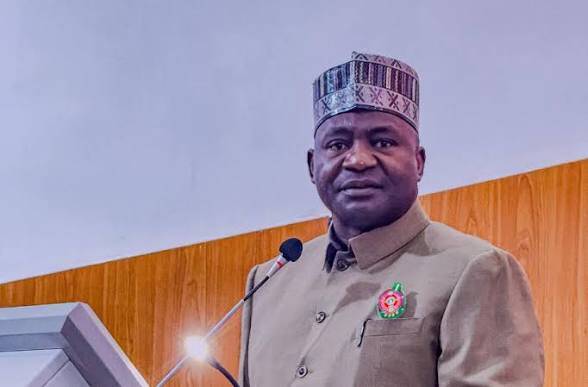
The Federal Government is significantly deepening military cooperation with Benin Republic and Niger, establishing a new tri-country security sector along their shared borders to counter the growing threat of jihadist groups spilling over from the Sahel, Defence Minister Christopher Musa has announced.
In an exclusive interview with AFP on Thursday, July 2, 2026, the retired general revealed that Nigeria is "opening another sector to cover the border between Nigeria, Benin Republic and Niger" as part of a coordinated response to the encroachment of armed groups from Burkina Faso, including the Al-Qaeda-linked Group for the Support of Islam and Muslims (JNIM).
"From Burkina Faso, JNIM is trying to take advantage of coming through Benin Republic into Nigeria. So we're establishing that sector… so that it gives us freedom to operate within those general areas," Musa told AFP. The plan, he said, remains a "work in progress" without a definite timeline, but it signals a major strategic shift in Nigeria's counter-terrorism posture as the conflict extends beyond its traditional northeastern epicentre.
Nigeria has been battling homegrown militants since 2009, but the insurgency has been reshaped recently by the growing presence of armed groups from the wider Sahel region. The United States has launched strikes against Islamic State Sahel Province in northwest Nigeria, while JNIM's attempt to infiltrate through Benin has raised alarm among security analysts.
The increased collaboration with Benin comes as videos have circulated online of Beninese troops operating within Nigerian territory, which Musa confirmed was done with "long-established permission". Security sources have also told AFP that the Nigerian military has cooperated, on Nigerian territory, with anti-jihadist militias from Benin. The minister noted that jihadist activity has often overlapped with unguarded forest reserves and illegal mining operations, which armed groups exploit to finance their activities.
Musa also confirmed plans to visit Burkina Faso, Mali and Niger in the coming months — all countries governed by military rulers that have broken with the regional ECOWAS bloc and formed their own Alliance of Sahel States. Despite the political tensions, Musa insisted that military cooperation has continued. "Politically, there is always that issue, but militarily, we have been able to go beyond that," he said of relations with Niger.
"We need to close ranks so that we can defeat these enemies," Musa declared, underscoring the urgency of a united regional front against the insurgencies roiling the Sahel and West Africa.
With a presidential election looming in January 2027, Musa acknowledged fears that some voters, especially in the conflict's epicentre in the northeast, may not be able to cast their ballots. "We know that's a possibility," he told AFP. "What we're trying to do is to ensure that that doesn't happen. Nigerians are willing to vote as long as the locations are safe," he said.
The tri-country military collaboration marks a significant escalation in Nigeria's regional security strategy, as Abuja moves to prevent the Sahel's jihadist groups from establishing a foothold in the country's vulnerable northwestern and southwestern corridors.
📩 Stone Reporters News | 🌍 stonereportersnews.com
✉️ info@stonereportersnews.com | 📘 Facebook: Stone Reporters News | 🐦 X (Twitter): @StoneReportNew | 📸 Instagram: @stonereportersnews
Add comment
Comments