

Reported by: Oahimire Omone Precious | Edited by: Oravbiere Osayomore Promise.
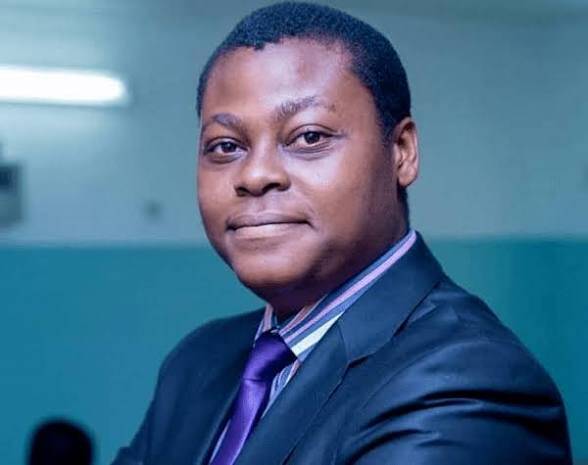
Arise Television anchor Rufai Oseni has launched a blistering attack on Minister of Works David Umahi over the environmental approval process for the Lagos-Calabar Coastal Highway, declaring that Nigeria is "officially a joke" after uncovering evidence that construction began more than a year before the mandatory Environmental Impact Assessment (EIA) was completed.
In a post on X that has since gone viral, Oseni laid bare the timeline discrepancy that he says fundamentally undermines the integrity of one of the federal government's flagship infrastructure projects. According to his findings, construction on the multi-billion-naira highway officially began in March 2024, but the EIA—a legal prerequisite designed to identify and mitigate potential ecological harm before any work starts—was not finalised until April 2025. The first phase of the coastal road was commissioned just one month later, in May 2025.
"An EIA is a prerequisite before you start a project," Oseni wrote. "Releasing or finalizing EIA components a year later (April 2025) and commissioning the first phase in May 2025 means the project was built retrospectively. This defeats the legal purpose of an EIA, which is to prevent harm rather than document it after construction."
The timeline discrepancy provides critical context to the fierce resistance the project faced during its initial phases. When civil society groups and affected Lagos property owners demanded to see the EIA prior to the demolition of shoreline businesses, the Ministry was unable to produce the document. Oseni noted this evasion directly: "It's obvious when we asked for the EIA they didn't have it."
Oseni also challenged both the Lagos State Ministry of Environment and the Federal Ministry of Environment and Works to make public all correspondence, reports, and records showing how the EIA was conducted and how its findings addressed potential flooding risks. Speaking on Arise Television's The Morning Show on Wednesday, he said: "You see, when we talk, they say my mouth is smelling, but it is better my mouth smells and Nigeria gets better."
"There's no how you would have been building a road like that, you will not have environmental impact assessments where the state Ministry of Environment liaises with the federal," he argued. "So, I challenge them to bring out those documents. I also want to challenge them to bring out the critical work of the environmental impact assessment and the narrative around the effects of this coastal road on Lagos, on flood waters, when it was done, and the mitigating effect that they said was going to be done."
The Lagos-Calabar Coastal Highway, intended to be an economic super-artery linking Lagos to the oil-rich Niger Delta and southern tourism hubs, carves through highly sensitive marine ecosystems, coastal mangroves, and densely populated urban shorelines. The absence of a preemptive EIA suggests that engineering teams may have operated blindly regarding coastal erosion, marine biodiversity disruption, and socio-economic displacement of artisanal fishermen.
Oseni's allegations strike at the core of international engineering and environmental law. An EIA is not a mere bureaucratic checkbox but a highly technical, preemptive diagnostic tool requiring soil sampling, marine life disruption modeling, and community displacement mapping. By executing the construction first and producing the EIA later, the Ministry of Works has effectively engaged in a post-mortem justification of environmental damage, violating core tenets established by global bodies like the United Nations Environment Programme. For context, similar infrastructure projects in East Africa, such as Kenya's Standard Gauge Railway, faced severe judicial injunctions precisely because authorities attempted to bypass stringent environmental impact protocols before breaking ground.
Umahi, who has previously clashed with Oseni in a heated live television exchange where he told the journalist to "keep quiet" and dismissed him as "too small" to be reported to the President, has also rejected claims that the coastal highway contributed to recent flooding in parts of Lagos. Responding to Oseni's comments, Umahi said infrastructure experts should be allowed to address technical issues. "Leave this profession for us. We, the professors of infrastructure, leave it for us," he said.
Oseni's comments come amid growing public debate over the planning, execution, and environmental implications of the Lagos-Calabar Coastal Highway project. His revelation that the project was effectively built before its environmental impact was assessed has raised fundamental questions about compliance with Nigerian law and international environmental standards.
📩 Stone Reporters News | 🌍 stonereportersnews.com
✉️ info@stonereportersnews.com | 📘 Facebook: Stone Reporters News | 🐦 X (Twitter): @StoneReportNew | 📸 Instagram: @stonereportersnews
Add comment
Comments