

Reported by: Ijeoma G | Edited by: Oravbiere Osayomore Promise.
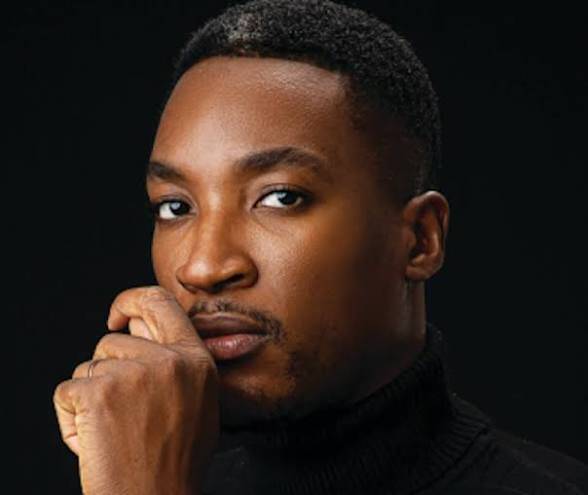
Nollywood actor and social commentator Akah Nnani has added his voice to the growing chorus of Nigerians demanding that lawmakers enact legislation compelling politicians and public officeholders to enroll their children in Nigerian schools, arguing that the current practice of sending political elites' children abroad while neglecting the country's crumbling education system is a fundamental betrayal of public trust.
In a widely shared post on his social media platform on Friday, July 3, 2026, Nnani declared that it was time for the National Assembly to make it mandatory for the children of politicians to receive their education within Nigeria's borders. "They can't keep sending their children abroad while we are dying in public schools," he wrote, in remarks that have since gone viral and reignited a long-standing national debate about the hypocrisy of Nigeria's political class.
Nnani's intervention comes at a time when the country's public education system is in a state of acute crisis, with chronic underfunding, dilapidated infrastructure, teacher shortages, and security challenges pushing millions of children out of school. According to UNICEF, Nigeria has one of the highest rates of out-of-school children in the world, with an estimated 20 million children not receiving formal education. Yet, the children of many politicians and top civil servants are often enrolled in elite private schools in Nigeria or abroad, a disparity that Nnani described as a "double standard" that must end.
"These same people who make laws about education, who allocate budgets for schools, who sit in air-conditioned offices while our children learn under trees—they won't send their own children to those same schools," Nnani said in the video. "It's time for a law. If you are a politician, your children must school in Nigeria. Not because we hate foreign education, but because you cannot fix what you don't experience."
Nnani's remarks echo a legislative effort that has been gaining traction in the House of Representatives. In July 2025, a bill seeking to compel public officials to enroll their children in public schools passed its first reading. The bill, sponsored by Rep. Kayode Akiolu (APC-Lagos), proposes to prohibit public officeholders and their immediate families from patronising private schools and healthcare facilities, except in cases explicitly approved by the Senate. While the bill was initially focused on public servants, Akiolu later clarified that he would support it only if it included politicians.
The proposed legislation has drawn both support and criticism. Proponents argue that it would force politicians to experience the reality of Nigeria's public institutions, thereby motivating them to improve the system. Critics, however, contend that such a law would be an infringement on the rights of parents to choose the best education for their children and could drive the best and brightest out of the country.
Nnani's comments have sparked a firestorm of reactions on social media, with many Nigerians applauding his stance and others questioning its feasibility. One user wrote: "Akah Nnani is speaking for millions of us. If politicians' children were in our public schools, they would fix them overnight." Another countered: "This is populist nonsense. Forcing someone to send their child to a failing school is not the solution. Fix the schools first."
The debate touches on deeper questions about governance, accountability, and the social contract between the ruling class and the governed. For many Nigerians, the sight of politicians' children in foreign schools while public schools crumble is a powerful symbol of a system that works for the elite and fails the masses. Nnani's call for a mandatory law taps into that frustration, demanding that those who govern share the same burdens as those they govern.
In his post, Nnani made it clear that he was not interested in mere rhetoric. "We have had enough talk," he said. "We need action. We need a law. And we need to hold them accountable when they break it." He urged his followers to pressure their representatives in the National Assembly to support the bill and to ensure that any legislation on the matter is enforced without exceptions.
Nnani, who has built a reputation for speaking candidly on social and political issues, is no stranger to controversy. But his latest intervention has struck a chord with many Nigerians who are tired of what they see as the disconnect between the political class and the ordinary citizen. As one commentator put it: "Akah Nnani is saying what every Nigerian is thinking. The question is: will the lawmakers listen?"
As the 2026 session of the National Assembly continues, the fate of the bill remains uncertain. While it has passed first reading, it faces an uphill battle in a legislature where many members are themselves parents of children in private or foreign schools. However, the growing public pressure, amplified by voices like Nnani's, may force lawmakers to take the issue more seriously.
For now, Nnani's words have added fuel to a fire that has been smoldering for years. Whether it will lead to legislative change or remain another flash in the pan of Nigerian social media outrage remains to be seen. But one thing is clear: the conversation is no longer just about education—it is about accountability, equality, and the very soul of Nigeria's democracy.
📩 Stone Reporters News | 🌍 stonereportersnews.com
✉️ info@stonereportersnews.com | 📘 Facebook: Stone Reporters News | 🐦 X (Twitter): @StoneReportNew | 📸 Instagram: @stonereportersnews
Add comment
Comments