

Reported by: Oahimire Omone Precious | Edited by: Oravbiere Osayomore Promise.
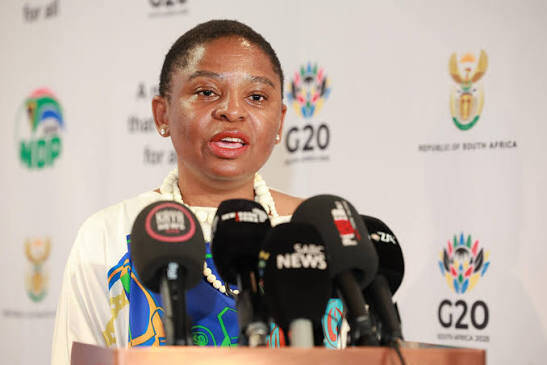
South Africa's Minister in the Presidency, Khumbudzo Ntshavheni, has firmly rejected calls for compensation to Nigerian nationals whose properties were abandoned following their evacuation from the country, doubling down on the government's position in a statement that has further strained diplomatic relations between Pretoria and Abuja.
Ntshavheni's remarks, made during a media briefing on Friday, July 3, 2026, came just days after Temitope Ajayi, Nigeria's acting high commissioner to South Africa, indicated that the Nigerian government was exploring options for possible compensation for citizens who lost properties during the recent wave of xenophobic attacks. The minister's response was unequivocal. "I didn't stutter," she declared, reiterating that South Africa would not be paying reparations to foreign nationals who chose to leave the country.
The dispute stems from the mass evacuation of Nigerian citizens from South Africa in late June and early July 2026, following a surge in anti-immigrant protests and violent attacks on foreign-owned businesses. The Federal Government, through the Ministry of Foreign Affairs, facilitated the evacuation of hundreds of Nigerians who had registered and expressed a desire to return home. Many of these evacuees left behind homes, shops, and investments they had built over years of living and working in South Africa.
Ajayi, who has been at the forefront of Nigeria's diplomatic engagement with South Africa over the crisis, had earlier suggested that the Nigerian government would seek compensation for its citizens who suffered losses. "We are going to engage the South African government on the issue of compensation for our citizens whose properties were destroyed," Ajayi told reporters upon the arrival of the first batch of evacuees in Lagos.
However, Ntshavheni's latest statement has effectively closed the door on any such negotiations, at least for now. She argued that the South African government had no legal obligation to compensate foreign nationals who voluntarily left the country, even if they did so out of fear for their safety. "The South African government cannot be held responsible for the decisions of individuals to leave the country. We did not force anyone to leave. They made that choice, and they must live with the consequences," she said.
The minister's comments have drawn sharp criticism from Nigerian officials and civil society groups, who have accused Pretoria of insensitivity and a lack of accountability. Some have pointed out that the South African government has a moral, if not legal, obligation to ensure the safety of all persons within its borders, regardless of their nationality. Others have called on the African Union to mediate the dispute, warning that the failure to address the grievances of affected Nigerians could further damage the already fragile relationship between Africa's two largest economies.
The Nigerian Ministry of Foreign Affairs has yet to issue an official response to Ntshavheni's remarks, but sources within the ministry have indicated that Abuja is considering all options, including diplomatic protests and possible retaliation. The Federal Government has also reiterated its commitment to protecting the rights and welfare of Nigerian citizens abroad, and has vowed to continue engaging South African authorities on the matter.
The standoff over compensation comes amid broader tensions between Nigeria and South Africa, which have been exacerbated by recurring outbreaks of xenophobic violence targeting foreign nationals. The latest attacks, which began in late June 2026, prompted the Nigerian government to launch an emergency evacuation exercise, bringing home hundreds of citizens who felt unsafe and unwanted in the country.
In a related development, the South African government has also faced criticism from other African nations, with several countries expressing solidarity with Nigeria and condemning the attacks. The African Union has called for calm and dialogue, while the Economic Community of West African States (ECOWAS) has urged South Africa to take concrete steps to prevent further violence against foreign nationals.
As the diplomatic standoff continues, the fate of the evacuated Nigerians remains uncertain. For those who have returned home with nothing, the question of compensation is not just a matter of principle, but of survival. And for the governments of both countries, the issue has become a test of their commitment to the principles of justice, accountability, and Pan-African solidarity.
📩 Stone Reporters News | 🌍 stonereportersnews.com
✉️ info@stonereportersnews.com | 📘 Facebook: Stone Reporters News | 🐦 X (Twitter): @StoneReportNew | 📸 Instagram: @stonereportersnews
Add comment
Comments