

Reported by: Oahimire Omone Precious | Edited by: Oravbiere Osayomore Promise.
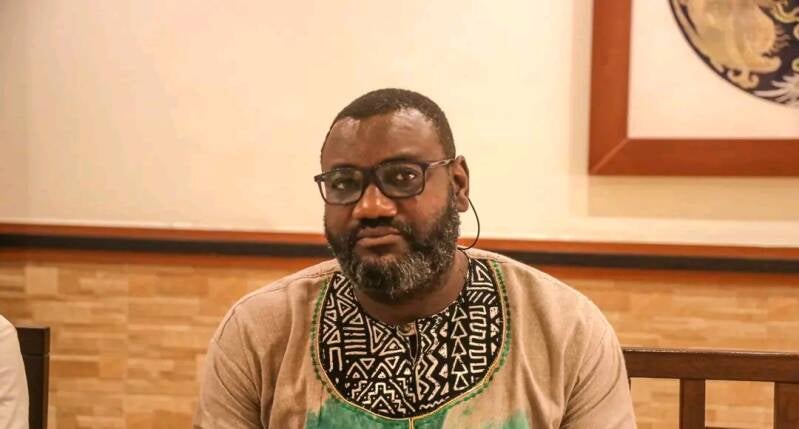
A military historian and counter-insurgency specialist, Joshua Ocheja, has argued that conventional military force alone is insufficient to defeat the criminal groups operating across Nigeria, warning that the country's security approach remains dangerously one-dimensional and trapped in a reactive cycle. Speaking on Saturday, July 4, 2026, in Abuja, Ocheja said security agencies must prioritise "strategic out-thinking" over firepower, stressing that military victories on the battlefield have consistently failed to translate into lasting peace because the underlying drivers of conflict remain unaddressed.
Ocheja, who has studied insurgent movements across the Sahel and the Lake Chad Basin, noted that Nigeria's armed forces have recorded significant tactical successes, including the neutralisation of key terrorist commanders and the destruction of camps. However, he argued that these achievements have been undermined by a lack of coherent post-conflict strategy, weak intelligence coordination, and the failure to address the socio-economic grievances that fuel recruitment into violent groups. "You cannot kill your way out of an insurgency," he said. "The military can degrade and disrupt, but it cannot solve the problem. That requires a comprehensive approach that includes governance, development, and justice."
The historian pointed to the example of the North-East, where Boko Haram and ISWAP have continued to mount deadly attacks despite years of military offensives. He noted that the same pattern is now emerging in the North-West and North-Central, where banditry and farmer-herder conflicts have taken on increasingly organised and ideological dimensions. "We are fighting the same war over and over again because we are not learning from our mistakes," Ocheja said. "Each time we degrade one group, another emerges. We are not addressing the conditions that make these groups possible."
Ocheja also criticised the government's over-reliance on foreign military assistance and advanced weaponry, arguing that while such support is valuable, it cannot replace the need for local intelligence, community engagement, and effective governance. He called for a fundamental shift in Nigeria's counter-insurgency doctrine, emphasising the importance of intelligence-led operations, psychological operations, and strategic communication to undermine the legitimacy of insurgent groups and win the trust of local populations.
The historian further warned that the militarisation of the security response has often alienated communities, turning them against the state and driving them into the arms of insurgents. He cited examples from the North-West, where military operations have sometimes resulted in civilian casualties, mass displacement, and the destruction of livelihoods, fueling resentment and creating a fertile ground for recruitment. "Every civilian killed or displaced by military action is a potential recruit for the insurgents," he said. "We need to be smarter about how we operate."
Ocheja also called for the strengthening of Nigeria's intelligence architecture, arguing that the lack of reliable intelligence has been a major factor in the failure to pre-empt attacks and dismantle insurgent networks. He proposed the establishment of a dedicated counter-insurgency intelligence unit that would coordinate information from the military, police, DSS, and local sources to provide a comprehensive picture of the threat landscape.
The specialist also addressed the controversial issue of negotiating with insurgents, noting that while dialogue can sometimes be a useful tool, it should never be pursued from a position of weakness or without clear conditions. He warned that the government's previous amnesty programmes had often been poorly designed and implemented, leading to a cycle of surrender and re-engagement.
Ocheja concluded by calling on the Federal Government to adopt a long-term, holistic approach to counter-insurgency that combines military pressure with meaningful investment in education, healthcare, infrastructure, and economic opportunity. He stressed that the fight against insurgency is ultimately a contest for legitimacy, and the government must demonstrate that it can deliver for its citizens if it is to win their trust. "The insurgency will not be defeated by bullets alone," he said. "It will be defeated when the people believe that the state has more to offer than the insurgents."
📩 Stone Reporters News | 🌍 stonereportersnews.com
✉️ info@stonereportersnews.com | 📘 Facebook: Stone Reporters News | 🐦 X (Twitter): @StoneReportNew | 📸 Instagram: @stonereportersnews
Add comment
Comments