

Reported by: Oahimire Omone Precious | Edited by: Oravbiere Osayomore Promise.
The Nigeria Hydrological Services Agency (NIHSA) has issued a stark warning that the devastating floods currently ravaging Lagos and other parts of the country are only the beginning of a prolonged rainy season that could last for another 12 weeks, with the worst expected to hit in August and September.
The Director-General and Chief Executive Officer of NIHSA, Umar Mohammed, speaking through the agency's Head of Geographic Information System and Remote Sensing, Emmanuel David Tuna, said last week's floods in Lagos were not a surprise and that the agency had predicted the disaster months in advance. "This is something we foresaw, we saw it coming," Mohammed said. "As we speak now, with the flooding happening, if nothing is done, this is just the start of the rainy season, sometime around July-September (12 weeks), and it could be worse than what is even happening right now. And we're expecting it to be worse around August-September, particularly August-September."
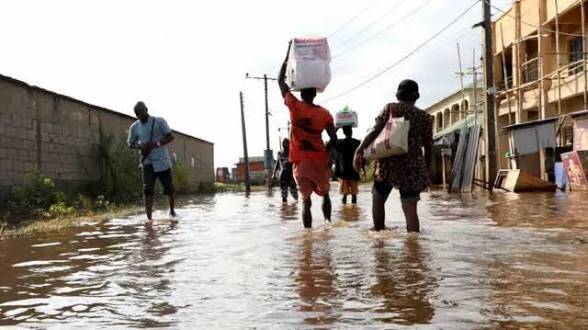
The warning comes after torrential rainfall that lasted over 12 hours submerged property and roads across Lagos, bringing commercial activities and vehicular movement to a halt. The downpour, which started on Sunday and reached a crescendo on Tuesday, left motorists and commuters stranded across the metropolis, while residents had to bail out storm water from their homes to stay safe. Parents and guardians, in panic mode, prevented their children and wards from going to school due to the severity of the downpour and possible risks. The areas heavily flooded included the Lagos-Oshodi Expressway, Abeokuta Expressway, Lekki-Epe Expressway, Victoria Island, Agege, Ikeja, Oworonsoki, Gbagada, Funsho Williams Avenue, Iwaya, and other coastal areas.
Mohammed explained that Lagos is particularly vulnerable because it is exposed to three different forms of flooding—urban, riverine, and coastal flooding—which can occur simultaneously. "Lagos is a coastal state, and so it has lots of factors that can influence flooding within the state, peculiar to Lagos," he said. "Lagos is a very large urban city, and then it also has a very large river that cuts through the city, and then it is just by the ocean. So, with this, all the three major forms of flooding, particularly in Nigeria, can happen in Lagos." He warned that parts of Lagos are at or below sea level, making natural drainage extremely difficult. "When I say below sea level, there is a sea level, and usually ground is supposed to be above the sea, and that is why the ground is not submerged underwater. Some sections, particularly in Ikoyi, that I have been to, where we use some of our devices and our GPS to check the altitude of the ground, we got to see that some areas in Lagos are point zero, meaning equal level with the sea. Some places are even below the level of the sea."
The NIHSA boss further explained that rising water from the Ogun River was now combining with urban floodwaters, worsening the situation. He warned that if high ocean tides coincided with heavy rainfall, the state could experience far more devastating floods. He also raised concerns over possible contamination of drinking water, saying prolonged flooding could pollute boreholes and other water sources used by residents. The agency had already conducted pre-flood water quality assessments and would carry out post-flood analysis to determine the extent of contamination.
Mohammed lamented what he described as poor cooperation from many state governments, accusing them of routinely disregarding annual flood outlooks and early warning advisories issued by the agency. "We saw this coming and alerted the public through various channels. Unfortunately, our warnings were not taken seriously. Most times, because people cannot immediately see the danger, they ignore our predictions," he said.
The Nigerian Meteorological Agency (NiMet) has also issued a probable flash-flood risk alert from July 1 to 10, 2026, warning that intensified rainfall at the onset of the peak rainy season could trigger flash flooding across 27 states. The states identified as being most vulnerable include Taraba, Sokoto, Borno, Zamfara, Kebbi, Katsina, Kaduna, Nasarawa, Plateau, Adamawa, Kwara, Kogi, Oyo, Ogun, Lagos, Osun, Ekiti, Delta, Edo, Abia, Imo, Anambra, Enugu, Akwa Ibom, Cross River, Rivers and Bayelsa.
NiMet warned that the anticipated heavy rainfall could lead to localised flash floods, particularly in flood-prone communities and densely populated urban areas. Other potential impacts include traffic congestion, road closures, transport disruptions, temporary electricity and telecommunications outages, reduced visibility affecting motorists and aviation operations, waterlogging of farmlands with possible crop losses, and damage to roads, bridges, drainage infrastructure and other public facilities. It also cautioned that stagnant floodwaters could increase the risk of waterborne diseases in affected communities if proper sanitation measures are not maintained.
To minimise the impact of possible flooding, NiMet urged residents to monitor official weather forecasts and flash flood advisories, keep drains and waterways free of refuse, secure loose outdoor objects, and avoid walking or driving through flooded roads. It emphasised that early preparedness, public awareness and prompt action remain critical to reducing the risks and impacts associated with flash flooding during the peak of the 2026 rainy season.
Mohammed projected that flooding would likely occur intermittently from July through September before gradually subsiding in October, while warning that residents might not experience complete relief until November. The NIHSA chief urged state governments, emergency management agencies and residents to take the warnings seriously and act swiftly to prevent a repeat of the devastating 2022 floods, which were rated as the worst in decades.
📩 Stone Reporters News | 🌍 stonereportersnews.com
✉️ info@stonereportersnews.com | 📘 Facebook: Stone Reporters News | 🐦 X (Twitter): @StoneReportNew | 📸 Instagram: @stonereportersnews
Add comment
Comments