

Reported by: Oahimire Omone Precious | Edited by: Oravbiere Osayomore Promise.
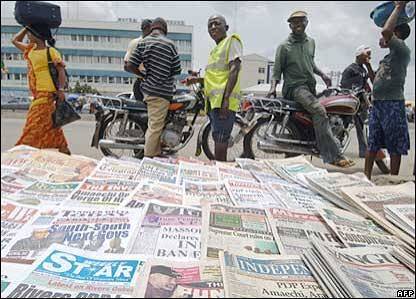
The familiar sight of newspaper vendors weaving through Lagos traffic, balancing bundles of the day's publications on their heads or bicycles, is fast becoming a relic of Nigeria's past. Once the lifeblood of the country's print media industry, newspaper vendors are gradually disappearing from street corners and busy intersections across the nation, buckling under the combined weight of digital disruption, soaring operating costs, shrinking print circulation, and dwindling patronage. The trade, which once provided a dependable livelihood for thousands and served as the final link between newspaper publishers and millions of readers, is now in a state of existential crisis. Many vendors have abandoned the business entirely, while those who remain have been forced to diversify into selling bottled water, snacks, recharge cards, and other items to make ends meet.
At the heart of this decline is the rapid migration of news consumers to digital platforms. With smartphones becoming increasingly accessible and online news platforms offering free, real-time updates, the demand for physical newspapers has plummeted. Musa Abdullahi, a vendor in Abuja, captured the despair of an entire profession when he lamented: "I used to sell over a hundred copies daily. Now, I'm lucky if I sell thirty. People just read news on their phones". The numbers paint a grim picture of the industry's collapse. A Q1 2026 survey by AbingMO3 Marketing Management Consultancy found that not a single Nigerian newspaper recorded national daily circulation of 10,000 copies between January and March 2026. Combined, 20 national dailies sold fewer than 150,000 copies per day.
The economic pressures on vendors are compounded by rising inflation and the escalating cost of newsprint, which has skyrocketed due to Nigeria's weak currency and import dependency. The harsh reality is that most Nigerian newspapers can no longer afford daily print production, with many quietly moving from daily to weekly prints. The Newspaper Vendors Association of Nigeria has repeatedly raised alarm over the growing impact of digitisation on the print media distribution chain. Edmund Arikpo, Chairman of the association's Board of Trustees, who has been in the newspaper vending business since 1996, lamented: "Through this work, I've been able to build a home and raise a family. But with the rise of digital media, many of our members can no longer survive in the business. Some have had to leave entirely; others have returned to their villages".
For ageing vendors like Oga Bello, however, the crisis goes beyond declining income. His untreated ulcer-ridden right leg, which has deteriorated over time because he cannot afford proper medical care, has become a painful symbol of a profession that appears to have been forgotten. Every morning, despite the excruciating pain and the foul-smelling wound, he reports to his newspaper stand in the Ile-Ile area of Ketu, along the Ikorodu Corridor, because staying at home means earning nothing. "If I don't come out, I won't eat," he says quietly, shifting his weight to ease the pain. He has no health insurance, no pension, and no savings to rely on. His story, like those of many of his colleagues still clinging to the trade, reflects the human cost of an industry that has been hit by changing times.
The crisis facing newspaper vendors is part of a broader structural shift in Nigeria's media landscape. The SquirrelPR RANKED 2026 Report revealed that Nigeria's digital media ecosystem recorded a 26.2 per cent decline in total readership traffic in 2025, falling from over 1.04 billion visits in 2024 to 769 million. This decline, however, does not reflect reduced relevance but a recalibration driven by artificial intelligence, as AI-powered search overviews increasingly answer user queries directly, reducing the need to visit publisher websites. Big Tech platforms like Google and Meta now capture over 60 per cent of digital advertising revenue, while news organisations face, in some cases, 90 per cent drops in traffic due to AI-generated summaries.
Despite these challenges, some vendors have adapted in creative ways. A number have diversified into selling bottled water, snacks, or phone accessories alongside newspapers, while others have embraced mobile payment systems, allowing customers to pay electronically. Media experts note that while print journalism faces stiff competition, it still retains a niche audience, particularly among older readers and institutions that value the tangibility and credibility of newspapers. The Newspaper Vendors Association has urged publishers to adopt a more balanced approach by regulating early online publication of stories to protect the livelihood of vendors. "We're not against publishers making money online, but they must also consider the welfare of those who ensure the physical distribution of their papers across the country. That's where the sales come from," Arikpo said.
The Federal Government has taken some steps to address the crisis. President Bola Ahmed Tinubu, recognising the skyrocketing costs of production that have forced many print titles to thin out or shut down, announced a review of the national tariff exemption list in March 2026. Stakeholders have also called for government support for local paper mills and incentives for investment in publishing, emphasising the sector's potential to boost economic growth and literacy in Nigeria. For the itinerant newspaper vendor, once a dominant feature of urban life, resilience in a rapidly changing media landscape remains the only option. But as Oga Bello's untreated leg and Musa Abdullahi's dwindling sales make painfully clear, resilience alone may not be enough to save a profession that is being slowly erased by the digital tide. Across Nigeria's major cities, the familiar newspaper kiosks that once occupied strategic junctions are vanishing, replaced by POS centres, soft drink stalls, or simply empty spaces where news once changed hands.
📩 Stone Reporters News | 🌍 stonereportersnews.com
✉️ info@stonereportersnews.com | 📘 Facebook: Stone Reporters News | 🐦 X (Twitter): @StoneReportNew | 📸 Instagram: @stonereportersnews
Add comment
Comments