

Reported by: Oahimire Omone Precious | Edited by: Oravbiere Osayomore Promise.
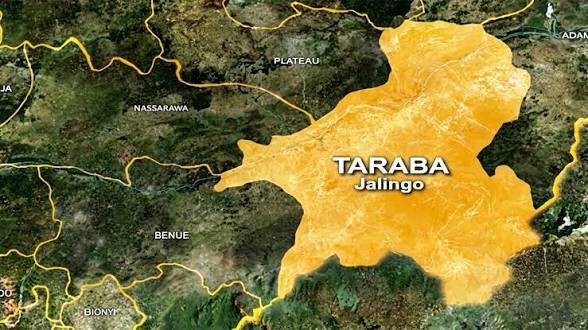
Residents of Gashaka Local Government Area in Taraba State have issued a desperate cry for help as the Garbabi Bridge, a critical transport route linking several communities, faces imminent collapse due to severe erosion worsened by persistent heavy rainfall. The bridge, which serves as a vital gateway for farmers, traders, students, healthcare workers, and commuters, is now at the centre of growing fears after a substantial section of its approach road was washed away, leaving parts of the roadway suspended and dangerously unstable.
According to community members who spoke with Daily Post, the damage has worsened with each rainfall, forcing motorists to navigate the area with extreme caution. Deep gully erosion has extended toward the bridge embankment, while cracks and soil displacement have become increasingly pronounced. Abdullahi Sarti, a resident, expressed the collective anxiety gripping the community: "We are afraid that the bridge may totally wash away any moment because of the persistent rainfall".
The situation has been compounded by the painful memory of the Namnai Bridge in Gassol Local Government Area, which collapsed in 2024 and remains unrepaired at the time of this report. Sarti, who does not want the Garbabi Bridge to suffer the same fate, called on authorities to urgently intervene. "This bridge is our only major route to nearby communities. If it collapses, many villages will be cut off from hospitals, markets, schools, and other essential services," said Ndoti Halimat, another resident.
For many residents, the Garbabi Bridge is more than just infrastructure—it is a lifeline. It serves as an essential corridor for the movement of agricultural produce, commercial goods, and emergency services across parts of Gashaka Local Government Council. A collapse would isolate several communities, disrupt local commerce, delay medical emergencies, and negatively affect school attendance. Residents and commercial drivers who spoke with Daily Post warned that allowing the bridge to be washed away by rain would be inimical not only to the people of the local government council but to the state at large.
With no official warning signs in place, local residents have taken it upon themselves to protect road users by placing old vehicle tyres, tree branches, and makeshift flags along the damaged section to alert approaching motorists. Despite these efforts, many fear that the temporary measures offer little protection against the growing risk.
A civil engineering expert, Samson Uba, warned that unchecked erosion around bridge foundations and embankments can gradually weaken structural stability. He recommended immediate emergency stabilisation, including embankment reconstruction, stone pitching, gabion installation, and improved drainage systems to redirect floodwater and prevent further soil loss. As the rainy season intensifies, residents and community leaders are appealing to the Taraba State Government, the Federal Roads Maintenance Agency (FERMA), and other relevant authorities to urgently assess the bridge and begin emergency repairs before the situation deteriorates further. They argue that prompt intervention would not only protect lives and property but also preserve critical economic and social links for thousands of people who depend on the route every day.
The alarm raised by the Gashaka community comes amid broader concerns over infrastructure neglect in Taraba State. The Namnai Bridge, which collapsed in August 2024, has remained unrepaired for nearly two years, forcing commuters to rely on dangerous boat crossings that have already claimed lives. The North East Development Commission had begun reconstruction of the Namnai Bridge in February 2026, but progress has been slow. The Garbabi Bridge now threatens to become another symbol of the state's crumbling infrastructure if urgent action is not taken.
For the people of Gashaka, the fear is palpable. With no official warning signs and the rainy season far from over, they are left to rely on makeshift alerts and hope that their voices will be heard before it is too late. As Abdullahi Sarti put it: "We are in danger". The question now is whether the authorities will act in time to prevent another preventable tragedy.
📩 Stone Reporters News | 🌍 stonereportersnews.com
✉️ info@stonereportersnews.com | 📘 Facebook: Stone Reporters News | 🐦 X (Twitter): @StoneReportNew | 📸 Instagram: @stonereportersnews
Add comment
Comments