

Reported by: Oahimire Omone Precious | Edited by: Oravbiere Osayomore Promise.
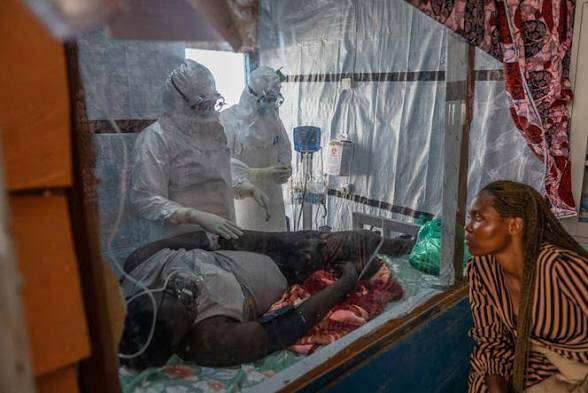
The death toll from the ongoing Ebola outbreak in the Democratic Republic of the Congo has surpassed 500, as frontline health workers in the epicentre of the crisis threaten to embark on a strike over unpaid benefits and dire working conditions, raising fears that industrial action could severely disrupt efforts to contain the rapidly spreading virus. The outbreak, which was officially declared on 15 May 2026, has now recorded 1,561 confirmed cases, including 506 deaths, according to the latest update from the DRC's Ministry of Health released on Sunday, 5 July 2026. The spread continues to outpace the response, with transmission now confirmed in three eastern provinces: Ituri, North Kivu, and South Kivu.
Health workers deployed in Ituri province, the epicentre of the outbreak, issued a 24-hour strike notice on Sunday, 5 July 2026, threatening to down tools on Monday, 6 July 2026, if authorities fail to meet their demands. In a notice to the government, a copy of which was seen by The Associated Press, the workers detailed a litany of grievances: they have not been paid benefits since the outbreak began, lack adequate supplies for their work, endure poor salaries, and face hostility from residents sceptical about the virus. They also complained of the "arrogance" of teams sent from the capital, Kinshasa, and the "excessive" use of labour from other provinces without prioritising local workers in Ituri.
The strike threat comes just days after enrolment for clinical trials began in Bunia, the capital of Ituri Province, raising significant concerns about the potential disruption of research into treatments for a strain of the virus that currently has no approved vaccine or therapy. The outbreak is caused by the Bundibugyo virus, a rarer strain of Ebola for which there is no licensed vaccine or specific targeted treatment. This contrasts with the more common Zaire strain, which has driven most of the DRC's previous 16 outbreaks and for which a vaccine exists.
The lack of approved medical countermeasures has complicated response efforts, making community-based measures, early detection, and supportive healthcare more critical than ever. Officials have yet to identify the outbreak's "patient zero" and face the monumental task of tracing possibly tens of thousands of people who may have come into contact with infected individuals. The World Health Organization has already declared the first month of this outbreak the worst on record.
Beyond the immediate health emergency, the outbreak is also raising alarms over its economic and social impact. A new assessment by the United Nations Development Programme (UNDP) has warned that the Ebola crisis could push as many as 985,000 additional people into poverty in the DRC, with women disproportionately affected. The UNDP also cautioned that the crisis risks eliminating tens of thousands of jobs, disrupting education and healthcare services, and costing African economies up to $3.6 billion if broader regional and global shocks intensify. Even under a baseline scenario in which the virus is contained in the DRC and Uganda, the country could face real GDP losses of more than $1 billion and the loss of 55,000 jobs.
The Africa Centres for Disease Control and Prevention (Africa CDC) has called for urgent funding to support clinical trials for candidate therapeutics against the Bundibugyo virus. Trials evaluating candidate therapeutics were launched this week in Bunia, but a funding gap remains for therapeutic trials, which have only secured $10 million. Africa CDC appealed for immediate additional financing, including $16 million for a post-exposure prophylaxis study among exposed contacts and another $2–3 million to strengthen contact tracing needed for the trial.
Health authorities and international partners have repeatedly warned that insecurity, population movement, pressure on health facilities, and incomplete contact tracing continue to complicate the response. As the death toll rises and health workers prepare to strike, the DRC's latest Ebola outbreak stands as a stark reminder of the devastating intersection of a deadly virus, a fragile health system, and the socioeconomic vulnerabilities that threaten to turn a health emergency into a broader humanitarian catastrophe.
📩 Stone Reporters News | 🌍 stonereportersnews.com
✉️ info@stonereportersnews.com | 📘 Facebook: Stone Reporters News | 🐦 X (Twitter): @StoneReportNew | 📸 Instagram: @stonereportersnews
Add comment
Comments