

Reported by: Oahimire Omone Precious | Edited by: Oravbiere Osayomore Promise.
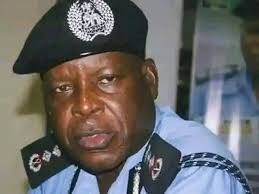
A former Inspector-General of Police, Sir Mike Okiro, has delivered a blunt assessment of Nigeria's security crisis, declaring that the growing demand for state police is a direct consequence of the federal police force's failure, which he attributed to chronic underfunding, severe manpower shortages, and inadequate equipment. Okiro made the remarks on Monday, 6 July 2026, while featuring on Channels Television's Politics Today, igniting fresh debate over the nation's policing architecture as the National Assembly's State Police Bill moves to state Houses of Assembly for ratification.
Okiro painted a grim picture of the Nigeria Police Force, describing it as "badly disorganised, disenchanted, demoralised, unstaffed, ill-equipped, ill-trained". He argued that funding, rather than the structure of policing itself, remained the central problem undermining the force. "You see, if the police are well-equipped, nobody would talk about state police," Okiro said. He added: "People talk about state police because federal police have failed. If they succeed, they won't talk about it".
The former police chief highlighted the deteriorating state of police infrastructure across the country, noting that many stations had become non-functional due to severe manpower shortages. "Funding. Poorly staffed. Most police stations are closed down. No manpower," he stated. Okiro disclosed that during his tenure as Inspector-General, he had written to former President Goodluck Jonathan, drawing attention to the manpower shortage within the police. "I told the President that some police stations had been closed because of lack of personnel while thousands of educated young men and women were roaming the streets without jobs," he recalled.
The former IGP's comments come amid an intensifying national debate over the establishment of state police, following the passage of a landmark State Police Bill by the National Assembly on 24 June 2026. The bill, which seeks to create a constitutional framework for state-controlled police services alongside the existing federal policing structure, has now been transmitted to the 36 state Houses of Assembly for ratification. To become law, at least 24 state assemblies must endorse the amendment.
Okiro, who initially opposed the idea of state police, said he had since changed his position due to the growing complexity of security challenges and the limitations of a centrally controlled police structure. He argued that governors are better positioned to understand the peculiar security issues within their states and can respond more effectively if empowered through state policing. "The governor of Zamfara understands the security challenges in Zamfara. The governor of Rivers understands the challenges in Rivers. Security problems differ from one state to another, and governors know what is happening in their environments," he said.
However, Okiro stressed that state police must operate under strict legal safeguards to prevent abuse by political office holders. "There should be checks and balances. There should be regulations guiding state police operations. If governors are given unlimited powers over the police, there is a risk of abuse. The law must protect everyone, whether they are in government or not," he added. In a separate interview with Daily Sun, Okiro described the constitutional amendment as "long overdue," noting that Nigeria is too large to have a single police force. He also welcomed the proposed change of name from the Nigeria Police Force to the Nigeria Police Service, describing it as a philosophical re-orientation towards community policing and accountability.
Despite supporting decentralisation, Okiro has previously cautioned that Nigeria may not yet possess the institutional capacity to sustain 36 independent state police organisations, suggesting instead that a regional or geopolitical zone-based policing framework could provide a more practical transition. The debate over state police has gained momentum amid persistent insecurity across several parts of the country, including terrorism in the North-East, banditry in the North-West, kidnapping for ransom, and violent communal conflicts.
The proposal has drawn mixed reactions from public figures. Human rights lawyer Femi Falana has cautioned that state police may not resolve Nigeria's insecurity unless underlying issues such as unemployment are addressed. Labour Party's 2023 presidential candidate Peter Obi has urged the Federal Government to delay implementation until after the 2027 general election over fears it could be misused against political opponents. Meanwhile, Imo State Governor Hope Uzodimma has lauded President Bola Tinubu and the National Assembly over the bill, expressing confidence that the proposed state police structure would significantly strengthen Nigeria's federal system.
In a related development, the Independent National Electoral Commission (INEC) has partnered with the Independent Corrupt Practices and Other Related Offences Commission (ICPC) to train its staff on promoting integrity and preventing corruption ahead of the 2027 General Election. The two-day Anti-Corruption Education and Sensitisation Workshop, themed "Corruption-Free Election: Integrity Matters (C-FEIM)," began on Monday at INEC's headquarters in Abuja. INEC National Commissioner Mrs May Agbamuche-Mbu said the training was timely, coming ahead of the 2027 elections, and commended the ICPC for facilitating the workshop. ICPC Chairman Dr Musa Adamu, represented by the Director of Legal Services Mr Henry Emore, said corruption remained one of the biggest factors hindering development and that the fight against corruption required collective action.
As the debate over state police continues, Okiro's latest intervention reinforces the broader argument that strengthening funding, training, equipment, and personnel within the existing police system remains central to improving public security, regardless of the policing model eventually adopted. His words serve as a stark reminder that while Nigeria may be on the verge of a historic security reform, the fundamental challenges of underfunding and neglect must be addressed to ensure that any new policing structure does not simply replicate the failures of the old.
📩 Stone Reporters News | 🌍 stonereportersnews.com
✉️ info@stonereportersnews.com | 📘 Facebook: Stone Reporters News | 🐦 X (Twitter): @StoneReportNew | 📸 Instagram: @stonereportersnews
Add comment
Comments