

Reported by: Oahimire Omone Precious | Edited by: Oravbiere Osayomore Promise.
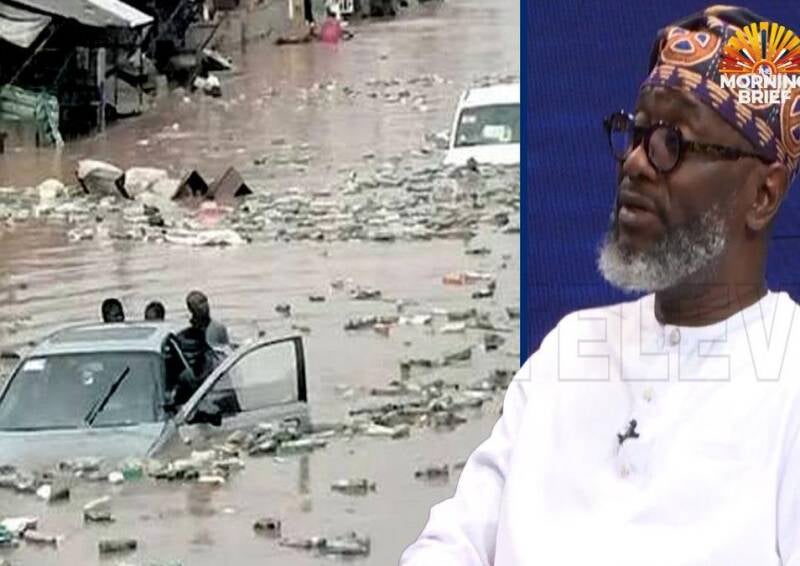
The Lagos State Commissioner for Waterfront Infrastructure Development, Dayo Bush-Alebiosu, has delivered a blunt assessment of the persistent flooding that has paralysed Africa's largest city, attributing the annual catastrophe to a toxic combination of "bad habits" and rampant illegal land reclamation, including the dumping of human waste directly into the lagoon. In an interview on Channels Television's The Morning Brief on Tuesday, 7 July 2026, the commissioner insisted that the recurring floods are not a natural disaster but a self-inflicted crisis driven by the conduct of residents and commercial developers alike. "It is important to identify what the problem is in the first place, and the problem is nothing other than bad habits," Bush-Alebiosu declared. He explained that illegal reclamation and illegal dredging constitute one side of the problem, while the habits of residents constitute the other.
The commissioner drew a sharp distinction between the two drivers of the crisis. Those who dump refuse out of habit are not doing so for profit, he argued, while those engaged in illegal reclamation are driven by commercial interests. "You have both sides," he said. In a particularly striking example, Bush-Alebiosu cited the dumping of human waste into the lagoon as one of the most egregious bad habits undermining the state's flood control efforts. "The first thing is that some people even dump faeces into the lagoon and things like that. This is the same lagoon that feeds us. You know you're eating fish that's feeding off faeces," he said. "So all of these things eventually will come back to bite us, and this is just a typical example of what we're seeing at the moment".
The commissioner's comments come as Lagos reels from weeks of persistent rainfall that have submerged major roads, stranded commuters, and left many homes inundated. Footage and pictures of the flooding have circulated widely on social media, with many Lagosians calling on authorities to address the perennial challenge. The floods have affected communities across the metropolis, including Gbagada, Mushin, Oshodi, Ikeja, Surulere, Agege, Alimosho, Ikorodu, Victoria Island, Lekki, Ajah, Okota, and Amuwo-Odofin, turning roads into rivers and homes into holding ponds. The economic and human toll has been severe, with commercial transport operators suspending services and many motorists abandoning broken-down vehicles after attempting to drive through floodwaters.
The crisis has also drawn attention to the federal government's role in the flooding, with some residents blaming the ongoing Lagos-Calabar Coastal Highway project for exacerbating the situation. However, the Minister of Works, David Umahi, has dismissed these claims, insisting that the project is not responsible for the recent flooding. During an inspection of the project on Monday, 6 July 2026, Umahi explained that investigations revealed that Kuramo Lagoon, which is designated under Lagos State's drainage master plan as a major flood collection point, had been illegally reclaimed with sand by residents, preventing it from effectively serving its drainage purpose. "You cannot block the channel and be crying about flooding," Umahi said. He ordered that the lagoon be dredged to remove the sand deposits and restore its natural water flow.
The Minister also addressed complaints of flooding around Alpha Beach, one of the locations frequently linked to the highway project, insisting that the problem existed long before construction began. He attributed the recurring flooding in the area to deficiencies in the original planning and development of the estate, warning that lasting solutions would require additional drainage infrastructure and, in some cases, the demolition of structures obstructing natural water channels. "Some buildings must have to go," Umahi said. To ensure proper maintenance of drainage facilities along the highway corridor, he directed the Federal Controller of Works in Lagos to deploy 40 personnel on rotational shifts to monitor culverts and manholes and prevent indiscriminate dumping of refuse.
The Lagos State Government has intensified its enforcement efforts in response to the crisis. On Sunday, 28 June 2026, the Commissioner for the Environment and Water Resources, Tokunbo Wahab, announced the commencement of demolition of structures obstructing drainage alignments, wetlands, and stormwater discharge channels in the Lekki-Epe area. Speaking during an inspection of drainage channels and flood-prone locations in the Agungi-Ajiran, Gravitas, and Ikota areas, Wahab warned that the government would no longer tolerate encroachment on drainage corridors, floodplains, and natural water channels. "We are not going to tolerate any form of encroachment on the alignments, floodplains and our discharging point for stormwater. Whosoever you are, we don't care whose ox is gored; we shall remove those contraventions immediately," he said.
Wahab noted that officials had observed illegal reclamation of wetlands around Graceland Estate, warning that wetlands serve as nature's sponge by retaining water during heavy rainfall and that unauthorised reclamation destroys the ecosystem and worsens flooding. He also revealed that a private developer was allegedly reclaiming part of the Ikota River without the required approvals, narrowing the river's natural path. The government has insisted that all reclamation activities must observe the approved setback of between 150 and 200 metres to preserve the river's natural flow. Wahab also cautioned traditional landowning families against permitting developments that violate environmental regulations, saying land ownership does not exempt anyone from complying with planning and environmental laws. "Taxpayers' money is being used to provide drainage infrastructure and maintain channels. Don't make it worse by blocking them," he said.
The government's enforcement drive has also targeted illegal reclamation projects across the state. In September 2025, the Ministry of the Environment and Water Resources ordered the immediate suspension of all reclamation projects across the state, citing grave environmental and social risks. The government warned that failure to comply would prompt the deployment of machinery to decommission illegal sites. In a related development, the government recently halted reclamation activities at Orange Island on Freedom Way because the developers failed to obtain the mandatory Environmental Impact Assessment approval and drainage clearance. The commissioner reaffirmed the government's resolve against illegal dredging and land reclamation, warning that the area serves as a major discharge outlet for Lekki Phase I into the Lagoon and that any obstruction would heighten flood risks.
As Lagos continues to grapple with the devastating impact of flooding, the government's message is clear: the crisis is not inevitable, and it cannot be solved by infrastructure alone. "The problem is nothing other than bad habits," Bush-Alebiosu insisted. The commissioner's pointed reference to the dumping of faeces into the lagoon—the same lagoon that provides fish for consumption—underscores the public health dimension of the crisis. "So all of these things eventually will come back to bite us, and this is just a typical example of what we're seeing at the moment," he warned. For the residents of Lagos, the message is a stark reminder that the fight against flooding is not just a matter of government action but of individual and collective responsibility. As the government intensifies its enforcement and the federal government moves to restore Kuramo Lagoon, the question remains whether the "bad habits" that have brought the city to its knees can finally be broken.
📩 Stone Reporters News | 🌍 stonereportersnews.com
✉️ info@stonereportersnews.com | 📘 Facebook: Stone Reporters News | 🐦 X (Twitter): @StoneReportNew | 📸 Instagram: @stonereportersnews
Add comment
Comments