

Reported by: Oahimire Omone Precious | Edited by: Oravbiere Osayomore Promise.
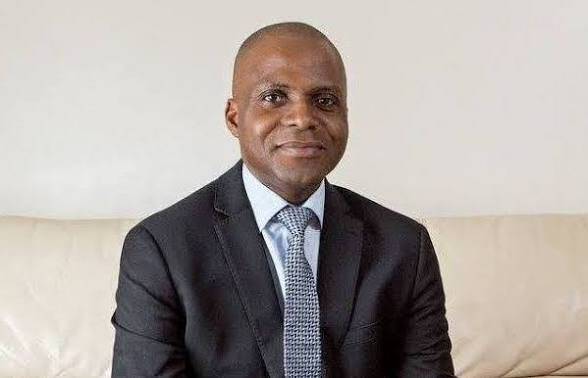
Energy expert Nick Agule has described President Bola Tinubu's removal of fuel subsidy as mere "symptom management" that failed to address the root cause of Nigeria's fuel crisis: the collapse of the country's state-owned refineries. In a statement that has since gone viral on social media, Agule argued that while the President's decision to end the subsidy regime was necessary, it did little to solve the fundamental problem of Nigeria's dependence on imported petroleum products. "The fuel subsidy that President Tinubu removed was a symptom of the collapse of state-owned refineries," Agule said. "He addressed the subsidy drain, which was essentially symptom management, but he has not tackled the root cause: the refineries themselves."
Agule, a chartered accountant and public affairs analyst who has consistently written on energy sector reforms, also took aim at the leadership of the Nigerian National Petroleum Company Limited (NNPC Ltd), accusing its Group Chief Executive Officer, Bayo Ojulari, of failing to deliver tangible results beyond signing Memoranda of Understanding (MoUs). "At the helm of the NNPC, all Bayo Ojulari has done so far is sign MoUs. These agreements will not even yield results within the next year," Agule said, citing the recent MoU signed with Chinese firms for the rehabilitation of the Port Harcourt and Warri refineries. Ojulari himself has acknowledged that the MoU is "an agreement to explore working together, not a binding contract," and that the arrangement has entered a "rigorous evaluation phase".
Agule proposed a radical alternative: the Federal Government should adopt an Incorporated Joint Venture (IJV) model, similar to the highly successful Nigeria Liquefied Natural Gas (NLNG) arrangement. Under the NLNG model, NNPC holds a 49 per cent stake, while international oil companies—Shell, TotalEnergies, and Eni—hold the remaining 51 per cent, providing technical expertise and operational efficiency. "Like is the case with NLNG, President Tinubu can enter into an IJV arrangement with competent operators if he doesn't want to sell," Agule said. The NLNG model has delivered substantial cash flows to all shareholders and demonstrated the effectiveness of risk-sharing, cost management, and technical collaboration. Calls for a similar restructuring of Nigeria's refineries have been echoed by former Group Managing Directors of NNPC, who have long argued that the facilities should be run as IJVs with credible technical and financial partners.
Agule's critique comes amid growing frustration over the state of Nigeria's refineries, despite billions of dollars spent on Turn Around Maintenance. Between 2021 and 2025, NNPC spent over $2.5 billion on the three refineries, including $1.5 billion on Port Harcourt, $897.6 million on Warri, and $740.7 million on Kaduna. Yet sustained commercial production has not materialised. The Port Harcourt refinery was shut down again in May 2025 for scheduled maintenance, barely six months after a previous resumption of operations. The Warri facility, which achieved mechanical completion in early 2025, has remained idle, while the Kaduna refinery continues to operate far below capacity.
Agule's intervention adds to a growing chorus of energy experts and former officials calling for a fundamental restructuring of Nigeria's downstream petroleum sector. He has previously argued that simply removing subsidy while continuing to import fuel does not constitute economic reform, and that the benefits of the policy will not materialise unless the refineries are fixed. His latest comments, made during an interview with Arise News, have reignited debate over the best path forward for Nigeria's refining industry. As Nigerians continue to grapple with high fuel prices and persistent product scarcity, the question of how to revive the nation's refineries remains one of the most pressing challenges facing the Tinubu administration.
📩 Stone Reporters News | 🌍 stonereportersnews.com
✉️ info@stonereportersnews.com | 📘 Facebook: Stone Reporters News | 🐦 X (Twitter): @StoneReportNew | 📸 Instagram: @stonereportersnews
Add comment
Comments