

Reported by: Oahimire Omone Precious | Edited by: Oravbiere Osayomore Promise.
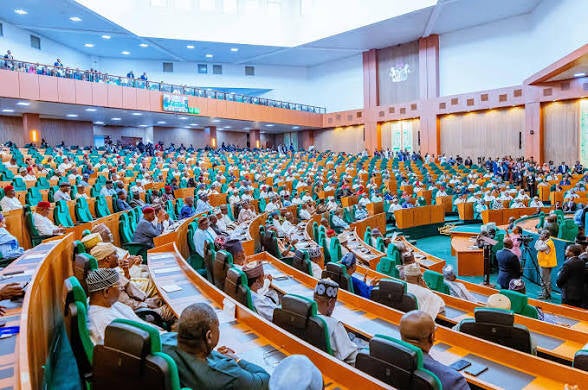
The House of Representatives on Thursday, 9 July 2026, adopted a unanimous resolution demanding that the Federal Government immediately summon the South African High Commissioner to Nigeria to account for the recent killings of Nigerian citizens and to clarify Pretoria's position on the protection of Nigerians and other African nationals residing in South Africa. The resolution, which followed the adoption of a motion of urgent public importance sponsored by the Chairman of the House Committee on Navy, Hon. Yusuf Adamu Gagdi, also called for a comprehensive review of bilateral relations between Nigeria and South Africa, an independent investigation into the deaths, and compensation for affected families and businesses.
Leading the debate, Gagdi expressed deep concern over media reports of a fresh wave of xenophobic attacks, unlawful arrests, destruction of businesses, and the deaths of Nigerians and other African nationals in South Africa. He drew particular attention to the reported killing of two Nigerians, including one who allegedly died in the custody of the South African Police Service and another who was reportedly murdered outside his business premises. Gagdi argued that the incidents underscored the continued vulnerability of Nigerians despite repeated diplomatic assurances from Pretoria that foreign nationals would be protected.
In a powerful address, Gagdi recalled Nigeria's historic support for South Africa's liberation struggle, noting that successive Nigerian governments invested significant diplomatic, financial, and humanitarian resources in the fight against apartheid in the spirit of African solidarity. He declared that it was profoundly disturbing that Nigerians and other Africans are now facing persecution, humiliation, and violent attacks in the very country whose freedom Nigeria helped to secure. He warned that xenophobic violence has become recurrent, systematic and increasingly deadly, and that the repeated attacks have continued despite previous assurances by the Government of South Africa that adequate measures would be taken to guarantee the safety of foreign nationals. Gagdi further cautioned that continued inaction may embolden perpetrators and weaken confidence in regional institutions established to protect African citizens, and that these recurring attacks threaten diplomatic relations, economic cooperation and continental integration. He stressed that the continued killing of Nigerians abroad without adequate accountability diminishes confidence in the collective commitment of African States to uphold human rights, justice and the rule of law.
Supporting the motion, Hon. Billy Osawaru recalled that the House had adopted a similar motion on 5 May 2026, following which the Federal Government facilitated the voluntary evacuation of hundreds of Nigerians from South Africa. He noted that about 856 of nearly 1,000 Nigerians who registered for evacuation had already returned to Nigeria, but added that the latest killings suggested South Africa's security agencies had failed in their responsibility to protect foreign nationals. He declared that Nigeria has engaged diplomatically, but it looks like Nigeria is being undermined, and that this is no longer a time for endless discussions, pointing out that other African countries are already taking action.
Hon. Prince Kayode Akiolu called for deeper diplomatic engagement, reminding South Africa of Nigeria's historic support during the anti-apartheid struggle. Hon. Jersey Okezie-Okejoto advocated for the use of international legal instruments and commercial diplomacy to compel South Africa to uphold its obligations under international law. Other lawmakers, including Hon. Ghali Tijjani, Hon. Mark Obetta, and Hon. Ben Etanabene, urged the Federal Government to explore stronger diplomatic and legal options, including seeking international justice for victims, while maintaining pressure on South Africa to guarantee the safety of Nigerians and other African nationals.
During consideration of the motion, the House rejected a proposed amendment seeking to suspend diplomatic, political, and parliamentary relations with South Africa. The Speaker ruled that diplomatic engagement should remain open while the matter is being addressed. However, lawmakers adopted an amendment urging the Federal Government to pursue legal redress and compensation for Nigerians affected by the attacks. In his remarks, the Speaker recalled Nigeria's contributions to the anti-apartheid struggle and expressed disappointment that Nigerians now face violence in South Africa. He maintained that while Nigeria has the capacity to respond, diplomatic channels remain the best path to resolving the crisis.
The House resolved to urge the Federal Government to immediately summon the South African High Commissioner to Nigeria to provide a comprehensive explanation regarding the reported incidents and to clarify the official position of the South African government on the protection of Nigerian citizens and other African nationals. Lawmakers also demanded an independent, transparent, and internationally monitored investigation into the deaths, with perpetrators to be identified, prosecuted, and punished in accordance with the law. The House further called on the Federal Government to engage the African Union, the Southern African Development Community (SADC), the United Nations, and the African Commission on Human and Peoples' Rights to promote the protection of African migrants and strengthen accountability mechanisms. Lawmakers also urged the government to enhance consular services, legal assistance, and support for Nigerians who wish to return home. The House resolved to establish an ad hoc committee to engage relevant stakeholders, including the South African Parliament, South African authorities, and regional organisations, and to report back within 21 legislative days with recommendations for further legislative and diplomatic action.
The resolution follows the reported deaths of at least two Nigerians in South Africa on 28 June 2026. According to the Nigerian Ministry of Foreign Affairs, Emeka Charles Iroegbu was allegedly killed by police officers using gruesome interrogation techniques, while shop owner Musa Yunana Joe was killed by unidentified individuals outside his business premises. The killings occurred amid escalating xenophobic tensions, following an ultimatum issued by anti-immigrant groups directing undocumented foreign nationals to leave South Africa by 30 June 2026. The South African government has formally rejected Nigeria's demand for compensation for affected citizens, instead demanding that Abuja produce evidence of alleged criminal operations run by Nigerians in South Africa. The Senate had earlier on 7 July 2026 condemned the renewed xenophobic attacks and warned that Nigeria might be compelled to review its diplomatic relations with Pretoria if the attacks persist. The Minister of Foreign Affairs, Bianca Odumegwu-Ojukwu, had also demanded a probe into the killings and warned that all options remain on the table if South Africa fails to curb the violence. The House resolution represents the latest escalation in Nigeria's diplomatic response to the recurring violence against its citizens in South Africa, as lawmakers push for accountability, compensation, and a fundamental reassessment of bilateral relations with a country whose freedom, they insist, was secured with Nigeria's sacrifice.
📩 Stone Reporters News | 🌍 stonereportersnews.com
✉️ info@stonereportersnews.com | 📘 Facebook: Stone Reporters News | 🐦 X (Twitter): @StoneReportNew | 📸 Instagram: @stonereportersnews
Add comment
Comments