

Reported by: Oahimire Omone Precious | Edited by: Oravbiere Osayomore Promise.
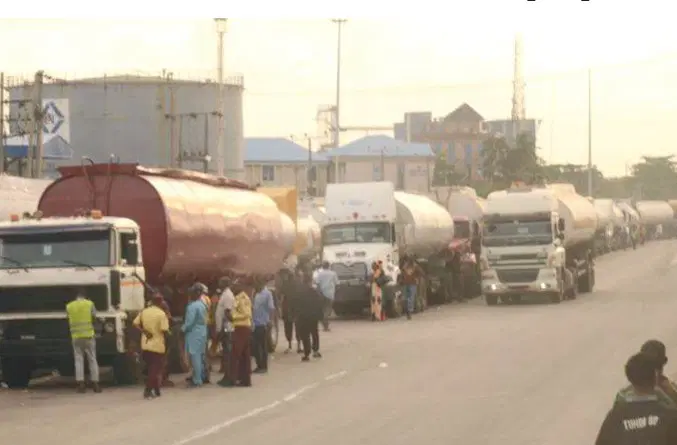
There was mayhem on the Oshodi-Apapa Expressway on Thursday, 9 July 2026, as negligence and lack of coordination by the Nigerian Ports Authority (NPA), the Nigeria Police Force, the Lagos State Traffic Management Authority (LASTMA), and tank farm owners combined to bring the major access road to the nation's busiest seaports to a complete standstill. Thousands of commuters and motorists were trapped in one of the worst traffic nightmares witnessed in recent months, as container-laden trucks and fuel tankers brought the expressway to a halt, triggering a fresh blame game among the agencies, truck drivers, and stakeholders over the persistent gridlock along the nation's busiest port corridor.
The gridlock, which crippled movement along the Mile 2-Berger Yard axis and adjoining routes, was worsened by the indiscriminate parking of trucks on both sides of the road and reckless driving by truck operators along the Mile 2-Tin Can corridor. Motorists and commuters spent several hours on journeys that ordinarily would have taken less than one hour, while commercial transport operators lamented huge losses caused by the traffic paralysis. Some motorists caught in the congestion told reporters they spent about two hours travelling from Fatgbems Filling Station to Berger Yard. One of them said that from Fatgbems Filling Station to Otto Wharf, he spent more than two hours, blaming the slow movement on tankers loading products at the tank farms. Despite the deployment of police officers, military personnel, and LASTMA officials to the corridor, the gridlock persisted for several hours, with motorists, commuters, and commercial operators bearing the brunt of the chaos. The situation forced many motorists to abandon their journeys, while others turned back after spending hours in traffic.
The recurring gridlock has ignited a fierce blame game among the NPA, tank farm owners, truck drivers, and traffic management agencies. While some tanker drivers blamed poor traffic management by the Lagos State Government and the NPA, customs agents accused the NPA of failing to effectively manage port access roads. Truck owners, on their part, blamed petroleum tankers for abandoning the designated single-lane arrangement. However, Traffic Transit Point (TTP), managers of the electronic call-up platform, insisted that tankers are yet to be integrated into the system and therefore should not be linked to the current gridlock. The National Council of Managing Directors of Licensed Customs Agents also blamed the NPA for the persistent traffic gridlock along the Tin Can Port access road. The President of the Council, Lucky Amiwero, argued that the affected roads are designated port access routes under the management of the NPA, stressing that the authority should be held accountable for the congestion. He maintained that the NPA is responsible for coordinating activities along the port corridor and ensuring that access roads remain free of obstruction.
Residents, transport operators, and businesses affected by the congestion identified the commencement of operations at the new Kirikiri terminal, poor road infrastructure, inadequate traffic coordination, indiscriminate parking by tanker drivers, and weak enforcement of traffic regulations as major factors responsible for the recurring crisis. Findings showed that the heavy gridlock along the Mile 2-Coconut Expressway was triggered by the inability of fuel-laden tankers to exit Shema, Integrated, and Sahara tank farms by Westminster, before the Ibru jetty, after access routes became blocked by empty tankers waiting to load petroleum products. The situation worsened as scores of empty tankers parked indiscriminately along the corridor, obstructing entrances and exits to the depots and preventing loaded tankers from leaving. Investigations further revealed that the recent decline in crude oil prices on the international market encouraged many tank farms to increase their operations, leading to a surge in the number of tankers on the roads. Inadequate parking bays by tank farms operating at the ports were also identified as a significant contributor to the perennial gridlock. A motorist, who spoke on condition of anonymity, said the traffic challenge became more pronounced after the establishment of container terminals opposite the Catholic Church along the Berger/Kirikiri road. He explained that before those terminals came, the road was free, but now three different terminals receiving containers have created long queues of trucks waiting to access the terminals, routinely occupying major sections of the expressway and creating bottlenecks that stretch for several kilometres. He added that although officials of the Nigerian Navy, LASTMA, FRSC, and other security agencies are regularly deployed to manage traffic, the situation has remained largely unchanged because of the volume of trucks accessing the terminals.
Stakeholders maintained that unless truck movements are better coordinated, tank farm operations properly regulated, and all relevant agencies—including the NPA, Lagos State Government, security agencies, terminal operators, and transport unions—work in unison, the Oshodi-Apapa Expressway and adjoining port corridors will continue to witness recurring traffic paralysis with severe economic consequences. The gridlock, which extended from the Berger/Kirikiri axis towards Apapa, disrupted the movement of people and goods, slowing commercial activities across the busy port access route. The Nigerian Ports Authority had earlier launched a multi-agency task force to combat the resurgence of traffic gridlock choking the Lagos port access roads, in a fresh push to restore seamless cargo evacuation and sustain recent gains in port efficiency. However, the latest incident has raised questions about the effectiveness of the task force and the commitment of stakeholders to addressing the perennial crisis. Residents and road users expressed disappointment that the Nigeria Customs Service, the NPA, and the Police, whose operations are closely linked to activities within the port corridor, have yet to take decisive action to tackle the recurring congestion, leaving motorists and businesses to bear the brunt of the crisis. As the blame game continues, the people of Lagos and the nation's economy continue to pay the price for the negligence and lack of coordination among the agencies responsible for managing the port access roads. The recurring gridlock on the Oshodi-Apapa Expressway is not just a traffic nightmare; it is a symptom of a deeper institutional failure that requires urgent and sustained intervention to prevent further economic losses and hardship for millions of Nigerians.
📩 Stone Reporters News | 🌍 stonereportersnews.com
✉️ info@stonereportersnews.com | 📘 Facebook: Stone Reporters News | 🐦 X (Twitter): @StoneReportNew | 📸 Instagram: @stonereportersnews
Add comment
Comments