

Reported by: Ijeoma G | Edited by: Oravbiere Osayomore Promise.
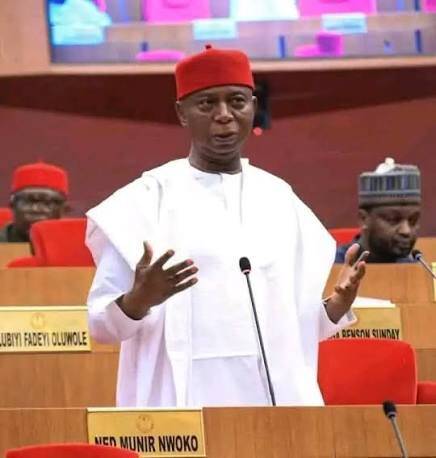
The Nigerian Senate has scheduled Wednesday, 22 July 2026, for a public hearing on a landmark bill seeking to amend the Nigeria Data Protection Act, 2023, to require major social media platforms operating in the country to establish physical offices within its territorial boundaries. The bill, sponsored by Senator Ned Munir Nwoko (APC, Delta North), who also chairs the Senate Committee on Reparations and Repatriation, has advanced to the public hearing stage, marking a significant step in the legislative process aimed at holding global tech giants accountable to Nigerian laws and consumers.
Senator Nwoko, in a statement made available to the News Agency of Nigeria (NAN) on Friday, 10 July 2026, described the public hearing as an opportunity for stakeholders, industry experts, civil society organisations, technology companies, legal practitioners, and members of the public to contribute to shaping a stronger and more responsive digital ecosystem for the country. He argued that Nigeria, as one of the world's largest and most active digital markets, with millions of citizens relying on social media platforms for communication, business, education, innovation, civic engagement, and entertainment, deserves a stronger corporate presence from global digital platforms operating within its jurisdiction.
According to the lawmaker, the bill, titled "A Bill for an Act to Amend the Nigeria Data Protection Act, 2023, to Mandate the Establishment of Physical Offices within the Territorial Boundaries of the Federal Republic of Nigeria by Social Media Platforms, and for Related Matters (SB. 648)," is not intended to restrict freedom of expression, regulate opinions, or interfere with the operations of digital platforms. Rather, he maintained, it seeks to ensure that companies deriving substantial economic value from Nigeria maintain a reasonable level of corporate presence and responsibility within the country. Nwoko noted that the absence of a physical presence in Nigeria continues to create significant challenges for users, regulators, and businesses alike, including difficulties in resolving user complaints, engaging with regulatory authorities, enforcing data protection laws, and ensuring consumer protection.
Nwoko stressed that a physical office would facilitate quicker resolution of user complaints, improve engagement with regulatory agencies, strengthen compliance with Nigeria's data protection laws, and encourage responsible corporate conduct, while fostering greater trust between these platforms and their Nigerian users. He also highlighted the significant economic opportunities the bill presents, including encouraging investment, creating jobs for Nigerian professionals, expanding opportunities for technology transfer, strengthening the digital economy, and supporting the growth of Nigeria's vibrant innovation ecosystem.
The bill has drawn comparisons to similar regulatory efforts in other jurisdictions, including Australia's battles with tech platforms over content moderation, the United Kingdom's Online Safety Act, and Kenya's Digital Services Tax. If passed, the legislation would require major social media companies—including Meta (Facebook, Instagram, WhatsApp), X (formerly Twitter), and ByteDance (TikTok)—to establish physical infrastructure, appoint locally based executive officers who can be held legally accountable to Nigerian courts and regulatory bodies, and ensure seamless integration with the Nigeria Data Protection Commission.
As the July 22 public hearing approaches, civil society organisations and digital rights advocates are expected to scrutinise the bill closely, with some raising concerns over potential state overreach and censorship. However, Senator Nwoko has preemptively addressed these concerns, insisting that the bill is not a Trojan horse for censorship but a necessary step to ensure that global tech companies contribute fairly to the Nigerian economy and are held accountable to the laws of the land. "Many multinational technology companies already maintain offices in countries where they have significant operations. Nigeria should not be an exception," he said. "Our size, talent, market potential and strategic importance justify a stronger corporate presence from global digital platforms operating within our jurisdiction."
📩 Stone Reporters News | 🌍 stonereportersnews.com
✉️ info@stonereportersnews.com | 📘 Facebook: Stone Reporters News | 🐦 X (Twitter): @StoneReportNew | 📸 Instagram: @stonereportersnews
Add comment
Comments