

Reported by: Oahimire Omone Precious | Edited by: Oravbiere Osayomore Promise.
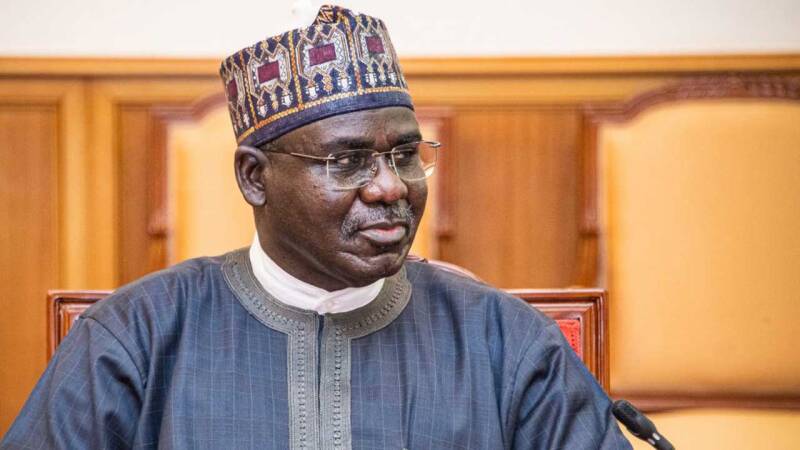
Former Chief of Army Staff, retired Lieutenant General Tukur Yusuf Buratai, has issued a stark warning to African nations, declaring that the continent can no longer rely on external military interventions to guarantee peace and must instead take full ownership of its security challenges through strengthened regional cooperation, indigenous capabilities, and coordinated home-grown strategies. Buratai delivered the address on Friday, 10 July 2026, while delivering the keynote speech titled "Africa's Priority Security Threats" at the 32nd Parliamentary Intelligence-Security Forum in Addis Ababa, Ethiopia, a gathering of legislators and security experts from across the continent.
In his address, Buratai identified five major security threats confronting Africa: terrorism and violent extremism, transnational organised crime, cybersecurity vulnerabilities, governance-related instability, and the erosion of sovereignty through external dependence. He argued that these threats have converged to create an unprecedented security crisis that demands a unified, African-led response. "Africa can no longer rely solely on external interventions," Buratai said, according to a report by security analyst Zagazola Makama. He urged governments across the continent to deepen regional cooperation, strengthen intelligence sharing, and invest significantly in home-grown security capabilities to address an increasingly complex and interconnected threat landscape.
Buratai described the Sahel region as the global epicentre of terrorism, noting that it now accounts for nearly half of all terror-related deaths worldwide. He cited alarming statistics to underscore the gravity of the situation, revealing that West Africa recorded approximately 450 terrorist attacks between January and November 2025, resulting in more than 1,900 fatalities. While acknowledging recent military gains in Burkina Faso under President Ibrahim Traoré, where government forces reclaimed about 72.7 per cent of territories previously occupied by insurgents by June 2025 through Operation Lalmassga, Buratai warned that the security situation remained fragile. He noted that jihadist groups, including Jama'at Nusrat al-Islam wal-Muslimin (JNIM), continued to launch deadly attacks despite intensified military operations that reportedly killed at least 400 militants in early 2026.
The former army chief also expressed deep concern over the withdrawal of Burkina Faso, Mali, and Niger from the Economic Community of West African States (ECOWAS), warning that the move had significantly weakened regional intelligence-sharing and collective security efforts. He cautioned that violent extremism was no longer confined to the Sahel, pointing to a sharp increase in attacks in northern Benin over the past three years, indicating a worrying spread of terrorism into coastal West African states. Buratai also highlighted the interconnected nature of transnational organised crime, noting that criminal networks involved in terrorism financing, piracy, arms trafficking, drug smuggling, and cybercrime were increasingly exploiting porous borders, digital technologies, and weak governance structures to expand their operations across the region.
Buratai identified cybersecurity as a growing national security concern, urging African governments to invest in cyber defence capabilities, protect critical digital infrastructure, and strengthen regional cooperation against cyber threats. He stressed that lasting security in Africa will depend on stronger institutions, enhanced intelligence cooperation, greater economic resilience, and sustained political commitment among African nations. "The cost of inaction is far greater than the cost of investment," Buratai said. "Every dollar donated to African-led security is a dollar saved from the human and economic devastation of unchecked terrorism."
His call for African-led solutions comes amid growing recognition that external military interventions, including those by the United States and France, have failed to deliver lasting peace in the Sahel and other conflict zones. Buratai's address at the Parliamentary Intelligence-Security Forum, which brought together lawmakers and security experts from across the continent, is seen as a significant push for a paradigm shift in Africa's approach to security governance. He urged African governments, policymakers, and security institutions to adopt coordinated, home-grown strategies capable of addressing the continent's evolving security challenges while safeguarding sovereignty and promoting sustainable peace and development.
Buratai's remarks also align with his earlier warnings that Nigeria's worsening security situation could deteriorate further if urgent measures are not taken. He has previously cautioned that political leaders, including ministers, senators, and governors, may become targets of bandits and insurgents if the current trajectory continues. He has also called for the expansion of the National Counter Terrorism Centre under the Office of the National Security Adviser, including the creation of state branches equipped with advanced technology and operational facilities for better coordination among security agencies.
The former army chief's intervention comes at a critical time when the Sahel and West Africa are grappling with a surge in extremist violence, military coups, and the breakdown of regional cooperation. His emphasis on African-led solutions reflects a growing sentiment among African leaders and security experts that the continent must take greater responsibility for its own security, rather than relying on external powers whose interests may not always align with those of African nations. As Buratai put it, lasting security in Africa will require stronger institutions, enhanced intelligence cooperation, greater economic resilience, and sustained political commitment among African nations. The question now is whether African governments will heed his call and invest in the home-grown solutions needed to address the continent's most pressing security challenges.
📩 Stone Reporters News | 🌍 stonereportersnews.com
✉️ info@stonereportersnews.com | 📘 Facebook: Stone Reporters News | 🐦 X (Twitter): @StoneReportNew | 📸 Instagram: @stonereportersnews
Add comment
Comments