

Reported by: Oahimire Omone Precious | Edited by: Oravbiere Osayomore Promise.
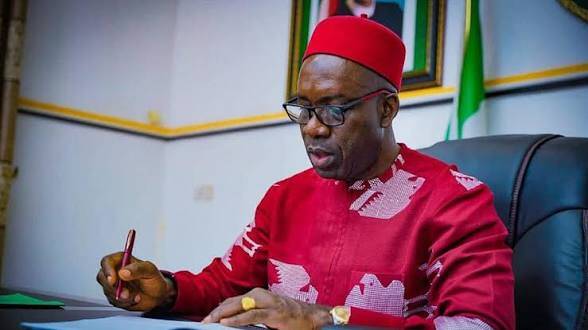
The Governor of Anambra State, Professor Chukwuma Soludo, and the Minister of Foreign Affairs, Ambassador Bianca Odumegwu-Ojukwu, have thrown their full weight behind the Reserved Seats for Women Bill currently before the National Assembly, declaring that Nigeria's democracy cannot achieve its full potential while women remain grossly underrepresented in governance and decision-making positions. The duo made the call on Saturday, 11 July 2026, at the maiden National Women's Summit of the All Progressives Grand Alliance (APGA), held under the theme "Advancing Women's Inclusion in Politics and Governance: Addressing Barriers to Women's Participation and Representation" in Awka, the Anambra State capital.
Speaking through his deputy, Dr Onyekachukwu Ibezim, Governor Soludo lamented the sharp decline in women's representation in Nigeria's legislative bodies, warning that the trend threatens the country's democratic development. "I look at the representation of women in the Senate and the House of Representatives and it is dropping. There was a time it rose to about 10 percent, but today it is even less than five percent. We need to ask ourselves what is happening and begin to address the root causes," Soludo said. He emphasised that women have consistently demonstrated competence and effectiveness in leadership and should be given greater opportunities to contribute to governance and national development. "Any structure you create and hand over to women will grow from strength to strength. Our experience at the grassroots has shown that women are highly committed and effective when entrusted with responsibility," he added.
Minister Bianca Odumegwu-Ojukwu, in her address, described women's exclusion from decision-making positions as a fundamental weakness in Nigeria's governance architecture, arguing that the country cannot afford to sideline nearly half of its population. "Today, women occupy only a small fraction of seats in our National Assembly, State Houses of Assembly and executive political offices. This imbalance is not because women lack competence, courage or leadership qualities. It reflects structural barriers that have persisted for decades," she said. The minister identified the high cost of political participation, political violence and intimidation, cultural stereotypes, inadequate campaign financing, and unequal access to party structures as the major obstacles preventing women from seeking elective office. "When women are excluded from decision-making, society loses valuable perspectives and opportunities. Inclusive governance consistently produces stronger institutions, more balanced policies and more sustainable development outcomes," she stated.
The Foreign Affairs Minister also threw her full weight behind the Reserved Seats for Women Bill, describing it not as a favour to women but as a necessary democratic corrective aimed at addressing historical imbalances. "This proposal should not be viewed as a favour to women. It is a practical mechanism to address longstanding barriers that have prevented capable women from fully participating in governance," she said. Drawing from her diplomatic engagements, Ojukwu cited countries such as Tanzania and Namibia, where deliberate affirmative measures and constitutional guarantees have significantly improved women's representation in governance, strengthening democratic institutions and economic performance.
APGA's National Woman Leader, Elizabeth Nwokeocha, who convened the summit, expressed concern over the declining number of women who secured tickets in recent primary elections, calling for urgent action to reverse the trend. "The number of women who secured tickets in recent primary elections is lower than what we recorded in previous elections. We need urgent action to reverse this trend," she said. The APGA National Chairman, Sly Ezeokenwa, announced that the party is committed to women's inclusion through concrete actions, including reducing the cost of nomination forms for female aspirants by granting them a 50 percent discount.
The Reserved Seats Bill, which is part of the ongoing constitutional review, proposes the creation of additional legislative seats to be contested and filled only by women in the National Assembly and State Houses of Assembly. If enacted, the bill will amend the 1999 Constitution to create reserved seats for women, aiming to address Nigeria's persistent gender imbalance in political representation. The bill, which has been passed for second reading in the National Assembly, has gained momentum in recent months, with key political figures and civil society groups rallying behind it. The call by Soludo and Bianca Ojukwu adds significant weight to the growing campaign for the bill's passage, as Nigeria continues to grapple with one of the lowest rates of women's political representation in Africa.
📩 Stone Reporters News | 🌍 stonereportersnews.com
✉️ info@stonereportersnews.com | 📘 Facebook: Stone Reporters News | 🐦 X (Twitter): @StoneReportNew | 📸 Instagram: @stonereportersnews
Add comment
Comments