

Reported by: Oahimire Omone Precious | Edited by: Oravbiere Osayomore Promise.
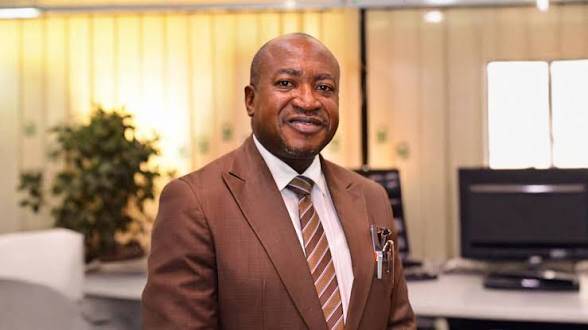
The Vice-Chancellor of the University of Abuja (UniAbuja), Professor Hakeem Fawehinmi, has declared that artificial intelligence is an irreversible reality in higher education but can never replace the core elements of human learning, critical thinking, and independent judgement, even as he navigated a whirlwind first six months in office marked by a false NELFUND diversion scandal, an acute infrastructure deficit, and the historic renaming of the institution to Yakubu Gowon University. In an exclusive interview with TheCable's Promise Eze, published on Saturday, 11 July 2026, Fawehinmi offered a candid assessment of his tenure so far, addressing the pressing challenges facing one of Nigeria's foremost public universities and outlining his vision for transforming it into a world-class 21st-century institution. Fawehinmi assumed office as the eighth substantive Vice-Chancellor of the University of Abuja on 10 February 2026, succeeding Professor Mathew Adamu, who had served in an acting capacity. Before his appointment, he served as Vice-Chancellor of the Nigerian British University and is a respected scholar of clinical anatomy and biomedical anthropology with over three decades of academic, research, and administrative leadership at national and international levels.
Fawehinmi, who has spearheaded the launch of what has been described as Nigeria's first AI-powered academic research ecosystem, insisted that while artificial intelligence is here to stay and cannot be ignored, it must be deployed as a tool to support learning rather than replace it. He explained that AI can serve as a valuable research assistant, and that one of the university's researchers had already developed an innovation that supports thesis writing and bibliography preparation for academic research. The university has implemented robust plagiarism detection systems designed to identify inappropriate use of AI-generated content, and every academic submission is subjected to quality assurance measures. Fawehinmi made it clear that students are not expected to rely on AI for their academic work, and that during examinations, they do not have access to electronic devices or AI tools. He emphasised that the ultimate test remains whether students have acquired the knowledge, competence, and skills required to justify the certificates awarded by the institution.
One of the most challenging episodes of Fawehinmi's early tenure was a controversy that erupted in February 2026 when an online publication accused him and other senior officials of diverting multibillion-naira Nigerian Education Loan Fund grants meant for indigent students. The university received about N256.1 million on 29 January 2026 for 245 approved beneficiaries in the 2025/2026 academic session. Fawehinmi described the allegations as completely false and fake news, insisting that there was absolutely no truth to the unverified report. He explained that the university had responded professionally by immediately issuing clarifications and presenting the facts, and had also taken steps to trace the origin of the false report. The university's Governing Council and NELFUND itself publicly debunked the claims, reiterating their confidence in Fawehinmi's management and its commitment to transparency, due process, and institutional integrity.
Fawehinmi detailed the university's actual processes for handling NELFUND disbursements, explaining that whenever funds are received, they are processed and paid to beneficiaries without delay. He noted that he had consistently insisted that students should receive their funds as quickly as possible, and that when students experienced delays due to incomplete banking details, they were invited to provide the necessary information so payments could be made promptly. In some cases, where students faced imminent examinations, the university paid their fees upfront after confirming that they were NELFUND beneficiaries, with the understanding that the funds would be recovered once NELFUND released the disbursement. He maintained that the university does not withhold students' funds and that the allegations were baseless.
Fawehinmi also addressed the acute infrastructure and security challenges facing the university, which has a student population of nearly 40,000 but accommodation for fewer than 10,000. He disclosed that the Tertiary Education Trust Fund has commenced the construction of two new student hostels through its annual and special high-impact intervention programmes, which will significantly increase the university's accommodation capacity. On security, he said the university has strengthened its internal security architecture, with personnel patrolling the campus around the clock, and is working with TETFund on a project to modernise surveillance systems along the perimeter fence. He also revealed that he has drawn the attention of the Minister of the Federal Capital Territory, Nyesom Wike, to the university's security needs, noting that as the only conventional federal university in the FCT, the institution requires additional government support. He acknowledged that while the university had not experienced any major security incidents such as kidnapping for ransom, there had been a few cases of burglary and occasional breaches of the perimeter fence by illegal settlers, to which the university had responded proactively.
On transportation, Fawehinmi said the university has put most of its shuttle buses back on the road, providing free services for staff and charging modest fares for students, which has substantially improved mobility between the mini-campus in Gwagwalada and the main campus. He also confirmed that the university has been renamed Yakubu Gowon University in honour of the former Head of State, but is awaiting the formal gazetting of the Act by the appropriate arm of government before the new name can be used for legal or formal transactions. For now, the university refers to itself as the University of Abuja, now Yakubu Gowon University, in recognition of the change and in honour of Yakubu Gowon.
Looking ahead, Fawehinmi said he wants the university to be known as a university of excellence and a true university of the federation, where outstanding teaching, impactful research, and the production of globally competitive graduates are the norm, and where people from every state, ethnic group, and religion come together in an atmosphere of unity and mutual respect. He wants to leave behind a university where every young person who passes through its corridors is equipped to succeed and contribute meaningfully to society, and where service delivery is fully digitised, ICT is integrated into administration, teaching, and research, and where cutting-edge research earns recognition among the leading universities in the region and across the world. As Fawehinmi continues to navigate the complexities of leading one of Nigeria's largest universities, his interview offers a glimpse into the challenges and opportunities facing higher education in the country, and the delicate balance between embracing technological innovation and preserving the fundamental values of learning and human judgement.
📩 Stone Reporters News | 🌍 stonereportersnews.com
✉️ info@stonereportersnews.com | 📘 Facebook: Stone Reporters News | 🐦 X (Twitter): @StoneReportNew | 📸 Instagram: @stonereportersnews
Add comment
Comments