

Reported by: Oahimire Omone Precious | Edited by: Oravbiere Osayomore Promise.
The South African government has firmly rejected calls for an apology over remarks made by Minister in the Presidency Khumbudzo Ntshavheni, who suggested that Nigerian nationals were running drug dens in South Africa, insisting that the comments were taken out of context and did not amount to an accusation against an entire nationality. The clash occurred on Sunday, 12 July 2026, during a press briefing of the Inter-Ministerial Committee (IMC) on Migration held at Tshedimosetso House in Pretoria, where Nigerian journalist Ireti Bakare-Yusuf pressed Justice and Constitutional Development Minister Mmamoloko Kubayi on whether Ntshavheni would apologise for her earlier remarks.
The controversy stems from comments Ntshavheni made earlier in July 2026 during a Cabinet briefing, where she responded to Nigeria's demand for compensation for properties abandoned by Nigerians who fled xenophobic attacks in South Africa. Instead of agreeing to compensation, Ntshavheni stated that South Africa would be interested to know where the drug dens of Nigerians are so they could be cleaned up. The remark was widely condemned in Nigeria, with the Ministry of Foreign Affairs describing it as inflammatory and unacceptable.
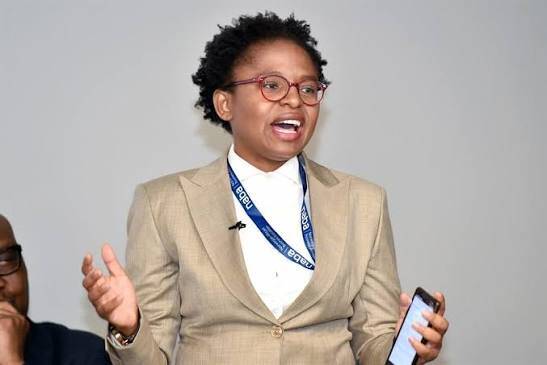
At Sunday's briefing, Bakare-Yusuf, who hosts Nigeria Info's Borderlines programme, read Ntshavheni's quote back to Kubayi and asked directly whether the minister would apologise. She pointed out that Nigerians in South Africa work as doctors, lawyers, and other professionals, and challenged the stereotyping, asking whether Kubayi thought making such statements was smart and whether she would like to apologise to Nigerians, noting that she was a Nigerian sitting in front of her and could assure her that she did not do drugs, neither did her father, neither did her friends, adding that the vast majority of Nigerians in South Africa are doctors, immigration lawyers, and professionals in various fields, and questioning why the focus was on drugs.
Kubayi rejected the demand outright, insisting that Ntshavheni had spoken in her official capacity and had not accused an entire nationality of criminality. She stated that she did not think Minister Ntshavheni needed to issue an apology because when she spoke, she spoke on behalf of South Africa. She maintained that Ntshavheni's comments reflected complaints raised by South Africans themselves about drug activity in areas like Hillbrow and Sunnyside, rather than an accusation against Nigerians as a whole, insisting that Ntshavheni never said all Nigerians are drug dealers.
Kubayi also stressed that any formal grievance from the Nigerian government should be routed through diplomatic channels via the Department of International Relations and Cooperation rather than raised at a press briefing. She stated that if the Nigerian government felt that a South African minister had done something wrong, the appropriate channel was for that to be dealt with through diplomatic channels, and she did not think confrontation was appropriate at that point.
The exchange grew tense as the journalist repeatedly interjected during Kubayi's responses, prompting the minister to appeal for decorum, asking to be respected as a Minister of the Republic of South Africa. In footage that has since gone viral, a South African official later walked up to Bakare-Yusuf, threatening to remove her from the briefing over her questioning. The confrontation adds to weeks of strained relations between Abuja and Pretoria following waves of xenophobic violence that have forced Nigerians to flee businesses and homes in South Africa, with the Federal Government evacuating more than 1,000 citizens in four batches.
Sunday's briefing also provided an update on South Africa's broader repatriation drive, with officials reporting that 53,449 migrants have been repatriated so far, roughly 80 per cent of them Malawian nationals. Acting Police Minister Firoz Cachalia echoed Kubayi's sentiments, saying the government was responding to the concerns of South Africans and would not be dictated to by foreign states. Kubayi emphasised that South Africa is a sovereign state and its right to make and enforce laws must be respected. The rejection of the apology demand is likely to further strain diplomatic relations between Nigeria and South Africa, which have been under significant pressure following the xenophobic attacks and the subsequent evacuation of Nigerian citizens. For now, the South African government has made its position clear: Ntshavheni's remarks stand, and no apology will be forthcoming.
📩 Stone Reporters News | 🌍 stonereportersnews.com
✉️ info@stonereportersnews.com | 📘 Facebook: Stone Reporters News | 🐦 X (Twitter): @StoneReportNew | 📸 Instagram: @stonereportersnews
Add comment
Comments