

Reported by: Ijeoma G | Edited by: Oravbiere Osayomore Promise.
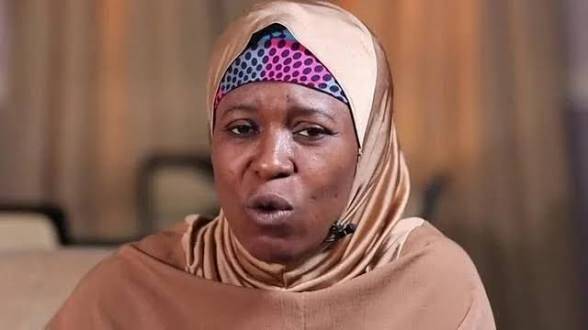
Human rights activist and co-convener of the Bring Back Our Girls movement, Aisha Yesufu, has made a sweeping allegation that Nigerian politicians maintain some religious leaders on their payroll to shape public opinion and legitimise bad governance, while ordinary citizens contribute their modest offerings in the belief that they are serving God. Yesufu made the claim on Monday, 13 July 2026, in a post on her verified X handle, reacting to a video of the Minister of Works, Dave Umahi, leading a prayer session. The activist dismissed the spectacle as a cynical display, arguing that Nigerians are being deceived by leaders who are themselves engaged in intensive prayer campaigns while simultaneously impoverishing the masses.
In her post, Yesufu directly addressed Nigerians who place their faith in religious leaders who have been co-opted by the political class. She wrote that Nigerians want to pray their way to good governance, while the same politicians giving them bad governance are out-praying them on everything. She added that politicians even have religious rulers on their payroll, and that while citizens bring sadaqah and tithes in thousands, politicians bring theirs in billions. The activist's comment was a direct response to a video of the Minister of Works leading a prayer session, which she interpreted as part of a broader pattern of performative religiosity designed to pacify the populace while the government continues its policies of economic strangulation and neglect. She argued that the same politicians who preside over poverty, insecurity and corruption are the ones who present themselves as devout, using religion to mask their malfeasance and to maintain a grip on power.
Yesufu's latest remarks are consistent with her long-standing criticism of the intersection of religion and politics in Nigeria. In previous statements, she has described religious rulers in Nigeria as being worse than political rulers, accusing them of keeping the people enslaved and selling cheap miracles to a desperate populace. She has also argued that bad governance is not merely a political failure but a cornerstone for those who profit from people's struggles, suggesting that religious leaders benefit from the perpetuation of poverty and ignorance because it creates a market for their services.
Yesufu has previously described the relationship between political and religious rulers as symbiotic. According to her, while religious rulers need bad governance to sell their cheap miracles, political rulers need the citizens to be subdued and compliant, a condition that religious leaders help to maintain through their influence. This critique places her squarely within a tradition of Nigerian social commentary that has long questioned the moral authority of religious figures who align themselves with corrupt political actors.
The timing of Yesufu's statement is significant. It came shortly after a video of Minister of Works Dave Umahi leading a prayer session circulated widely on social media. The video, which showed Umahi in a posture of prayer, drew mixed reactions from Nigerians. While some praised the minister for his display of piety, others, including Yesufu, viewed it as a hollow gesture from a government that has presided over worsening economic conditions, rising insecurity, and widespread poverty. Yesufu's post effectively channeled the frustration of many Nigerians who have grown cynical about the performative religiosity of public officials.
As of the time of this report, no religious leader or political figure had issued a direct response to Yesufu's allegations. However, her post has already sparked significant debate on social media, with many Nigerians echoing her sentiments and questioning the integrity of religious leaders who are perceived to be in the pockets of politicians. Others have defended religious leaders, arguing that Yesufu's claims are sweeping and lack concrete evidence. The debate reflects a broader societal tension in Nigeria, where religion plays a central role in public life and where the line between genuine faith and political manipulation is often blurred.
Yesufu's claim that politicians have religious leaders on their payroll is not new, but its repetition underscores the deep-seated mistrust that many Nigerians feel towards both their political and religious institutions. As the country approaches the 2027 general elections, such allegations are likely to intensify, with activists and civil society groups increasingly scrutinising the relationship between political power and religious authority. For now, Yesufu's words serve as a stark reminder that in Nigeria's complex socio-political landscape, the altar and the ballot box are often more closely connected than many would like to admit.
📩 Stone Reporters News | 🌍 stonereportersnews.com
✉️ info@stonereportersnews.com | 📘 Facebook: Stone Reporters News | 🐦 X (Twitter): @StoneReportNew | 📸 Instagram: @stonereportersnews
Add comment
Comments