

Reported by: Oahimire Omone Precious | Edited by: Oravbiere Osayomore Promise.
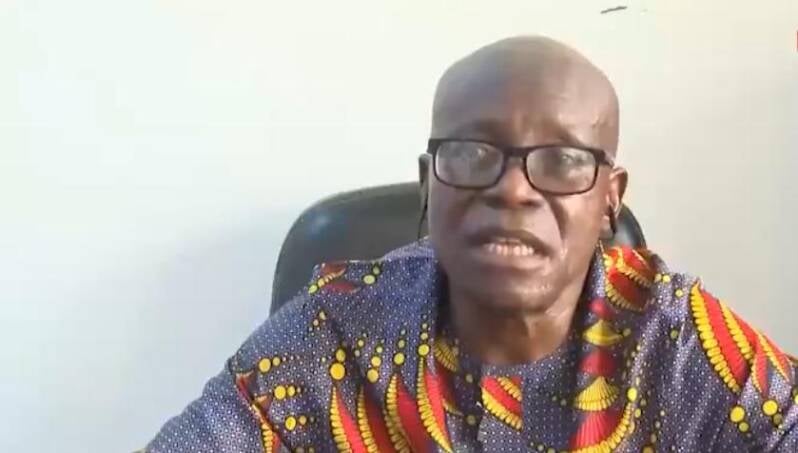
Former Abia State Commissioner for Information and veteran journalist Eziuche Ubani has stirred a fresh debate on press freedom in Nigeria, arguing that journalists enjoyed greater operational freedom during the country's military era than under the current democratic dispensation. Speaking on the state of the media industry in an interview on ARISE News on Monday, 13 July 2026, Ubani said the democratic ideals that many activists and journalists fought for have failed to translate into a freer press, lamenting that the reality has been the opposite of what was expected.
"For me, we had more space to operate as journalists during the military era than we do in this democratic era," Ubani declared. He expressed deep disappointment that after decades of struggle against military authoritarianism, journalists today face mounting legal, financial, and political pressures that make it increasingly difficult for the press to perform its watchdog role. "Looking back, it feels like we laboured in vain. The democracy we fought for is not being practised," he added.
Ubani alleged that journalists and media organisations are increasingly being intimidated, while defamation laws are being expanded and deployed against media practitioners. He argued that the legal environment for journalists has become more hostile under democracy than it was under military rule, where the press was at least able to operate with a clearer sense of its adversarial role. His comments come amid growing concerns over the use of cybercrime and defamation laws to silence critics and investigative journalists. The Nigerian press has faced a series of legal challenges in recent years, with several journalists and media houses prosecuted for critical reporting.
Beyond legal pressures, Ubani highlighted the severe economic challenges confronting the media industry. He noted that the withdrawal of multinational advertising support and the accumulation of unpaid advertising debts have weakened many media organisations. The former commissioner also pointed to the rapid growth of digital platforms and citizen journalism, which have significantly disrupted traditional media. He observed that many people now bypass conventional news organisations to publish information directly online, reducing the revenue and relevance of established media houses.
Despite these challenges, Ubani stressed the need to safeguard press freedom and strengthen the media, describing a vibrant and independent press as essential to the survival of democracy in Nigeria. His remarks have reignited conversations about the state of press freedom in Nigeria, with many journalists and civil society groups echoing his concerns. The statement also draws attention to the paradox of Nigeria's democratic transition: while the country has maintained civilian rule since 1999, the space for media freedom has not expanded as many had hoped, with journalists continuing to face arrest, intimidation, and legal harassment.
Ubani's comments come at a time when Nigeria's media landscape is grappling with multiple challenges. The Nigerian press has been at the forefront of the fight for democracy, with many journalists paying the ultimate price during the military era. However, critics argue that the democratic governments that followed have not done enough to protect press freedom and have instead used legal instruments to stifle dissent. The use of cybercrime laws to prosecute journalists has been particularly contentious, with many arguing that these laws are being weaponised against the press.
The conversation has also sparked reactions on social media, with some Nigerians agreeing with Ubani's assessment while others have questioned the historical accuracy of his claim, pointing to the brutal repression of journalists under military regimes, including the infamous Decree No. 4 of 1984, which severely curtailed press freedom. However, Ubani's argument centres on the operational space available to journalists, suggesting that while the military era was repressive, journalists were able to function as a clear opposition to the state, whereas under democracy, the lines have become blurred, and the press is increasingly caught between political and economic pressures.
📩 Stone Reporters News | 🌍 stonereportersnews.com
✉️ info@stonereportersnews.com | 📘 Facebook: Stone Reporters News | 🐦 X (Twitter): @StoneReportNew | 📸 Instagram: @stonereportersnews
Add comment
Comments