

Reported by: Ijeoma G | Edited by: Oravbiere Osayomore Promise.
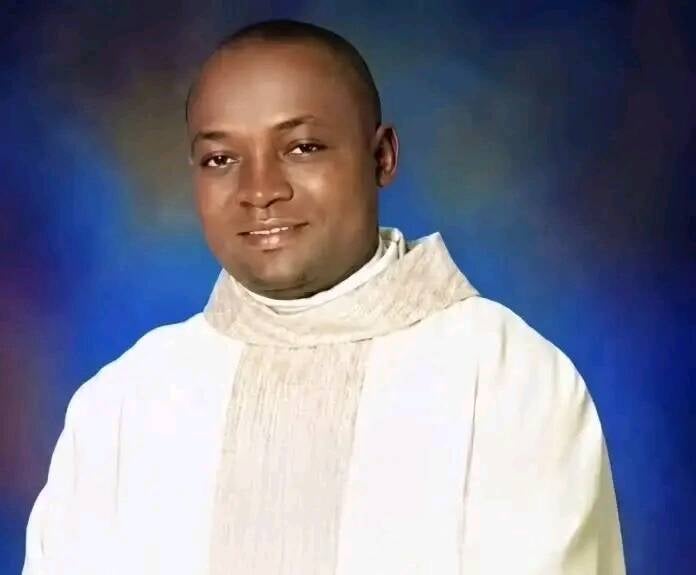
The Reverend Benjamin Okwy Madu, a 54-year-old Nigerian Catholic priest serving in Massachusetts, died by suicide on July 2, 2026, at his residence in Lynnfield, days after his home diocese ordered him to return to Nigeria earlier than planned and as his religious worker visa was set to expire under a US immigration freeze affecting Nigerian nationals. The priest, who had served as a hospital chaplain at Salem Hospital and ministered at three Cape Ann churches since 2021, had repeatedly expressed deep fear about returning to Nigeria, where Catholic clergy have increasingly become targets of kidnapping, assassination, and violent attacks. His death, confirmed by Boston Archbishop Richard Henning in an internal email to fellow priests, has sparked outrage among Nigerian diaspora and Christian advocacy groups, who are demanding that the US government halt deportations and grant Temporary Protected Status to Nigerian nationals.
Born in Abor, Nigeria, on May 15, 1972, Madu was ordained at St. Theresa Cathedral in Abakaliki, Ebonyi State, and would have celebrated his 25th anniversary in the priesthood on July 7, just five days after his death. He had worked in the Archdiocese of Boston for nearly six years under consecutive R-1 religious worker visas, with his most recent visa due to expire on July 29. Under US immigration regulations, religious workers seeking to renew their R-1 visas are required to leave the country before applying for a new one. However, the Trump administration had suspended the processing of some immigration cases for nationals of 75 countries, including Nigeria, effectively closing any path for Madu to extend his stay.
The Diocese of Abakaliki leadership had instructed Madu to return to Nigeria even earlier than his visa deadline, ahead of a new assignment scheduled to begin on August 4. Bishop Ernest Obodo, the apostolic administrator of the diocese, told the National Catholic Register that he directed the priest to come home early so as not to overstay his visa and to give him an opportunity to rest and prepare for his new assignment. But Madu had made it clear he did not want to go. In a farewell message posted to his parish's website days before his death, he wrote: "Sincerely, it is not my wish to return home right now, but circumstances beyond my control have warranted that my time in the United States come to an end. My heart is broken, yet my joy remains". He added that if ever given the chance to minister again to the people of Gloucester and Rockport, he would "gladly do it all over again".
The priest's distress had been building for weeks. On June 14, Madu suffered a panic attack while driving to St. Joachim Church in Rockport to celebrate Sunday Mass and was treated at a hospital emergency department. The following week, during Mass on June 21, he announced to parishioners that he would be returning to Nigeria, telling them that "his heart was shattered". A colleague and four parishioners who knew the priest told the Register that Madu never explicitly said why he feared returning, but they noted a significant change in his outlook after the illness and death of Bishop Peter Nworie Chukwu, who led his home diocese, on April 10. "He was very sad, and it changed things for him. There was a level of trust there that he lost," said Curt Williams, a chaplain at Salem Hospital who spoke with Madu at least twice a week.
The security situation for Catholic clergy in Nigeria has deteriorated sharply in recent years. In the country's Middle Belt, particularly in Plateau, Benue, and Kaduna states, radical Islamist terrorists and armed insurgent militias have carried out systematic raids on Christian farming villages, with over 50,000 Christians slaughtered and thousands of churches destroyed. Priests have been abducted for ransom, and some have been murdered by their kidnappers or have died during captivity. The US-Nigeria Civil Society Coalition, in a statement, said Madu "suffered acute emotional distress and panic over the prospect of returning to a region where Catholic clergy are actively targeted for kidnapping and assassination". The coalition pointed to the frozen visa renewal process under current US immigration restrictions as a critical factor in his death.
The tragedy has prompted an outpouring of grief on Massachusetts' North Shore, where Madu was beloved by parishioners who knew him as "Father Ben." Father Jim Achadinha, pastor of the Catholic communities of Gloucester and Rockport, described his death as a "devastating loss," saying Madu "served Holy Family Parish and Our Lady of Good Voyage Parish with true joy, kindness, and generosity". Arlene Lesch, a parishioner at Holy Family Church, told the Boston Globe she was among those who contacted political leaders pleading for a way for Madu to remain in the US. Boston Archbishop Richard Henning extended "our prayers and heartfelt condolences to his family, brother priests and friends in Nigeria as well as the many people Fr. Benjamin Madu ministered to here in Cape Ann and at Salem Hospital".
The Essex County District Attorney's Office confirmed that Madu's death is under investigation by the Massachusetts State Police Detective Unit and the Lynnfield Police Department, though a spokesperson said foul play was not suspected. An autopsy was expected to be carried out. While the Archdiocese's public statement on his death did not describe it as a suicide, Archbishop Henning informed fellow priests in an internal email that Madu had "tragically took his own life".
In the wake of the tragedy, the US-Nigeria Civil Society Coalition and other advocacy groups have called on the Trump administration to suspend deportations of Nigerians and grant Temporary Protected Status to Nigerian nationals in the country. The coalition noted that the previous US administration had cleared thousands of displaced Christians in refugee camps in Cameroon for resettlement, but the current administration's blanket visa freeze halted those resettlements entirely. The coalition also pointed to an ongoing immigration ban that has effectively placed Nigeria under strict restrictions, while the US Embassy in Nigeria continues to collect millions of dollars in non-refundable visa application fees from desperate families.
For Madu, the convergence of a rigid immigration system, the death of his trusted bishop, and the terror of returning to a homeland where clergy are hunted proved unbearable. His final message to his congregation captured the depth of his anguish: "I will miss the home I found away from home, a mother far from my mother, a father far from my father, and a people far from my own people". His death has become a symbol of the human cost of restrictive immigration policies and the insecurity that continues to drive Nigerians to seek refuge abroad.
📩 Stone Reporters News | 🌍 stonereportersnews.com
✉️ info@stonereportersnews.com | 📘 Facebook: Stone Reporters News | 🐦 X (Twitter): @StoneReportNew | 📸 Instagram: @stonereportersnews
Add comment
Comments