

Reported by: Ijeoma G | Edited by: Oravbiere Osayomore Promise.
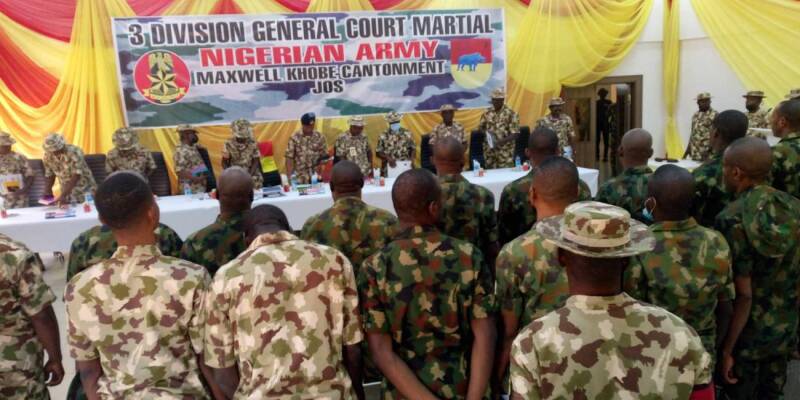
The ongoing General Court Martial trying 36 Nigerian military personnel over an alleged plot to overthrow President Bola Tinubu's government was abruptly stalled on Wednesday, July 15, 2026, after one of the defendants, Captain M.L. Muhammad, reportedly collapsed while being held in a 30-foot underground detention facility operated by the Defence Intelligence Agency. Multiple security sources familiar with the proceedings told SaharaReporters that the trial could not continue following the medical emergency involving the officer, who had been suffering from severe complications allegedly caused by prolonged exposure to radiation inside the secret facility. According to the sources, Captain Muhammad collapsed on Tuesday night after experiencing convulsions, repeated vomiting, seizures, and difficulty breathing, conditions they linked to the harsh environment of the underground confinement. As of Wednesday morning, his fate remained uncertain, with sources expressing deep concern over whether he was still alive.
The incident has cast a stark spotlight on the conditions inside the DIA's underground detention facility, where officers accused of plotting against the state have been held for months. The sources revealed that the detainees are being confined in a 30-foot underground cell where the only source of breathable air is supplied through an artificial air-conditioning system, and where a radiation-emitting signal-jamming device has been installed, allegedly causing severe health complications among the inmates. A senior security source told SaharaReporters that Captain Muhammad had been removed from the "jammer" and the confined detention facility after his condition deteriorated, but there was no confirmation on whether he had been taken to a hospital or if he was alive. "We don't know now whether he is in the hospital receiving treatment. We don't know whether he is alive or he is dead," the source said.
The General Court Martial, which was inaugurated by the Defence Headquarters to try the 36 personnel over allegations of conspiracy to commit treason, had been proceeding under tight security, with the accused officers arriving at the court in an Army Headquarters Garrison bus followed by a DIA detention operations vehicle. However, the proceedings have been marred by allegations of inhumane treatment, with families and lawyers previously barred from visiting the detained officers. The collapse of Captain Muhammad represents a dramatic escalation in the controversy surrounding the trial, raising urgent questions about the welfare of the accused and the legality of their detention conditions.
Multiple sources have alleged that the detained officers are being subjected to "illegal and dehumanising" conditions in the underground facility, where they have developed hearing problems, memory loss, vision impairment, persistent migraines, dizziness, breathing difficulties, and loss of appetite as a result of the radiation-emitting jamming device. One source explained that the device was introduced after a search conducted by security officials, who suspected that some of the detained officers had smuggled food items into the facility. The radiation exposure, combined with the confined space and lack of natural light, has taken a devastating toll on the health of the inmates, with at least five of them previously reported to be critically ill.
The timing of Captain Muhammad's collapse has further complicated the proceedings, as the court was scheduled to continue its hearings on Wednesday. The suspension of the trial has added to the growing outrage over the handling of the alleged coup plotters, with human rights groups and civil society organisations calling for an independent investigation into the conditions of their detention. The families of the detained officers have previously raised alarms over the deteriorating health and welfare of their loved ones, claiming that months of confinement have left several of them suffering from physical injuries, failing eyesight, and severe respiratory issues. They have also alleged that the officers have been denied access to lawyers and family members for more than 180 days, despite repeated appeals and formal requests.
The Defence Headquarters has maintained that the accused officers are being tried in accordance with military justice procedures and that the court martial will ensure fairness and due process. However, the latest developments have undermined these assurances, with sources within the DIA suggesting that the harsh conditions are part of a deliberate strategy to break the will of the detainees. The revelation that officers are being held in an underground facility with radiation-emitting devices has drawn comparisons to interrogation techniques used in covert operations, raising serious legal and ethical questions about the treatment of military personnel awaiting trial.
The alleged coup plot, which surfaced in October 2025, led to the arrest of officers ranging from the rank of captain to brigadier-general, who were accused of planning to overthrow President Tinubu's government. The suspects were initially held at the DIA headquarters before being moved to the underground facility. The military has described the arrests as a response to "indiscipline" and "career stagnation," but sources within the intelligence community have insisted that the real reason was a thwarted coup attempt. The trial of the 36 officers has been closely watched, with observers noting that the proceedings could have far-reaching implications for civil-military relations in Nigeria.
The collapse of Captain Muhammad has also reignited debate over the use of military tribunals to try coup suspects, with legal experts arguing that the accused should be tried in civilian courts to ensure transparency and adherence to due process. The involvement of civilians in the alleged plot has further complicated the legal landscape, as they cannot be tried in a military court. The suspension of the court martial due to the health crisis of one of the defendants has only added to the perception that the trial is being conducted in an atmosphere of secrecy and coercion.
As of the time of filing this report, the Defence Intelligence Agency and the Defence Headquarters had not issued an official statement on the condition of Captain Muhammad or the status of the court martial. The uncertainty surrounding his fate has deepened the anxiety among the families of the detained officers, who have been demanding answers and access to their loved ones. The incident has also prompted calls for an independent medical evaluation of all the detainees to assess the impact of the detention conditions on their health.
The suspension of the General Court Martial marks a critical juncture in one of Nigeria's most high-profile military trials in recent years. The health crisis of Captain Muhammad has exposed the hidden realities of the DIA's underground detention facility, where the line between justice and brutality appears to have been blurred. As the nation awaits clarity on the officer's condition and the future of the trial, the case has become a symbol of the broader challenges facing Nigeria's security institutions in balancing the imperatives of national security with the fundamental rights of the accused.
📩 Stone Reporters News | 🌍 stonereportersnews.com
✉️ info@stonereportersnews.com | 📘 Facebook: Stone Reporters News | 🐦 X (Twitter): @StoneReportNew | 📸 Instagram: @stonereportersnews
Add comment
Comments