

Reported by: Puis Althea | Edited by: Oravbiere Osayomore Promise.
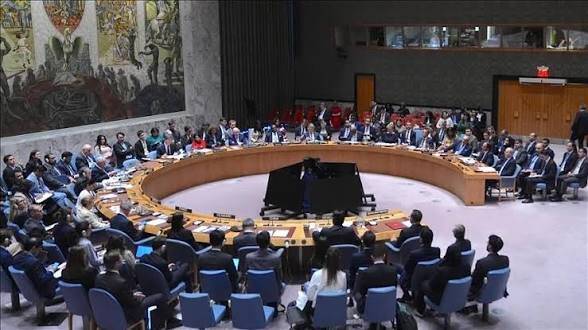
The United Nations Security Council has received a stark warning over the deteriorating security situation in Nigeria and the broader West African region, with the UN Special Representative revealing that at least 1,258 civilians were killed in Nigeria between January 1 and February 10, 2026, alone. Leonardo Santos Simão, the Special Representative of the UN Secretary-General and Head of the UN Office for West Africa and the Sahel, delivered the briefing to the Security Council on Tuesday, July 14, 2026, presenting the Secretary-General's latest report (S/2026/537), which covers developments from November 29, 2025, to June 30, 2026. The report painted a grim picture of a region increasingly plagued by terrorist violence, transnational organised crime, and intercommunal conflict, with Nigeria bearing a significant portion of the human cost.
Simão told the 15-member council that three broad trends stand out in the region: the concerning security situation, the renewed momentum for dialogue and cooperation, and the democratic developments occurring in the region. He emphasised that the threat posed by terrorists and other non-state armed groups remains acute, particularly in the central Sahel and northern Nigeria, with these groups now rapidly targeting coastal states in the Gulf of Guinea. In his presentation, the Special Representative highlighted the shocking civilian casualty figures from Nigeria, noting that between January 1 and February 10, 1,258 civilians were killed, including 170 in a single attack on February 3 in Kwara State by a Boko Haram splinter group. The violence has continued unabated, with the report documenting ongoing attacks, kidnappings, and intercommunal bloodshed that have resulted in high levels of civilian casualties across the North and Middle Belt regions.
The UN envoy also raised alarm over the evolving tactics of terrorist groups, warning that they are increasingly using advanced technologies such as drones, sophisticated communication devices, and cryptocurrencies to coordinate and finance their operations. He noted that attacks are now coordinated across multiple fronts, including across international borders, and their activities increasingly intersect with transnational organised crime, creating a complex and interconnected security threat. Simão also highlighted the growing menace of drug trafficking, production, and consumption in the region, which is rapidly affecting coastal states, with youth being the principal victims and drug syndicates reportedly threatening political and public institutions in some countries. Humanitarian access remains severely constrained in many areas, while funding shortfalls are reducing the reach of life-saving assistance, with women, children, and young people bearing the brunt of displacement, insecurity, and rights violations.
Despite the bleak security landscape, Simão noted some positive developments, pointing to a renewed momentum for dialogue and a shift from confrontation toward collaboration that is beginning to yield concrete results. He also flagged peaceful elections in Benin, Cabo Verde, Côte d'Ivoire, and Guinea, as well as reforms and continued steps toward accountable governance in the region. Several council members who spoke during the briefing reiterated the need to pay closer attention to West Africa and the Sahel, expressing deep concern over the continued deterioration of the security situation across the region. They stressed the importance of strengthening regional cooperation to address cross-border threats and underscored the critical role of UNOWAS in advancing preventive diplomacy and fostering regional dialogue.
US Representative for UN Management and Reform, Ambassador Jeffrey Bartos, thanked Simão for his leadership and noted that the United States is looking forward to receiving the UN's strategic assessment of the mission in the coming months. "The latest attacks are more sophisticated, more coordinated, and are escalating in intensity," Bartos said, condemning in the strongest terms all terrorist attacks, including those perpetrated by al-Qa'ida-affiliated JNIM, ISIS-Sahel, ISIS-West Africa, and Boko Haram. He called for accountability for the attacks and urged the Council to encourage greater coordination between the states of the Alliance of Sahel States and their coastal neighbours, warning that the current lack of coordination serves only the interests of terrorist organisations. The Security Council also heard calls for greater regional cooperation and dialogue to address the root causes of insecurity, including poverty, weak governance, and climate vulnerability. As the violence continues to escalate with devastating human consequences, the UN briefing serves as a sobering reminder of the urgent need for coordinated international action to address the deepening crisis in Nigeria and across West Africa.
📩 Stone Reporters News | 🌍 stonereportersnews.com
✉️ info@stonereportersnews.com | 📘 Facebook: Stone Reporters News | 🐦 X (Twitter): @StoneReportNew | 📸 Instagram: @stonereportersnews
Add comment
Comments