

Reported by: Oahimire Omone Precious | Edited by: Oravbiere Osayomore Promise.
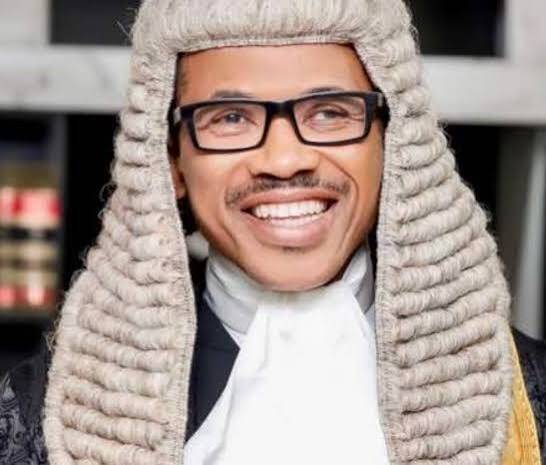
The Attorney General and Commissioner for Justice of Ondo State, Dr. Kayode Ajulo, a Senior Advocate of Nigeria, has called for a comprehensive constitutional amendment to provide a solid legal foundation for the establishment of state police, arguing that Nigeria's current centralised policing structure has become inadequate for addressing the diverse security threats confronting different parts of the federation. Speaking on NTA's "Good Morning Nigeria" programme on Wednesday, July 15, 2026, Ajulo emphasised that the Constitution must clearly define the responsibilities of both the Federal Police and State Police to prevent jurisdictional conflicts and ensure effective policing. His intervention comes at a pivotal moment, as President Bola Tinubu has transmitted to the National Assembly a Constitution Alteration Bill seeking the establishment of state police across the country, marking the most significant restructuring of Nigeria's policing architecture since the return to democratic rule in 1999.
Ajulo argued that the 1999 Constitution contains inherent contradictions that make it difficult for state governments to tackle insecurity headlong. He pointed to Section 14(2)(b) of the Constitution, which provides that "the security and welfare of the people shall be the primary purpose of government," describing it not as a pious aspiration but a constitutional command. However, he noted that Section 214(1) of the Constitution presently establishes "one Police Force for Nigeria," creating a fundamental contradiction that can only be resolved through constitutional amendment rather than executive fiat. "Constitutions are not mere legal texts. They are living instruments through which societies organise power in pursuit of peace, order, and good governance," Ajulo stated. "When circumstances change, institutions must evolve. When realities shift, governance structures must adapt. A nation that refuses to reform eventually finds itself governed by yesterday's assumptions in today's world."
The Attorney General traced the roots of Nigeria's policing crisis to the military intervention of January 15, 1966, and the centralisation that followed. Before independence and in the years immediately following it, the regions exercised substantial control over security administration within their territories. The Western Region, under the visionary leadership of Chief Obafemi Awolowo, understood that governance was most effective when institutions were closest to the people they served. However, the military intervention fundamentally altered that trajectory, concentrating powers at the centre and retaining a policing framework designed for a far smaller and less complex nation, despite dramatic demographic, technological, and security transformations. "Today, Nigeria is a federation of over two hundred million people confronting terrorism, banditry, kidnapping, cybercrime, cultism, farmer-herder conflicts, and increasingly sophisticated criminal enterprises," Ajulo said. "The threats are local in execution but national in consequence. Criminal networks exploit forests, borders, technology, and community vulnerabilities with alarming sophistication, while our security architecture often remains constrained by excessive centralisation."
Describing decentralised policing as a constitutional necessity and a practical response to Nigeria's worsening security challenges, Ajulo argued that genuine federalism requires constituent states to possess the authority to maintain law and order within their territories. Drawing from the experience of the Ondo State Security Network Agency, popularly known as Amotekun, he maintained that community-based policing enhances intelligence gathering, improves accountability and brings security governance closer to the people. He commended the Federal Government and the National Assembly for advancing the constitutional amendment process, noting that the broad support for the proposal reflects a growing national consensus on the need to reform Nigeria's security architecture. He further noted that federal law enforcement agencies would continue to exercise jurisdiction over national offences, thereby providing an additional layer of protection against abuse.
However, Ajulo cautioned that constitutional amendments alone would not guarantee success, insisting that issues such as funding, recruitment, training, operational coordination and accountability must be addressed through comprehensive implementing legislation. He identified four critical safeguards for the success of state police: the independence of State Police Service Commissions through wider stakeholder representation; a sustainable funding framework supported where necessary by the Federal Government; clearly defined procedures for federal intervention; and uniform national standards for recruitment, training and professionalism. He also defended limited federal intervention in exceptional situations, saying the Federal Government has a constitutional obligation to preserve national unity and public order whenever serious breakdowns occur, provided such interventions are subject to clearly defined procedures and oversight.
Addressing concerns that governors could misuse state police to intimidate political opponents, the Attorney General acknowledged that such fears were legitimate but insisted they could be effectively managed through strong institutions, independent oversight bodies, transparent funding arrangements, judicial review and constitutional checks and balances. "Critics of State Police frequently raise concerns about abuse by state governments," Ajulo said. "These concerns are legitimate, but they are not insurmountable. The same fears were raised when Nigeria adopted federalism, yet we have managed to sustain the federation through constitutional safeguards and institutional checks." He argued that states would be more accountable to their citizens than a distant federal police force, and that the political cost of abusing state police would be too high for any governor to bear.
Describing funding as the greatest challenge to the proposed reform, Ajulo advocated performance-based grants and equalisation mechanisms to support states with limited financial capacity, stressing that no state should be denied effective security because of inadequate resources. He explained that moving policing to the Concurrent Legislative List would allow both the Federal Government and the states to operate police services under clearly defined national standards. "Nigeria's growing population and varying security concerns, ranging from banditry in the North-West and militancy in the Niger Delta to urban crime in major cities, make decentralised policing both desirable and inevitable," Ajulo concluded. "State Police is no longer merely a policy option but a necessary reform capable of strengthening national security and deepening Nigeria's federal system if implemented with adequate safeguards, sustainable funding and unwavering commitment to the rule of law."
📩 Stone Reporters News | 🌍 stonereportersnews.com
✉️ info@stonereportersnews.com | 📘 Facebook: Stone Reporters News | 🐦 X (Twitter): @StoneReportNew | 📸 Instagram: @stonereportersnews
Add comment
Comments