

Reported by: Ijeoma G | Edited by: Oravbiere Osayomore Promise.
The Lagos State Government has firmly defended the ongoing reclamation project at the Makoko Waterfront near the Third Mainland Bridge, insisting that the development received all required approvals from both the Federal Government and the Lagos State Government before work commenced. Commissioner for Waterfront Infrastructure Development, Dayo Alebiosu, made the clarification on Wednesday, July 15, 2026, during an appearance on Channels Television's Morning Brief programme, where he addressed growing public concerns and speculation surrounding the project. According to the commissioner, the reclamation project is being executed by FBT Coral, a private developer that complied with all statutory requirements and secured the necessary permits from all relevant regulatory agencies before work began. "The reclamation work you see in Makoko around the Third Mainland Bridge is being handled by FBT Coral. They got approval from the Federal Government and also obtained the necessary clearance from the Lagos State Government," Alebiosu stated.
The commissioner explained that concerns were later raised by the Federal Ministry of Works over fears that dredging activities close to the Third Mainland Bridge could undermine the structural integrity of the critical infrastructure. However, investigations established that the developer was not dredging near the bridge but pumping sand from locations several kilometres away to the reclamation site. Alebiosu disclosed that the Lagos State Government actually suspended the project for about one year to allow the developer to obtain additional clearance from the Federal Ministry of Works, which subsequently constituted a technical committee to review the project. After the committee's assessment, the developer was cleared to resume work. The commissioner stressed that the reclamation underwent a full Environmental Impact Assessment and received the required drainage clearance before it was approved.
Addressing critics who have labelled the project illegal, Alebiosu stated: "I am an architect, not an environmentalist or an engineer, so I am not in a position to question what the experts have done. Every relevant agency came together, assessed the project and agreed it could proceed. It is therefore not my place to describe it as an illegal development". The commissioner also reaffirmed the state's commitment to tackling illegal dredging, revealing that his ministry had not issued a single dredging permit since he assumed office. He noted that recent bathymetric surveys indicated that sand deposits in Lagos waterways were gradually being depleted, forcing operators to travel as far as 14 kilometres offshore to source sand, compared to just three kilometres previously. "That tells us we are gradually running out of sand, and everyone must join hands to tackle illegal dredging," he warned.
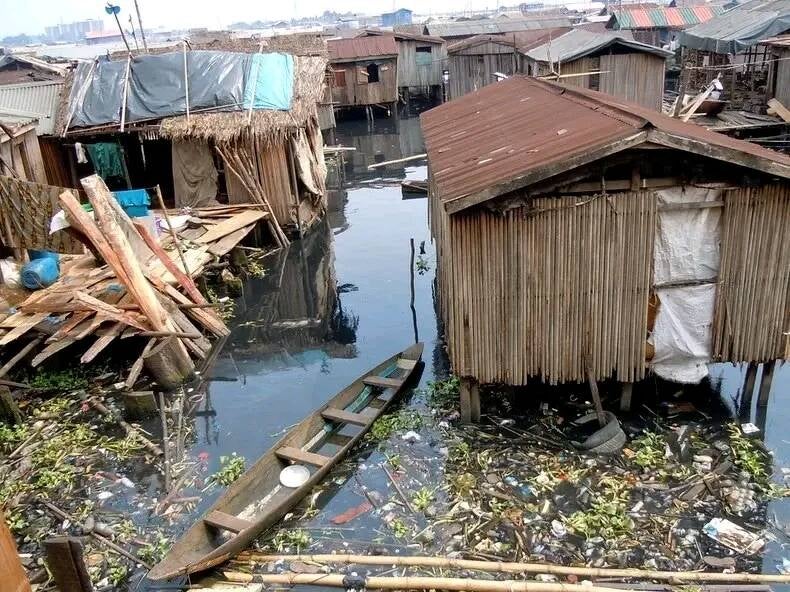
The commissioner acknowledged that illegal dredging remained a persistent challenge despite enforcement efforts but assured that the government would continue to clamp down on offenders. "There is no country in the world that is completely free of crime. The objective is to reduce it. Sometimes we are proactive, sometimes reactive, but we will continue to fight these illegal activities," he said. He also warned residents of Ikorodu and other waterfront communities against supporting illegal dredging, cautioning that continued environmental violations could have far-reaching ecological consequences if left unchecked. The reclamation project, located around the Ebute Meta/Lagos Island interchange, is part of a broader regeneration vision for Makoko, one of Lagos' largest informal waterfront settlements.
In February 2026, the Lagos State Government announced plans for a $10 million Makoko Water City project, under which the state would contribute $2 million while the United Nations was expected to provide up to $8 million in counterpart funding to support the regeneration of the fishing community. However, the redevelopment efforts have been accompanied by disputes over demolitions, environmental protection, and residents' rights. Human rights lawyer Femi Falana, a Senior Advocate of Nigeria, has cited previous court decisions, including a 2017 Lagos State High Court judgement and an August 2025 Federal High Court order restraining demolitions in Makoko and other waterfront settlements, arguing that affected communities are entitled to legal protection. Residents have alleged that homes, schools, and health facilities were destroyed without adequate consultation, compensation, or resettlement—claims the Lagos State Government has repeatedly denied.
The commissioner's remarks come amid sustained public debate over the future of Makoko, where redevelopment efforts have been accompanied by disputes over demolitions, environmental protection, and residents' rights. Recent clearance operations around the community sparked public debate over development activities in the area and their impact on residents. The government has maintained that the demolition exercises were necessary to safeguard critical infrastructure, enforce urban planning regulations, and protect public safety, with officials stating that demolition activities were limited to structures located within the high-tension electricity corridor. As the reclamation project continues, the Lagos State Government has reiterated its commitment to ensuring that all development activities in the state comply with statutory requirements and environmental regulations.
📩 Stone Reporters News | 🌍 stonereportersnews.com
✉️ info@stonereportersnews.com | 📘 Facebook: Stone Reporters News | 🐦 X (Twitter): @StoneReportNew | 📸 Instagram: @stonereportersnews
Add comment
Comments