

Reported by: Ijeoma G | Edited by: Oravbiere Osayomore Promise.
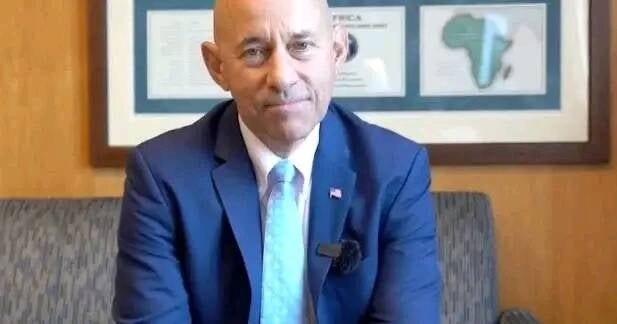
The United States has called on Nigeria to intensify efforts to protect Christian communities from recurring attacks and accelerate the safe return of millions of internally displaced persons, in a diplomatic push that underscores Washington's growing concern over religious persecution and the humanitarian crisis in the country's conflict zones. The appeal was delivered by the US Assistant Secretary of State for African Affairs, Frank Garcia, during a high-level visit to Abuja on Wednesday, July 15, 2026, where he held separate meetings with senior Nigerian government officials, including the Minister of State for Foreign Affairs, Ambassador Sola Enikanolaiye; the Chief of Defence Staff, General Olufemi Oluyede; the Attorney General of the Federation and Minister of Justice, Chief Lateef Olasunkanmi Fagbemi; the Minister of Communications, Innovation and Digital Economy, Bosun Tijani; and the National Security Adviser, Nuhu Ribadu.
According to a statement issued by the US Embassy in Abuja following the meetings, Garcia's visit was part of ongoing efforts to advance the U.S.-Nigeria strategic partnership across security cooperation, justice sector reform, digital transformation, commercial diplomacy, and regional stability. The discussions on defence and security were particularly significant, as they come amid a surge in violent attacks targeting Christian communities in Nigeria's Middle Belt and North-Central regions, as well as the protracted displacement crisis that has left millions of Nigerians living in squalid camps or as refugees in neighbouring countries. The US official welcomed Nigeria's increased efforts under the U.S.-Nigeria Joint Working Group, a bilateral mechanism established to address the country's designation as a Country of Particular Concern under the International Religious Freedom Act. However, Garcia made it clear that more robust action is required, pressing Nigerian authorities to allocate greater resources to protect Christian communities and facilitate the safe return of internally displaced persons to their homes.
The Country of Particular Concern designation, which was reaffirmed by the US State Department in its 2025 report on international religious freedom, has placed Nigeria under heightened scrutiny over allegations of systematic religious persecution, particularly against Christian minorities in the predominantly Muslim north. The US-Nigeria Joint Working Group was established to help Nigeria address the concerns that led to the designation, with both countries working collaboratively to improve the protection of religious minorities, enhance accountability for perpetrators of religiously motivated violence, and promote interfaith dialogue. Garcia's remarks indicate that while Washington acknowledges some progress, it remains dissatisfied with the pace and scale of reforms, particularly in the areas of prosecuting perpetrators of attacks on Christians and ensuring the safe and dignified return of IDPs.
Nigeria's displacement crisis has reached alarming proportions, with the International Organization for Migration estimating that over 3.6 million people are currently internally displaced across the country, the majority of whom have been uprooted by the Boko Haram insurgency in the North-East, banditry in the North-West, and farmer-herder conflicts in the Middle Belt. Christian communities have been disproportionately affected by these conflicts, with churches, schools, and entire villages targeted in waves of violence that have killed thousands and displaced countless families. The US call for greater resources to be allocated to the safe return of IDPs reflects a growing recognition that humanitarian assistance alone is insufficient; durable solutions require sustained investment in security, infrastructure, and community reconciliation.
During his meeting with the Attorney General, Garcia focused on strengthening collaboration in the prosecution of Islamic terrorism-related cases, improving criminal accountability, and promoting religious freedom. The discussions underscored the importance of ensuring that perpetrators of attacks on Christian communities are brought to justice, a critical component of any credible effort to protect religious minorities and restore public confidence in the rule of law. The US official also held talks with Minister Bosun Tijani on opportunities for increased US investment and expanded private sector engagement in Nigeria's digital economy, highlighting the breadth of the bilateral relationship beyond security and humanitarian concerns.
Garcia expressed optimism ahead of the next meeting of the Joint Working Group, scheduled to take place in Washington, D.C., in August 2026, where both countries will assess progress on the agreed areas of cooperation. The meeting is expected to provide a platform for Nigeria to demonstrate concrete achievements in protecting religious minorities and addressing the displacement crisis, as well as to identify areas where additional US support may be required. As part of his engagements, Garcia also met with senior executives of leading US energy and technology companies operating in Nigeria to discuss the country's business environment and prospects for increased investment, signaling that Washington remains committed to deepening economic ties despite persistent security and governance challenges.
The US call for stronger protection of Christians and IDPs comes at a time when Nigeria's security situation remains precarious, with armed groups continuing to carry out attacks on vulnerable communities with impunity. Human rights organisations have documented numerous incidents of violence against Christians, including mass abductions, killings, and the destruction of places of worship, often with little or no accountability for the perpetrators. The Nigerian government has consistently maintained that it is committed to protecting all citizens regardless of their religion, but critics argue that the security response has been inadequate, particularly in rural areas where attacks are most frequent.
The visit by Assistant Secretary Garcia and the subsequent US statement represent a significant diplomatic intervention, placing Nigeria's treatment of religious minorities and displaced persons firmly on the bilateral agenda. While the Nigerian government has welcomed the US engagement and expressed its commitment to addressing the concerns raised, the question remains whether the rhetoric will translate into tangible improvements on the ground. For the millions of Nigerian Christians who live in fear of attacks and the millions more who have been forced from their homes, the US call for action offers a glimmer of hope—but it is action, not words, that will ultimately determine whether their suffering is finally alleviated. The August meeting of the Joint Working Group will provide an early test of Nigeria's willingness to meet the expectations of its most important strategic partner.
📩 Stone Reporters News | 🌍 stonereportersnews.com
✉️ info@stonereportersnews.com | 📘 Facebook: Stone Reporters News | 🐦 X (Twitter): @StoneReportNew | 📸 Instagram: @stonereportersnews
Add comment
Comments