

Reported by: Puis Althea | Edited by: Oravbiere Osayomore Promise.
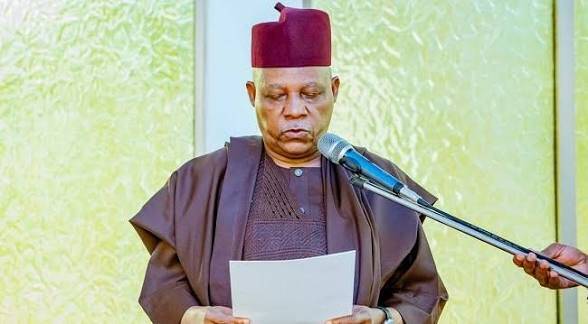
Vice President Kashim Shettima has delivered a blunt assessment of Nigeria's economic reality, declaring that the nation has no justification for its persistent poverty given its vast natural and marine resources, and challenged stakeholders to harness these assets to transform the country into one of the world's wealthiest nations. Shettima made the remarks on Wednesday while delivering the keynote address at the Agric, Development and Investment Summit in Abuja, where he used a pointed comparison with Indonesia to illustrate Nigeria's missed opportunities. According to the Vice President, Indonesia, an oil-producing nation, earned $25 billion from crude palm oil exports in 2025 from 53 million tons, while exporting only 32 million tons, and its revenue from palm oil alone exceeded Nigeria's total earnings from crude oil exports. "Its revenue exceeded Nigeria's oil revenue with just about 50 percent of what Indonesia earned from oil palm exports," Shettima told the gathering.
Shettima argued that Nigeria, which historically introduced oil palm seedlings to Southeast Asia decades ago, now spends heavily to import the very commodity it once exported, while nations that aggressively developed the sector generate tens of billions in foreign exchange. He stressed that Nigeria produces crude oil but has failed to diversify its revenue streams like Indonesia has done, adding that strategic investment in agriculture can generate significant national wealth. "In this great nation of ours, we have no business being poor. We have the potential to be one of the richest countries in the world," Shettima declared. "There are certain parts of this country where money can grow; you can plant money and harvest tremendous money resources".
Moving beyond traditional agriculture, the Vice President identified the Niger Delta's marine ecosystem as a sleeping economic giant with enormous potential for mariculture. He noted that the Niger Delta is the third-largest delta in the world, providing unmatched natural infrastructure for large-scale fish farming, including commercial cultivation of species such as salmon, tuna and lobsters. "The Niger Delta is the third largest delta in the world, and what do people in mariculture do? Fish farming like salmon, tuna, lobsters, and the Delta is endowed with those resources," Shettima said. He argued that industrial fish farming requires extensive localized labor, offering a sustainable alternative to the volatile fossil fuel job market and could create thousands of jobs across the region.
The Vice President expressed frustration over the severe undercapitalization of vast sectors of the economy despite their potential to dwarf the country's current petroleum revenues. He called for a radical shift in investor perspective, urging stakeholders to unlock Nigeria's economic potential through agriculture and allied sectors rather than relying solely on crude oil exports. His remarks point toward an aggressive federal push to pivot the nation's economic bedrock from fossil fuels to high-yield agriculture and aquaculture. Shettima expressed confidence that certain regions across the country could generate tremendous wealth through proper investment and development.
Beyond the economic argument, Shettima also used the occasion to defend the Tinubu administration's reforms and describe the President as a game-changer ready to make far-reaching decisions to reposition Nigeria's economy. He disclosed that President Bola Tinubu never plays the blame game and is ready to take responsibility for all his decisions, adding that the President usually gets angry when anyone criticises the late former President Muhammadu Buhari because he is ready to take responsibility for every one of his own actions. According to the Vice President, some of the reforms instituted by the Tinubu administration are already yielding results, adding that Nigeria is central to every good thing set to happen in Africa. He appealed to all stakeholders, including development partners, to support the government in the task of repositioning the country.
Shettima's remarks come amid growing calls for economic diversification and a shift away from Nigeria's heavy dependence on crude oil exports, which have left the economy vulnerable to global price fluctuations. The Vice President's comparison with Indonesia serves as a powerful reminder that Nigeria's agricultural sector, particularly oil palm, remains vastly underdeveloped despite the country's historical advantage in the commodity. The Niger Delta's marine resources, which have long been associated with oil extraction and environmental degradation, are now being positioned as a potential engine of economic growth and job creation. As Nigeria continues to grapple with high unemployment and poverty rates, Shettima's message underscores the urgent need for a fundamental rethinking of the country's economic priorities.
📩 Stone Reporters News | 🌍 stonereportersnews.com
✉️ info@stonereportersnews.com | 📘 Facebook: Stone Reporters News | 🐦 X (Twitter): @StoneReportNew | 📸 Instagram: @stonereportersnews
Add comment
Comments