

Reported by: Ijeoma G | Edited by: Oravbiere Osayomore Promise.
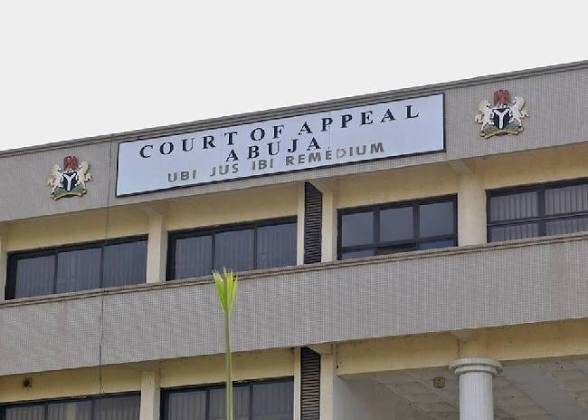
The Court of Appeal in Abuja has delivered a unanimous judgment setting aside the May 20, 2026 ruling of the Federal High Court that had nullified key portions of the Independent National Electoral Commission's electoral guidelines and timetable for the 2027 general elections. The appellate court, in a decision delivered on Thursday, July 16, 2026, held that the Youth Party, which instituted the suit challenging the guidelines, lacked the legal standing to do so, and that the lower court had erred in its interpretation of the Electoral Act. The ruling effectively restores the validity of INEC's revised timetable and schedule of activities for the 2027 polls, clearing the way for the electoral process to proceed as planned.
In the lead judgment, prepared by Justice Adebukola Banjoko and read by Justice Okon Abang, the three-member panel of the Court of Appeal held that the Youth Party failed to demonstrate how INEC's guidelines affected it or its members in the conduct of its primary election or the submission of names of its candidates for the 2027 polls. The court ruled that the party did not establish any injury arising from the guidelines to justify the institution of the suit. "The law gives INEC powers to conduct elections in the country," Justice Abang stated, adding that "there was no deposition or threat that the respondent was prevented from conducting its primaries. The respondent can only invoke the powers of the court where there are heavy threats to its participation in the election."
The appellate court further held that the Federal High Court, presided over by Justice Mohammed Garba Umar, had failed to follow binding judicial precedents and had wrongly granted declarative reliefs against INEC. The Court of Appeal ruled that INEC's revised timetable for the 2027 general elections constitutes subsidiary legislation made pursuant to the Electoral Act, 2026, and therefore has the same force of law as the principal legislation. According to the court, every deadline contained in the timetable fell within the provisions of the Electoral Act, and the commission acted within its statutory powers when it released the timetable and guidelines.
The legal battle began when the Youth Party filed a suit challenging INEC's directive requiring political parties to submit their membership registers and databases by May 10, 2026, as a condition for participation in the 2027 general elections. The party also challenged the deadlines set by INEC for the conduct of party primaries and the submission of candidates' particulars. On May 20, 2026, Justice Umar of the Federal High Court ruled in favour of the Youth Party, holding that INEC lacked the constitutional and statutory powers to compel political parties to conduct their primaries within timelines fixed by the commission. The trial court also nullified aspects of INEC's timetable requiring parties to submit their membership registers and candidates' particulars ahead of the timelines prescribed by the Electoral Act, ruling that the commission could not lawfully abridge statutory timelines.
Dissatisfied with the decision, INEC filed a nine-ground notice of appeal dated May 25, 2026, through its lead counsel, Dr. Alex Izinyom, asking the Court of Appeal to set aside the judgment. The electoral body argued that the Federal High Court failed to determine its preliminary objection that the suit was hypothetical and academic, thereby denying the commission a fair hearing. INEC also maintained that the Youth Party lacked the legal standing to institute and maintain the action. The commission further argued that the trial court's verdict was against the weight of evidence placed before it and that the judgment occasioned a miscarriage of justice.
In its ruling, the Court of Appeal agreed with INEC's submissions, holding that the trial court failed to follow binding precedents and that the commission's timetable was a valid exercise of its statutory authority. The appellate court also ruled that the Youth Party's action was merely academic and that the party had failed to establish any specific injury or direct impact on its operations. The court consequently allowed INEC's appeal, set aside the Federal High Court judgment, and struck out the Youth Party's case. The ruling effectively restores the legal foundation for INEC's 2027 election timetable, allowing the commission to continue implementing its schedule without the restrictions imposed by the earlier High Court ruling.
The Court of Appeal's decision is expected to remove the uncertainty that had trailed preparations for the 2027 general elections after conflicting judicial decisions created concerns over the validity of the commission's electoral calendar. With the appellate court's verdict, political parties are now expected to align with the restored timetable as they prepare for party primaries, candidate nominations, and other activities leading to the next general election. The ruling represents a significant legal victory for INEC, which had consistently argued that suspending or altering its timetable could disrupt critical preparations and affect the smooth conduct of the electoral process. The commission had maintained that clear timelines are essential for effective planning and compliance by political parties.
Unless further appealed to the Supreme Court, Thursday's decision restores the legal foundation for INEC's 2027 election timetable, allowing the commission to continue implementing its schedule for the forthcoming general elections without the restrictions imposed by the earlier High Court ruling. The judgment has been widely welcomed by political stakeholders who had expressed concerns over the potential chaos that could have resulted from the nullification of the electoral guidelines. The ruling affirms the constitutional and statutory authority of INEC to regulate and coordinate the electoral process through the issuance of schedules and timelines necessary for the orderly conduct of elections.
The appellate court's decision also underscores the importance of legal standing in challenging electoral guidelines, establishing that political parties must demonstrate a direct and specific injury before they can invoke the powers of the court to nullify INEC's administrative directives. The judgment has effectively closed the door on speculative or academic challenges to the commission's authority, reinforcing the principle that INEC's timetable is not merely an administrative document but a form of subsidiary legislation issued under the powers granted to it by the Electoral Act. As Nigeria prepares for the 2027 general elections, the Court of Appeal's ruling provides the legal clarity and certainty needed for all stakeholders to proceed with their preparations.
📩 Stone Reporters News | 🌍 stonereportersnews.com
✉️ info@stonereportersnews.com | 📘 Facebook: Stone Reporters News | 🐦 X (Twitter): @StoneReportNew | 📸 Instagram: @stonereportersnews
Add comment
Comments