

Reported by: Oahimire Omone Precious | Edited by: Oravbiere Osayomore Promise.
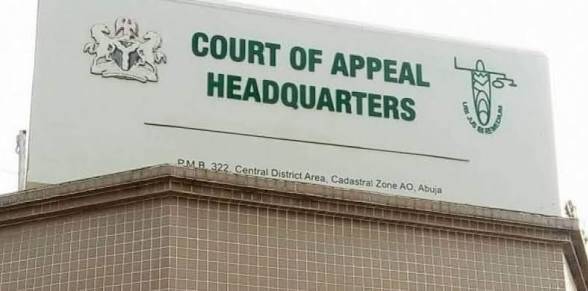
Nigeria's electoral landscape has been thrown into fresh legal uncertainty after two separate panels of the Court of Appeal in Abuja delivered conflicting judgments on the powers of the Independent National Electoral Commission and key provisions of the Electoral Act 2026, leaving political parties, legal practitioners, and the electoral umpire itself grappling with the implications of the contradictory rulings. In one decision, the appellate court upheld INEC's authority to issue election guidelines and timetables, ruling that the commission acted within its legal mandate and that the Youth Party lacked the locus standi to challenge the guidelines. In a separate ruling, another panel struck down Sections 77(5), (6), (7) and 84(2) of the Electoral Act 2026, holding that they are inconsistent with the 1999 Constitution because they infringe on political parties' constitutional right to manage their membership registers and determine candidate nomination processes.
The first ruling, delivered by a three-member panel led by Justice Adebukola Banjoko, overturned the May 20, 2026 judgment of Justice Mohammed Umar of the Federal High Court, which had nullified key portions of INEC's Revised Timetable and Schedule of Activities for the 2027 general elections. The appellate court held that the Youth Party, which instituted the suit, lacked the legal standing to challenge the commission's guidelines, as it failed to demonstrate how the guidelines adversely affected its primary elections or the nomination of its candidates. Justice Okon Abang, who read the lead judgment, stressed that "the law gives INEC powers to conduct elections in the country" and that where INEC acts within its powers, courts cannot intervene. The court further declared that INEC's Revised Timetable constitutes subsidiary legislation made pursuant to the Electoral Act 2026 and therefore carries the same force of law as the principal legislation.
However, in a separate ruling delivered on the same day, another three-member panel of the Court of Appeal, led by Justice Balkisu Aliyu, struck down Sections 77(5), 77(6), 77(7) and 84(2) of the Electoral Act 2026, declaring them unconstitutional. The sections in question regulated political parties' membership registers and the procedure for the nomination of candidates for the 2027 general elections. The court held that the disputed provisions conflicted with Sections 221 and 222 of the 1999 Constitution, which recognise political parties as the bodies responsible for sponsoring candidates for elections and managing their internal affairs. The judgment followed an appeal filed by the Zenith Party, which had challenged the dismissal of its suit by the Federal High Court on May 5, 2026.
Delivering the lead judgment, Justice Eberechi Nyesom-Wike declared that the National Assembly could not, through an Act of Parliament, impose restrictions on political parties that conflict with powers already guaranteed to them under the Constitution. The court specifically nullified Section 77(5), which required that only party members whose names appeared in the membership register submitted to INEC could vote or be voted for during party primaries, congresses and conventions. It also invalidated Section 77(6), which prohibited parties from using any membership register other than the one previously submitted to INEC, holding that it vested excessive control over the internal affairs of political parties in the electoral umpire. Section 77(7), which barred political parties that failed to submit their membership registers within the prescribed period from fielding candidates in an election, was also struck down, with the court ruling that such a consequence effectively deprived political parties of their constitutional right to sponsor candidates. Justice Nyesom-Wike also declared Section 84(2) unconstitutional, holding that limiting political parties to direct primaries or consensus as methods of candidate nomination amounted to undue legislative interference in their internal affairs.
The conflicting rulings have sparked intense debate among legal practitioners and political stakeholders. Senior Advocate of Nigeria, Adebayo Ojo, has dismissed reports of conflicting Court of Appeal judgments, insisting that only one appeal—the Youth Party case—has been determined by the appellate court. According to Ojo, the second case, involving the Social Democratic Party and a Federal High Court judgment delivered by Justice Emeka Nwite Omotoso, has not yet been heard by the Court of Appeal. "The Court of Appeal cannot give a judgment in one case and then turn around and give a spontaneous contrary judgment in another matter," Ojo said. However, the rulings have nonetheless created significant legal uncertainty, with stakeholders warning that the contradictory decisions could complicate preparations for the 2027 general elections.
The rulings have also raised fundamental questions about the balance of power between INEC, the National Assembly, and political parties. While one panel affirmed INEC's authority to prescribe timelines for party primaries and candidate nominations, the other panel struck down key provisions of the Electoral Act that gave effect to those timelines, effectively limiting the commission's ability to enforce compliance. The appellate court clarified that its decision did not invalidate the entirety of Sections 77 and 84 of the Electoral Act, explaining that provisions requiring political parties to maintain membership registers and make them available to INEC remained valid; only the specific subsections found to be inconsistent with the Constitution were struck down.
The rulings are expected to trigger further legal scrutiny as preparations for the 2027 general elections gather momentum. Political parties are likely to interpret the rulings as a validation of their autonomy in managing internal affairs and nominating candidates, while INEC may seek to clarify the implications of the conflicting decisions through further appeals or legislative amendments. The National Assembly, which passed the Electoral Act 2026 in February, may also be compelled to revisit the disputed provisions to resolve the constitutional inconsistencies identified by the court. For now, the conflicting rulings have thrown Nigeria's electoral process into a state of legal limbo, leaving stakeholders to navigate a complex and uncertain legal landscape just months before the 2027 elections.
📩 Stone Reporters News | 🌍 stonereportersnews.com
✉️ info@stonereportersnews.com | 📘 Facebook: Stone Reporters News | 🐦 X (Twitter): @StoneReportNew | 📸 Instagram: @stonereportersnews
Add comment
Comments