

Reported by: Althiea .P | Edited by: Bornet .k
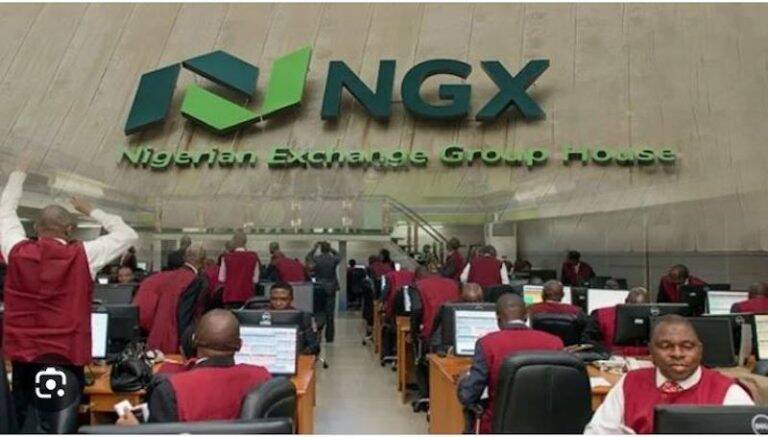
Domestic investors dominated activities on the Nigerian stock market in the first half of 2026, recording equity transactions worth approximately ₦8.4 trillion as confidence in the capital market strengthened amid improved corporate earnings and positive investor sentiment.
The strong performance by local investors, comprising both institutional and retail participants, represents a major increase compared with the same period in 2025 and highlights the growing influence of Nigerian investors in shaping market activities on the Nigerian Exchange Limited (NGX).
According to the NGX Domestic & Foreign Portfolio Investment Report, domestic investors accounted for ₦8.448 trillion in stock market transactions between January and June 2026, representing 87.93 per cent of total market activity during the period. This marked a significant rise from the ₦3.06 trillion recorded by domestic investors in the first half of 2025.
The report showed that domestic institutional investors were responsible for the largest share of local trading activity, recording transactions valued at ₦5.06 trillion during the period. This represented a 218.9 per cent increase compared with the ₦1.59 trillion recorded in the corresponding period of 2025.
Retail investors also contributed significantly to the market expansion, trading equities worth ₦3.39 trillion in the first half of 2026. The figure represents a 130.4 per cent increase from the ₦1.47 trillion recorded by retail investors during the same period in 2025.
Financial analysts attributed the rise in domestic participation to improved confidence in Nigeria’s capital market, stronger earnings performance from listed companies and policy measures aimed at increasing institutional investment capacity.
One of the major factors identified was the decision by the National Pension Commission (PenCom) in February 2026 to increase the equity investment limits available to pension funds under several Retirement Savings Account (RSA) fund categories.
The adjustment allowed pension fund managers to allocate more resources to ordinary shares, increasing potential liquidity in the equities market. Under the revised regulations, equity limits were raised for RSA Fund I from 30 per cent to 35 per cent, RSA Fund II from 25 per cent to 33 per cent, RSA Fund III from 10 per cent to 15 per cent and RSA Fund VI (Active) from 25 per cent to 33 per cent.
The increased participation by domestic investors coincided with a strong performance by the NGX during the first six months of the year. Market capitalisation reportedly increased by ₦47.84 trillion during the period, supported by gains across major sectors including banking, consumer goods, industrial companies and oil and gas firms.
Overall market transactions involving both domestic and foreign investors reached ₦9.61 trillion in the first half of 2026, representing a 129.1 per cent increase from the ₦4.19 trillion recorded in the first half of 2025.
Foreign investors, however, recorded a much smaller increase compared with domestic participants. Foreign portfolio transactions stood at ₦1.16 trillion during the period, representing only a marginal 2.2 per cent increase from ₦1.14 trillion recorded in the same period of 2025.
The changing structure of the market indicates a continued shift towards stronger domestic participation. Foreign investors accounted for 12.07 per cent of total transactions in the first half of 2026, compared with 27.08 per cent during the same period in 2025.
Market observers said the increased role of local investors could strengthen the resilience of Nigeria’s equities market by reducing dependence on foreign capital flows, which are often affected by global economic conditions, exchange rate movements and international interest rate decisions.
The growth also reflects broader efforts by financial regulators to deepen Nigeria’s capital market and encourage greater participation from pension funds, institutions and individual investors.
Despite the positive outlook, analysts noted that sustaining the momentum would require continued economic reforms, improved corporate performance, stable macroeconomic conditions and policies that encourage long-term investment.
The Nigerian Exchange has in recent years positioned itself as a key platform for mobilising capital for businesses and supporting economic growth. The increased activity recorded in 2026 suggests growing confidence among local investors in the country’s financial markets.
With domestic investors now accounting for the overwhelming majority of stock transactions, stakeholders believe the trend could play a significant role in shaping the future direction of Nigeria’s capital market and strengthening the country’s investment ecosystem.
📩 Stone Reporters News | 🌍 stonereportersnews.com
✉️ info@stonereportersnews.com | 📘 Facebook: Stone Reporters News | 🐦 X (Twitter): @StoneReportNew | 📸 Instagram: @stonereportersnews
Add comment
Comments