

Reported by: Althiea .P | Edited by: Bornet .k
Nigeria’s Vice President, Kashim Shettima, has urged African nations to take greater control of their natural resources by ending the dependence on raw material exports and investing in local processing industries that create higher economic value.
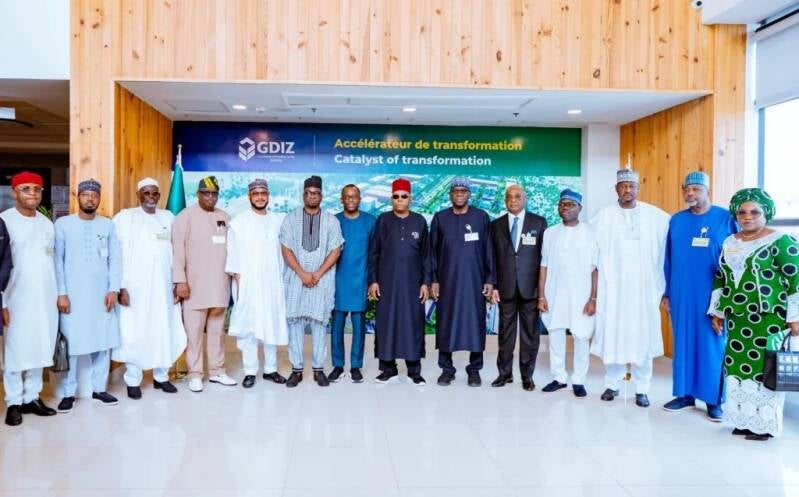
Shettima made the call on Friday, July 24, 2026, during a visit to the Glo-Djigbé Industrial Zone (GDIZ) in Cotonou, Republic of Benin, where he inspected industrial facilities and assessed the country’s approach to transforming agricultural resources into finished products.
The Vice President said Africa must reposition itself in global trade by developing industries capable of processing its vast natural resources instead of exporting them in their unprocessed forms.
He said the continent possesses enormous economic potential through its agricultural resources, minerals and human capital, but has continued to lose significant value because raw materials are often shipped abroad and returned as expensive finished goods.
According to Shettima, Africa’s future economic prosperity depends on its ability to build strong manufacturing and processing sectors that can support job creation, increase exports and strengthen local economies.
“We are here essentially at the behest of President Bola Tinubu, in the spirit of his Renewed Hope Agenda, to see and peer-review global best practices,” Shettima said during the visit.
He expressed satisfaction with Benin Republic’s industrial model, particularly the GDIZ’s integrated approach to linking agriculture with manufacturing.
The Vice President praised the industrial zone for creating a complete value chain where locally produced cotton, cashew and soya beans are processed into finished products for domestic consumption and international markets.
Shettima said Nigeria could draw valuable lessons from Benin’s experience in developing industrial clusters that connect farmers, manufacturers and exporters.
He noted that Africa currently receives only a small share of the global cotton industry despite being a major producer of cotton-related raw materials.
According to him, the global cotton industry is valued at about $370 billion, yet Africa benefits from only around one per cent because much of the continent’s cotton is exported without sufficient local processing.
He argued that rebuilding Nigeria’s textile industry could create millions of employment opportunities, increase non-oil exports and revive economic activities across different regions of the country.
The Vice President said Nigeria was already taking steps towards expanding agro-industrial development through the establishment of eight agro-industrial processing zones across eight states.
He explained that the initiative was designed to promote local production, attract private investment and encourage the transformation of agricultural commodities into finished products.
“The GDIZ represents an African success story where there is a whole chain of value addition in cotton, cashew and soya bean value chains,” Shettima said.
“Be rest assured that we have learnt a lot of lessons through this visit, and we are going to replicate a lot of that in Nigeria.”
During the inspection, Shettima and his delegation toured textile and agro-processing facilities where cotton produced locally is converted into yarn, fabrics and finished garments.
They also visited factories involved in processing cashew and other agricultural products for both domestic markets and export.
The visit formed part of Nigeria’s efforts to study successful industrial models within Africa and adapt them to strengthen the country’s own manufacturing sector.
The Vice President said the Federal Government remained committed to making Nigeria one of the world’s leading industrial economies under President Bola Ahmed Tinubu’s Renewed Hope Agenda.
He added that the administration’s industrialisation strategy would ensure that no region was left behind, with both federal and state governments working together to promote economic development.
The GDIZ initiative has been described by economic observers as one of Africa’s emerging examples of industrial transformation, as it focuses on processing local resources within the continent rather than exporting them in raw form.
Benin’s Minister of Tourism and Foreign Trade briefed the Nigerian delegation on the structure, production capacity and investment opportunities available within the industrial zone.
The delegation included governors from Kwara, Imo, Katsina, Plateau, Zamfara and Jigawa states, who joined the Vice President to examine possible areas of cooperation and adaptation.
Economic analysts have long argued that Africa’s reliance on raw material exports has contributed to slow industrial growth and limited job creation. They maintain that local value addition remains critical for achieving sustainable economic development.
The call by Shettima comes amid increasing efforts by African governments to promote intra-African trade and industrial cooperation through initiatives such as the African Continental Free Trade Area (AfCFTA).
Experts say that while Africa has abundant natural resources, achieving meaningful industrial transformation will require investment in infrastructure, electricity, technology, skills development and supportive economic policies.
Shettima’s remarks reinforce the growing argument that Africa must move beyond being a supplier of raw materials and become a producer of finished goods capable of competing in global markets.
The Vice President said the continent’s resources should become the foundation for economic empowerment, industrial growth and improved living standards for African citizens.
📩 Stone Reporters News | 🌍 stonereportersnews.com
✉️ info@stonereportersnews.com | 📘 Facebook: Stone Reporters News | 🐦 X (Twitter): @StoneReportNew | 📸 Instagram: @stonereportersnews
Add comment
Comments