

Reported by: Ijeoma G | Edited by: Oravbiere Osayomore Promise.
Nearly ten months after government officials first quietly flagged the Presidential Foreign Investment Promotion Council as fraudulent, the Independent Corrupt Practices and Other Related Offences Commission finds itself at the centre of one of Nigeria's most embarrassing institutional scandals — and under intense scrutiny over whether it can deliver justice when the accused are connected to the highest corridors of power. The saga, which centres on Prince Adeniyi Adeyemi Matthew, who allegedly presented forged documents including a letter bearing the falsified signature of President Bola Tinubu's Chief of Staff, Femi Gbajabiamila, to establish himself as Director-General of a council the Presidency says was never legally created, has exposed gaping holes in government verification processes and raised fundamental questions about the anti-corruption agency's ability to probe a case that implicates senior officials.
President Bola Tinubu directed the ICPC on July 7, 2026, to investigate the activities of the purported PFIPC and submit a comprehensive report within 30 days. The directive followed the discovery that the council, which had no basis in any law or executive approval, nevertheless secured office space at the Federal Secretariat in Abuja, opened two foreign-currency domiciliary accounts with the Central Bank of Nigeria, recruited a staff of 300, and obtained a N1.3 billion allocation in the 2026 Appropriation Act under budget code 0111062001, comprising over N1 billion in recurrent costs and N300 million in capital expenditure. Yet despite warnings from multiple government institutions as far back as November 2025 — including the Office of the Secretary to the Government of the Federation, the Office of the Chief of Staff, the Office of the National Security Adviser, the Ministry of Foreign Affairs, and the Nigeria Police — no public disclaimer followed for about seven months, by which time the PFIPC had already been written into a national budget that passed through committee scrutiny in both chambers of the National Assembly and was signed into law by the president himself.
The ICPC's handling of the case has drawn immediate criticism. Adeniyi Adeyemi, in an open letter dated July 13, 2026, commended the President's directive as "a vital first step" but argued that an investigation conducted solely by the ICPC would not sufficiently guarantee public confidence, since the commission ultimately answers to the same arm of government implicated in the allegations. He urged the President to establish an independent, multi-stakeholder investigative panel comprising civil society organisations, the Nigerian Bar Association, independent media representatives, and human rights observers. He also claimed that surrendering to authorities under the current arrangement posed "an immediate, existential threat" to his life, citing the reported death of Dolapo Tanimola, whom he described as "a central intermediary" in the matter, in a fire incident at Kachi Hotel in Utako, Abuja, and the subsequent demolition of the hotel by unidentified armed actors.
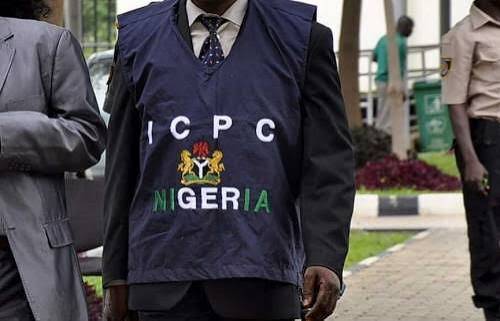
The ICPC, however, has insisted that it is fully capable of handling the case. Spokesman John Odey said on July 14, "The matter has been given to us. We are working on it. The capacity of the ICPC to work on its own or in collaboration with other agencies has never been in doubt." On July 20, Gbajabiamila himself appeared before ICPC investigators at the commission's headquarters in Abuja, spending time attending to enquiries from investigators before departing. The ICPC was quick to clarify that the Chief of Staff was invited, not arrested. "He was not arrested; he simply willingly honoured an invitation," the commission stated.
On July 23, ICPC operatives arrived at the Nigeria Police Force National Cybercrime Centre to interrogate Adeyemi, who remained in police custody. The questioning, however, could not immediately proceed because his new lawyer was absent; investigators suspended the session to allow him to secure legal representation in accordance with his rights under criminal procedure. The interrogation later commenced in the presence of his lawyer, but investigators were unable to complete the session and may continue the questioning at a later date.
The House of Representatives has convened its own ad-hoc committee, chaired by Yusuf Gagdi, to investigate the legal basis, operations, funding, and inclusion of the council in the 2026 federal budget. At a public hearing on July 20, the Central Bank of Nigeria disclosed that it had opened the two foreign-currency domiciliary accounts for the phantom agency on July 30, 2025, following a mandate from the Office of the Accountant-General of the Federation, but the accounts remained dormant with zero balance. Senior government officials, including the Secretary to the Government of the Federation, George Akume; the National Security Adviser, Nuhu Ribadu; and the Accountant-General of the Federation, Shamseldeen Ogunjimi, are expected to appear before the House panel.
What has turned this from a fraud story into an institutional reckoning is the timeline: Every institution touched the file, and every institution insists it did the right thing at the time. The Ministry of Foreign Affairs told the House committee it never dealt with PFIPC, and that when Adeyemi approached the ministry three times seeking backing for an investment summit, the requests were simply never acted upon. The Head of Civil Service of the Federation, Mrs Didi Walson-Jack, told the same panel her office never approved the council's organisational structure. The gap between private knowledge and public silence is the space in which the blame game now lives. With the ICPC's 30-day deadline approaching and the House investigation intensifying, the anti-corruption agency faces a defining test of its credibility and independence. As Adeyemi put it in his letter to the President, "True accountability cannot be achieved when the agency conducting the investigation answers directly to the branch of government within which the core allegations lie." Whether the ICPC can rise above that perception will determine not only the fate of those implicated in the PFIPC scandal, but also public confidence in Nigeria's anti-corruption machinery.
📩 Stone Reporters News | 🌍 stonereportersnews.com
✉️ info@stonereportersnews.com | 📘 Facebook: Stone Reporters News | 🐦 X (Twitter): @StoneReportNew | 📸 Instagram: @stonereportersnews
Add comment
Comments