

By: L.Stone
Federal Capital Territory Minister Nyesom Wike has described politics as a venture that requires sacrifice and generosity, arguing that politicians cannot expect to build lasting influence while withholding support from the people who helped them attain positions of power.
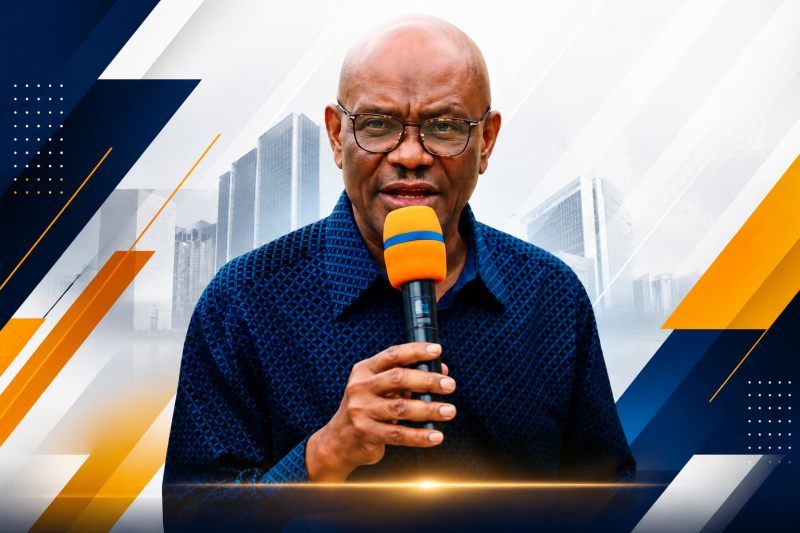
Wike made the remarks in a video circulating on social media on Monday, August 31, in which he reflected on the relationship between political leaders and their supporters. In the footage reviewed by Stone Reporters News, the former Rivers State governor emphasised that political success is rarely achieved by an individual acting alone and said politicians must recognise the contribution of ordinary people to their advancement.
“Politics is sacrifice. You can’t be where I am today if your hands are tight. Open your hands for people,” Wike said. “People made us to be where we are today. So you better open your hands.” The remarks closely match the version of the statement circulating publicly on social media.
His comments place renewed attention on a longstanding debate in Nigerian politics over what political leaders owe their supporters and communities after attaining public office. While politicians routinely speak about rewarding loyalty and supporting constituents, questions frequently arise over where legitimate political generosity ends and patronage, inducement or misuse of public resources begins.
Wike did not, in the circulating excerpt, suggest that public funds should be distributed outside established government procedures. His comments appeared instead to present generosity and willingness to assist supporters as essential qualities for politicians seeking to build enduring political relationships.
The minister’s reference to his own political journey carries particular significance because of the considerable influence he has accumulated during more than two decades in Nigerian politics. Wike served as chairman of Obio-Akpor Local Government Area in Rivers State before moving into national politics and later serving as Minister of State for Education under former President Goodluck Jonathan.
He subsequently became governor of Rivers State in 2015 and served two terms, leaving office in May 2023. His political influence expanded nationally during the campaign preceding the 2023 presidential election, particularly after his disagreement with the leadership of the Peoples Democratic Party following its presidential primary.
Wike had contested for the PDP presidential ticket but lost to former Vice-President Atiku Abubakar. He later emerged as one of the leading figures in the group of five PDP governors popularly known as the G5, who declined to support Atiku’s presidential campaign after demanding changes in the party's national leadership structure.
Following President Bola Tinubu's inauguration in May 2023, Wike was appointed Minister of the Federal Capital Territory despite remaining associated with the PDP. The appointment placed him in the cabinet of an All Progressives Congress administration and reinforced his position as one of Nigeria's most prominent political figures operating across traditional party boundaries.
His latest remarks can therefore be viewed against a political career built substantially around alliances, grassroots mobilisation and relationships with political stakeholders. Wike has repeatedly emphasised loyalty and political reciprocity in public speeches, while also presenting himself as a politician prepared to support those who have worked with him.
The language of “opening your hands”, however, is likely to attract different interpretations in Nigeria's highly competitive political environment. Supporters may understand it as an appeal for politicians to remain accessible and assist the communities and individuals who contribute to their political success. Critics of Nigeria's patronage-driven political culture may see such language as illustrating the expectation that political loyalty should attract personal rewards.
That distinction is important because Nigeria's electoral laws prohibit vote buying and other forms of material inducement intended to influence voters. Political leaders are nevertheless permitted to undertake lawful charitable activities, provide personal assistance and advocate government programmes benefiting their constituents, provided those actions comply with applicable laws.
Wike's statement itself did not explicitly refer to elections, vote buying or payments to voters. There is therefore no verified basis for characterising the remarks as an endorsement of electoral inducement. His central argument was that political leaders should recognise that their rise depends on other people and should consequently be willing to give back.
The comments come as political activities surrounding the 2027 general elections continue to intensify, with alliances and rivalries increasingly taking shape across the country. Wike is expected to remain an important figure in those calculations because of his influence in Rivers State, his position within the Tinubu administration and his complicated relationship with the PDP.
His political standing has also remained closely connected to developments in Rivers State, where relations between Wike and Governor Siminalayi Fubara have dominated political discussions since shortly after Fubara assumed office in 2023. Their prolonged disagreement generated divisions among political officeholders and triggered a wider struggle for control of the state's political structure.
Recent social-media posts circulating alongside Wike's latest comments also showed Fubara visiting the FCT minister at his Port Harcourt residence, another indication of the continuing attention surrounding relations between the two men. The political significance of individual meetings, however, depends on confirmed statements from those involved rather than speculation surrounding photographs or videos circulated online.
Beyond the immediate political personalities involved, Wike's remarks raise a broader question about the nature of political representation in Nigeria. Public expectations of elected and appointed officials frequently extend beyond policymaking and public infrastructure to requests for employment, education assistance, medical expenses and direct financial support.
That system can create considerable pressure on politicians to maintain extensive networks of personal assistance. Governance advocates have long argued that strong institutions and accessible public services should reduce citizens' dependence on individual politicians for necessities that functioning government systems should ordinarily provide.
Political supporters, however, often regard accessibility and willingness to help as measures of whether a politician remembers those who contributed to his or her success. Wike's comments reflect that political reality, presenting leadership as an obligation to recognise the people behind a politician's rise.
As Nigeria moves gradually towards another election cycle, the minister's message is likely to resonate differently among supporters and opponents. What remains clear from his statement is his belief that political power comes with obligations to others.
For Wike, politicians who reach positions of influence should remember that political careers are built through collective support rather than individual effort — and that those who benefit from that support should, in his words, “open their hands” to the people who helped them get there.
📩 Stone Reporters News | 🌍 stonereportersnews.com
✉️ info@stonereportersnews.com | 📘 Facebook: Stone Reporters News | 🐦 X (Twitter): @StoneReportNew | 📸 Instagram: @stonereportersnews
Add comment
Comments