

Published by Osasere Edomwonyi Ikpoba
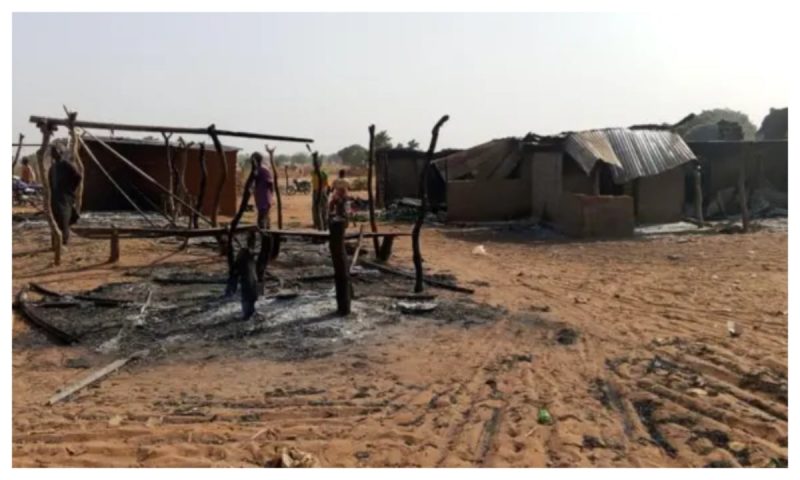
The Borno State Government has laid bare the staggering cost of more than a decade of insurgency on the North-East’s education sector, revealing that over 1,400 schools have been destroyed, 2,295 teachers killed, and 19,000 others displaced across the region. The government also disclosed that about three million children remain in urgent need of emergency education support.
Deputy Governor Umar Usman Kadafur, who represented Governor Babagana Umara Zulum, made the disclosure at a two-day National Dialogue on the Psychosocial Impact of Conflict on Children in Nigeria, held in Maiduguri. The dialogue was convened by the Office of the Special Adviser to the President on Health in collaboration with the North East Development Commission (NEDC) and the Borno State Government.
Kadafur stressed that the figures represented more than statistics, noting that behind the destruction of schools, displacement of teachers and disruption of education were children whose psychological wellbeing and future had been affected by years of violence. He said Borno’s experience of insurgency showed that the consequences of conflict continued after the guns had fallen silent, with trauma affecting children’s cognition, behaviour, ability to trust and relationships with their communities.
“I stand before you today with a heart that is both heavy and hopeful. Heavy because the subject of this dialogue, psychosocial impact of conflict on our children, is not an abstract policy debate for us in Borno State. It is the lived reality of hundreds of thousands of our sons and daughters,” Kadafur said. He added that the insurgency had targeted children through abduction, indoctrination and the use of children as human bombs, creating fear and mistrust that continued to affect communities.
The deputy governor warned that untreated trauma could create a cycle of bitterness, alienation and vulnerability to recruitment into violent groups. “Trauma does not end when the guns fall silent. It embeds itself in their developing brains. It alters their cognition, behaviour, and their capacity to trust,” he said. “If left untreated, it creates a pipeline of bitterness, alienation, and vulnerability to recruitment, perpetuating the very cycle of violence we are fighting to end”.
Kadafur said the state government had learnt that military intervention alone could not resolve the consequences of insurgency, insisting that security without healing remained incomplete. He proposed a national mental health framework for children affected by conflict, the training and deployment of child mental health professionals across conflict-affected areas, the integration of psychosocial support into counter-terrorism and anti-radicalisation programmes, protection of education as a psychosocial intervention and greater investment in data-driven, community-owned interventions.
“We need psychiatrists, clinical psychologists, psychiatric social workers, and counsellors—not just in our cities, but in our rural communities, in our IDP camps, and in our schools,” he said. He also called for schools to be protected as safe spaces where children could regain a sense of normalcy and hope. “Schools are not merely a place for learning arithmetic and grammar. For a conflict-affected child, the classroom represents normalcy, safety, and hope,” Kadafur said.
Professor Andrew Zamani, speaking at the event, said the psychological consequences of conflict had become a national emergency, warning that untreated trauma could turn grief and anger into a desire for revenge. Representing the National Security Adviser, Nuhu Ribadu, the Director of Medical Intelligence, Dr Patience Omokri, said child trauma should be treated as a national security concern. She said children exposed to insurgency, terrorism and communal violence had suffered the loss of parents and homes, displacement, abduction and other forms of exploitation. “A traumatized child is not only a victim. If left unsupported, they can become a vector of instability,” Ribadu said in the message.
The UNICEF representative, Francis Otuochi, said 270,864 children in Borno, Adamawa and Yobe require mental health and psychosocial support under the 2026 humanitarian needs and response plan. He urged governments to integrate mental health and psychosocial support into child protection, healthcare, education and social welfare systems.
The destruction of schools and the killing of teachers in the North-East has been a recurring tragedy since the Boko Haram insurgency intensified in 2009. The Teachers’ Registration Council of Nigeria (TRCN) had previously reported that between 2009 and 2022, around 2,295 teachers were killed in attacks, over 19,000 teachers were displaced, and more than 910 schools were either damaged or destroyed. UNESCO had earlier reported that Boko Haram killed 2,300 teachers and destroyed 1,000 schools in the North-East since the start of the insurgency.
The latest disclosure by the Borno State Government underscores the enduring scars of a conflict that has not only claimed lives and destroyed infrastructure but has also inflicted deep psychological wounds on an entire generation of children. As Kadafur noted, the trauma of conflict does not end when the guns fall silent. For the millions of children who have lost their schools, their teachers, and in many cases their families, the road to recovery will require more than just rebuilding classrooms—it will require healing minds and restoring hope.
📩 Stone Reporters News | 🌍 stonereportersnews.com
✉️ info@stonereportersnews.com | 📘 Facebook: Stone Reporters News | 🐦 X (Twitter): @StoneReportNew | 📸 Instagram: @stonereportersnews
Add comment
Comments