

Published by Osasere Edomwonyi Ikpoba
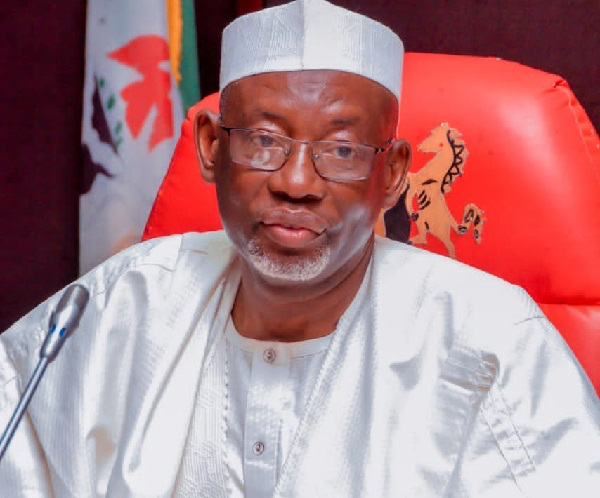
Jigawa State Governor, Malam Umar Namadi, has unveiled an ambitious plan to increase the state's rice production from the current 1.5 million tonnes to five million tonnes by 2030, as part of a comprehensive strategy to strengthen food security and transform agriculture into a commercially viable sector. The governor made the announcement on the sidelines of the 2026 Africa Food Systems Forum (AFSF) in Kigali, Rwanda, where he disclosed that discussions were ongoing with development partners to support the state's agricultural transformation agenda.
Namadi revealed that the state was pursuing partnerships, improved extension services, farmer training, soil mapping and youth empowerment to achieve the ambitious target. He noted that Jigawa's participation in the continental forum over the years has produced tangible results, including the establishment of the Jigawa State Agricultural Transformation Agency, which emerged from lessons gained during the state's first participation in the forum and engagements with stakeholders. "Today, I'm happy to say that we have created that noble agency, the Jigawa State Agricultural Transformation Agency, and that agency has been one of the drivers of our success stories in agriculture in Jigawa State," he said.
The governor disclosed that discussions had been held with the Gates Foundation on opportunities to support Jigawa's ambition of substantially expanding rice production. "We had a lot of discussions with the Gates Foundation, and the issues we discussed are quite germane to the development of agriculture in Jigawa State, especially when it comes to rice, where we are also prominent in production. We will signify interest to see how they can help us achieve our vision of moving production from 1.5 million tonnes to five million tonnes by 2030," he said.
Namadi said Jigawa was also strengthening its livestock sector and exploring partnerships and lessons from other African countries to improve the state's programmes. He stated that the recognition Jigawa had received from development partners at the forum showed that the state was making progress in agriculture and contributing to the Federal Government's food-security agenda. "Our contribution to the President's agenda of food security in Nigeria has been fully recognised, not only in Nigeria but on the African continent," he said.
On measures to improve farmers' productivity, Namadi disclosed that about 1,700 agricultural extension workers had been deployed across Jigawa to provide technical support and promote improved farming practices. He said extension workers were helping farmers understand the appropriate periods for planting, land preparation, fertiliser application, herbicide use and other agronomic practices. The governor said the administration was also providing regular training for lead farmers, who are expected to cascade knowledge to other farmers in their communities.
The rice production target builds on the state's existing agricultural achievements. Speaking earlier while receiving a delegation from the Revenue Mobilisation Allocation and Fiscal Commission (RMAFC), Namadi had outlined the state's rice cultivation roadmap. "We cultivate rice twice a year. In 2024 alone, we cultivated over 200,000 hectares of rice. This year, we are scaling up to over 250,000 hectares. By 2030, our target is 500,000 hectares—and at the pace we are going, we'll achieve that with ease," he said. "Our ultimate goal is to contribute 3.6 million metric tons of rice annually to Nigeria's rice production, representing close to 50% of the nation's requirement. We have the land, the people, and the political will to make this happen," he added.
Namadi emphasised that agriculture remains the mainstay of Jigawa's economy, with approximately 85 per cent of its population engaged in the sector. He noted that his government had recorded historic breakthroughs in dry season farming in previously barren areas of the state. "We are also making concerted efforts to expand our irrigation infrastructure. Once completed, more land will be brought into year-round production," he said. "For the first time in the history of Jigawa State, we have successfully introduced dry-season farming in desert-prone areas where agriculture was once thought impossible. Today, the youth in those communities have become fully engaged in productive farming and are no longer migrating out of the state for jobs," he explained.
The governor also highlighted Jigawa's dominance in other agricultural commodities. "Today, Jigawa is number one in sesame seed and hibiscus flower production in Nigeria. We currently contribute 75% of Nigeria's non-oil agricultural exports, thanks to our dominance in these two key commodities. When it comes to wheat, we are also leading. In 2024, we cultivated 55,000 hectares, and in 2025, we're doing 105,000 hectares," he said. "With additional support, our farmers can achieve even greater feats. For example, Jigawa State alone has the capacity to provide 50% of Nigeria's rice and 50% of its wheat requirements. That is why we are working hard to bring more land under cultivation and expand our irrigation networks," he added.
In a related development, Jigawa State has partnered with Africa Rice Centre (AfricaRice) to achieve the target of producing 3.6 million metric tonnes of rice yearly by 2030, contributing to 40 per cent of Nigeria's rice requirements by the same year. The partnership, formalised during a high-level visit by Governor Namadi to AfricaRice headquarters, will leverage AfricaRice's decades of expertise in climate-smart rice production and processing technologies tailored to African conditions. "Through this strategic partnership with AfricaRice, Jigawa State is committed to transforming our entire rice value chain to increase yields and production statewide. With rice being a staple food for millions of Nigerians, this partnership is key to scale up proven innovations and finally achieve the rice self-sufficiency," Namadi said.
The collaboration was solidified with the signing of a Memorandum of Understanding between the state and AfricaRice, outlining key areas of cooperation including technology transfer, capacity building, research collaboration, and infrastructure development. The Director General of AfricaRice, Dr. Baboucarr Manneh, expressed optimism about the partnership, stating, "AfricaRice is ready to provide scientific and technical support to assist the state's ambitious vision. Together, we can unlock the full potential of the rice industry, turning innovation into impact and research into resilience".
Namadi reaffirmed his administration's readiness to achieve the target of 500,000 hectares of rice production by 2030 during the signing of a separate MoU with a consortium of investors on a 100,000-hectare Alfalfa Production Project. He described agriculture as the economic backbone of Jigawa State, noting that "about 90% of our population depends on it for their livelihood, and it contributes more than 50% of our GDP". "This year alone, we cultivated 315,000 hectares of rice. Our plan to achieve 500,000 hectares by 2030 is fully on track," he said.
As Jigawa State positions itself to become Nigeria's rice production powerhouse, the 5 million tonne target by 2030 represents one of the most ambitious agricultural transformation agendas in the country. With strategic partnerships, deployment of extension workers, and expansion of irrigation infrastructure, the state is laying the groundwork for a future where it contributes significantly to Nigeria's food security and economic diversification.
📩 Stone Reporters News | 🌍 stonereportersnews.com
✉️ info@stonereportersnews.com | 📘 Facebook: Stone Reporters News | 🐦 X (Twitter): @StoneReportNew | 📸 Instagram: @stonereportersnews
Add comment
Comments