

Reported by: Ijeoma G | Edited by: Oravbiere Osayomore Promise.
Troops of the Joint Task Force North East, Operation Hadin Kai (OPHK), have repelled a coordinated attack by Islamic State West Africa Province (ISWAP) terrorists on the Headquarters of 27 Brigade and the Buni Gari checkpoint in Gujba Local Government Area of Yobe State, killing at least 50 insurgents and recovering a large cache of arms and ammunition. The attack occurred in the early hours of Thursday, May 8, 2026, when a large number of heavily armed terrorists launched a multi-directional assault under the cover of darkness.
According to a statement by the Media Information Officer of Operation Hadin Kai, Lieutenant Colonel Sani Uba, the insurgents first attacked from the western flank before reinforcing from the southern axis through Ganinga Junction and later from the south-western flank in an attempt to encircle the troops. However, the troops responded with devastating firepower, employing indirect fires and offensive-defensive tactics to systematically dismantle the assault. “The terrorists were met with such devastating resistance that they retreated in confusion, evacuating some of their killed and wounded as evidenced by trails of blood along their escape routes,” Lieutenant Colonel Uba stated.
The military confirmed that no part of the military formation was breached during the attack, as the troops maintained full control of the location throughout the engagement. The Air Component of Operation Hadin Kai played a decisive role by providing Intelligence, Surveillance and Reconnaissance (ISR) support and conducting precision airstrikes on fleeing insurgents, accounting for an additional 20 terrorists neutralised along escape corridors. Exploitation of the general area confirmed the recovery of 10 terrorist corpses within the immediate vicinity, while human intelligence reports indicated that over 20 additional bodies were scattered across bushes around Gashua, Azare and Kamuya along the terrorists’ withdrawal routes.
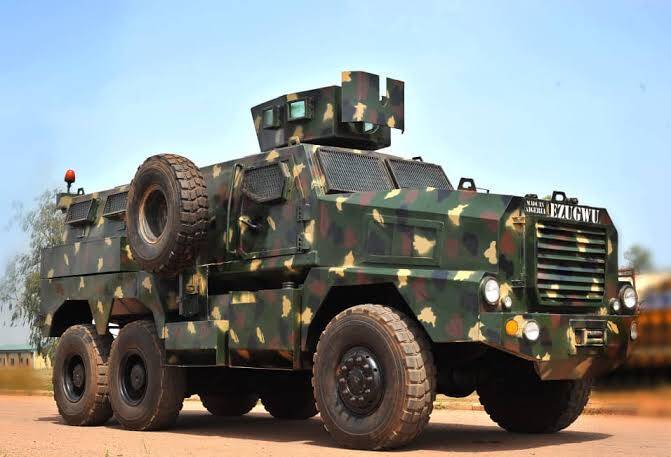
However, the encounter came at a cost. The army confirmed that two soldiers lost their lives during the fierce battle, while several others sustained injuries and are currently receiving medical treatment. A large cache of arms and ammunition was recovered from the fleeing remnants, including eight AK-47 rifles, two General Purpose Machine Guns (GPMG), two Rocket-Propelled Grenade (RPG) tubes, five RPG bombs, boxes of 7.62mm ammunition, loaded magazines, bandoliers, and three Improvised Explosive Device (IED) canisters. Some military equipment, including Mine-Resistant Ambush Protected (MRAP) vehicles and gun trucks, sustained minimal damage during the operation. Following the attack, troops and volunteer forces commenced aggressive follow-up operations to track fleeing terrorists and prevent any regrouping in the area.
The attack on Buni Gari in Yobe State reflects the persistent and evolving threat that defence forces face in the region. While the military has demonstrated its capability to repel such assaults, the incident also underscores the continuing security challenges in the North East, where ISWAP and Boko Haram factions have intensified attacks in recent months after a period of relative calm. The Nigerian military has, since 2019, consolidated its forces into larger, heavily fortified “super camps” to better withstand these assaults, though analysts point out that this strategy has reportedly allowed armed groups to move more freely through the surrounding rural areas.
📩 Stone Reporters News | 🌍 stonereportersnews.com
✉️ info@stonereportersnews.com | 📘 Facebook: Stone Reporters News | 🐦 X (Twitter): @StoneReportNew | 📸 Instagram: @stonereportersnews
Add comment
Comments