

Reported by: Oahimire Omone Precious | Edited by: Oravbiere Osayomore Promise.
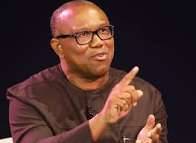
Peter Obi, presidential candidate of the Nigeria Democratic Congress (NDC) for the 2027 general election, has urged the Federal Government to postpone the implementation of the newly passed State Police Bill until after the upcoming polls, warning that introducing the new policing framework before the election could expose it to political manipulation and abuse by state governors.
In a statement posted on his official X (formerly Twitter) handle on Friday, June 26, 2026, Obi acknowledged the passage of the State Police Bill by the National Assembly as a "significant legislative milestone" in addressing Nigeria's long-standing security challenges. He noted that for years, he, alongside security experts and regional stakeholders, had consistently argued that Nigeria's highly centralised policing structure was fundamentally unsuitable for a country as vast, diverse, and complex as the nation.
However, the former Anambra State governor expressed deep reservations about the manner in which the legislation was processed, describing it as "shaky" and lacking adequate public participation. "The mechanism for passing the law appears highly disorganised, with no public hearing on such a sensitive issue," Obi said. "Indeed, the rush to enact the law without proper legislative procedures fuels suspicion among many observers about the political motives behind it".
Obi's greatest concern, he stressed, was not the operational framework of state police but the historical and well-founded fear that governors could deploy state-controlled police forces to intimidate political opponents, disrupt opposition rallies, and manipulate elections. "There is a widespread, justifiable fear that state police forces could become instruments in the hands of governors," he stated. "The suspicion is that a state-controlled police force could be weaponised to suppress political rivals, disrupt opposition rallies, and manipulate elections".
To address these concerns, Obi called for the establishment of independent oversight mechanisms insulated from executive influence before state police become operational. He proposed the creation of state-level Police Service Commissions that would be entirely free from executive control, arguing that such bodies would ensure that policing serves the public interest rather than the interests of the political elite. "For state policing to evolve from a risky political gamble into a genuine security solution, the law must not only permit states to establish police forces but also clearly provide for independent oversight bodies," he said.
Obi further questioned whether the current administration could resist the temptation to exploit the new policing framework ahead of the 2027 elections. "Going by what Nigerians have seen so far, there is no guarantee that this administration can resist the temptation to take advantage of state policing to influence the 2027 general election by proxy," he warned. "In view of that possibility and the danger it poses to the polity, it is necessary to defer its implementation until after the general election".
The State Police Bill, which was passed by the Senate on Wednesday, June 24, 2026, seeks to amend the 1999 Constitution to allow for the establishment of state police services across the federation. The bill, transmitted to the National Assembly by President Bola Tinubu, proposes moving policing from the Exclusive Legislative List to the Concurrent Legislative List, creating a dual policing structure consisting of federal and state police services. The proposed amendment now awaits approval by at least 24 state Houses of Assembly before it can be presented for presidential assent.
The debate over state police has remained one of Nigeria's most contentious constitutional reform issues. Supporters argue that decentralising policing would improve intelligence gathering, strengthen community policing, and enhance rapid response to security threats, while critics fear that state-controlled police could be weaponised by governors against political rivals. Although the National Assembly included safeguards aimed at limiting political interference and strengthening independent oversight, the proposal continues to generate debate among political parties, civil society organisations, and security experts over its timing and implementation.
Obi's call for postponement places him in direct opposition to the executive and legislative push for swift implementation of the reform. His position reflects the deep mistrust that persists between the opposition and the ruling All Progressives Congress (APC) over the potential use of state institutions for partisan advantage. As the 2027 elections draw nearer, the timing of the state police rollout is likely to remain a flashpoint in Nigeria's increasingly charged political landscape. For Obi and his supporters, the message is clear: the reform is welcome in principle, but its implementation must wait until after Nigerians have cast their ballots and a new administration—or a re-elected one—can be held accountable for its use.
📩 Stone Reporters News | 🌍 stonereportersnews.com
✉️ info@stonereportersnews.com | 📘 Facebook: Stone Reporters News | 🐦 X (Twitter): @StoneReportNew | 📸 Instagram: @stonereportersnews
Add comment
Comments