

Reported by: Oahimire Omone Precious | Edited by: Oravbiere Osayomore Promise.
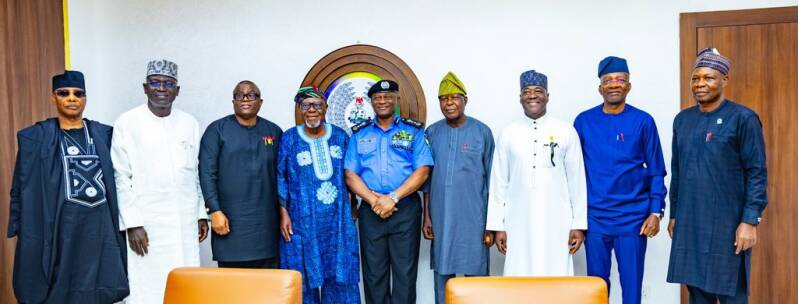
The Inspector-General of Police, IGP Olatunji Rilwan Disu, on Thursday hosted nine of his predecessors at the Force Headquarters in Abuja, a rare gathering of Nigeria's living former police chiefs that has drawn attention to the Force's deepening legitimacy crisis and the government's struggle to deliver meaningful policing reform.
The delegation, which included former IGPs from across four decades, was led by IGP Aliyu Attah, the country's first indigenous Inspector-General of Police. Other attendees were IGP Sunday Ehindero, IGP Mike Mbama Okiro, IGP Ogbonna Onachukwu Onovo, IGP Abubakar Ringim, IGP Mohammed Dikko Abubakar, IGP Sulaiman Abba, IGP Usman Alkali Baba, and IGP Kayode Adeolu Egbetokun.
The meeting, described as an official visit, was focused on leveraging the "vast institutional memory and strategic insights" of the former police chiefs to tackle contemporary security challenges and accelerate ongoing police reforms, according to a statement from the Force Public Relations Officer, CSP Muyiwa Adejobi.
The gathering comes at a time when the Nigeria Police Force is under intense public scrutiny. Recent incidents, including the brutal mob killing of a woman in Kaduna, allegations of police complicity in handing her over to her killers, and a viral video showing an officer drinking alcohol while conducting a stop-and-search, have further eroded public trust. The police have also been accused of using the Cybercrime Act to suppress dissent, most notably in the prosecution of activist Omoyele Sowore.
In response, the IGP has taken steps to repair the force's image, including a recent directive banning officers from creating social media content. However, critics say such measures are cosmetic and fail to address the systemic rot within the institution.
Disu expressed "profound gratitude" to his predecessors, noting that their "wealth of experience remains an invaluable asset to the Force administration." However, many Nigerians view the meeting with skepticism, questioning whether the veterans would acknowledge their own failures or simply endorse the status quo.
The nine former IGPs served under various administrations, from military dictatorships to civilian governments, and their tenure was often marked by the same problems that plague the force today: corruption, brutality, and impunity. Their collective "institutional memory" could indeed be invaluable—if it leads to honest reflection and accountability. But if the meeting was merely a photo opportunity, it will do little to restore public confidence in the police.
The meeting comes as President Bola Tinubu's administration, through the Police Reform and Transformation Office (PORTO), continues to push for reforms aimed at professionalising the force and improving service delivery. However, these efforts have been hampered by inadequate funding, resistance from within the police hierarchy, and a lack of political will to tackle corruption and human rights abuses.
For many Nigerians, the police remain a symbol of state failure rather than a protector of citizens. The question is whether the gathering of nine former IGPs will produce anything more than a group photograph and a press release. As one social media user put it, "The same people who failed us yesterday are now being asked to help us fix today. What could possibly go wrong?"
📩 Stone Reporters News | 🌍 stonereportersnews.com
✉️ info@stonereportersnews.com | 📘 Facebook: Stone Reporters News | 🐦 X (Twitter): @StoneReportNew | 📸 Instagram: @stonereportersnews
Add comment
Comments