

Reported by: Oahimire Omone Precious | Edited by: Oravbiere Osayomore Promise.
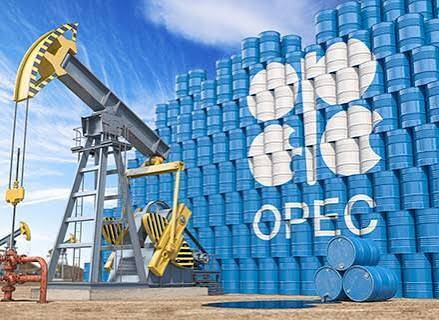
The Organization of the Petroleum Exporting Countries and its allies, collectively known as OPEC+, has approved another increase in oil production quotas, agreeing to raise output by 188,000 barrels per day (bpd) in August as part of a gradual phase-out of voluntary production cuts first announced in April 2023. The decision, announced on Sunday, 5 July 2026, following a virtual meeting of seven participating member countries, marks the third consecutive monthly increase of the same volume, following similar hikes approved for June and July. The move comes as crude prices ease following an interim truce between the United States and Iran, though shipping through the strategic Strait of Hormuz remains fragile and below pre-war levels.
The seven countries that agreed to the production adjustment are Saudi Arabia, Russia, Iraq, Kuwait, Kazakhstan, Algeria and Oman. According to OPEC+, the participating countries agreed to implement "a production adjustment of 188 thousand barrels per day" from August as part of the gradual phase-out of the additional voluntary production cuts first announced in April 2023. The group said the phased increase is intended to support oil market stability, stressing that the production adjustments "may be returned in part or in full subject to evolving market conditions and in a gradual manner". OPEC+ also reaffirmed its commitment to maintaining "full flexibility to increase, pause or reverse the phase out of the voluntary production adjustments" if necessary.
Under the August 2026 production schedule, Saudi Arabia and Russia will each increase oil output by 62,000 barrels per day, the largest increases among the participating OPEC+ members. Iraq will raise production by 26,000 bpd, followed by Kuwait with 16,000 bpd, Kazakhstan with 10,000 bpd, Algeria with 6,000 bpd, and Oman with 5,000 bpd. Following the adjustment, Saudi Arabia's required production level will stand at 10.416 million bpd, while Russia's will rise to 9.887 million bpd. Iraq's production target will reach 4.405 million bpd, Kuwait's 2.660 million bpd, Kazakhstan's 1.618 million bpd, Algeria's 1.001 million bpd, and Oman's 836,000 bpd.
The seven producers stressed that the production increases remain conditional and may be adjusted in response to changing market conditions. They reiterated the importance of maintaining flexibility in production policy, including the ability to accelerate, pause or reverse the phase-out of voluntary output cuts if required to support market stability. The group also said the latest production adjustment would help participating countries accelerate compensation for previous overproduction and reaffirmed their commitment to full compliance with the OPEC+ Declaration of Cooperation. The producers further confirmed they will fully compensate for any output that exceeded agreed levels since January 2024 and will continue holding monthly meetings to review market conditions, production compliance and compensation efforts. Their next meeting is scheduled for August 2, 2026.
The decision to raise output comes as Brent crude, the international benchmark, was trading below USD 72 a barrel, down 0.51 percent, while U.S. West Texas Intermediate crude was at USD 68.44 per barrel, down 0.47 percent. Prices have continued to fall as Iran and the United States work towards a final peace agreement after an interim deal eased disruptions in the Strait of Hormuz, although ship traffic through the waterway remains below pre-war levels and tensions continue. The war between the US-led coalition and Iran had triggered an energy crisis, with most shipping blocked in the Strait of Hormuz, which before the war carried roughly a fifth of the world's oil. The limited output increases pledged by OPEC+ in recent months could not offset the hit to global oil supplies during the height of the conflict. S&P Global Energy has estimated that Gulf oil production is not expected to recover fully until at least the first quarter of 2027.
The August increase is the latest phase in reversing the voluntary reductions first announced in April 2023. In May, the alliance approved a 188,000 bpd increase for June, while in June, OPEC+ approved another 188,000 bpd increase for July, despite supply disruptions linked to the US-Iran conflict and reduced oil exports through the Strait of Hormuz. The group said the seven participating countries will continue to "closely monitor and assess market conditions" while retaining the flexibility to adjust production policies as needed. As OPEC+ moves ahead with another modest production increase, the global oil market remains cautiously optimistic, with the alliance balancing the need to restore supplies against the risk of renewed volatility in a region still recovering from the devastating impact of war.
📩 Stone Reporters News | 🌍 stonereportersnews.com
✉️ info@stonereportersnews.com | 📘 Facebook: Stone Reporters News | 🐦 X (Twitter): @StoneReportNew | 📸 Instagram: @stonereportersnews
Add comment
Comments