

Reported by: Oahimire Omone Precious | Edited by: Oravbiere Osayomore Promise.
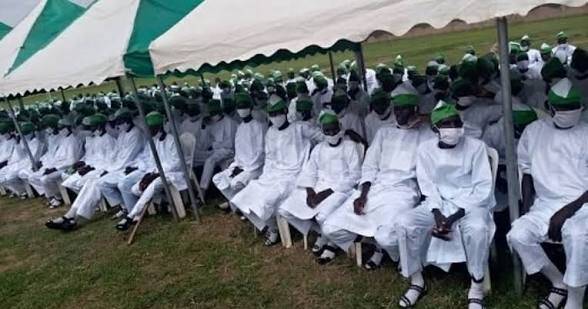
The Federal Government has launched a comprehensive set of Standard Operating Procedures (SOPs) to guide the implementation of its Disarmament, Demobilisation and Reintegration (DDR) programme for repentant terrorists, while issuing a firm warning that individuals accused of serious crimes will not escape justice through the programme. The procedures, unveiled on Monday, 13 July 2026, during a national validation workshop in Abuja, are designed to promote transparency, accountability and coordination in handling former combatants, but officials made it unequivocally clear that the programme would not serve as a shield for those responsible for grave offences.
Speaking at the workshop, the National Coordinator of the National Counter Terrorism Centre (NCTC) under the Office of the National Security Adviser, Major General Adamu Laka, said the SOPs were developed after extensive consultations drawing from Nigeria's experience, international best practices and the country's unique security realities. He explained that the procedures would clarify institutional mandates and responsibilities, strengthen inter-agency coordination, standardise operational processes and ensure that DDR programmes are implemented professionally, effectively and in full compliance with human rights principles and the rule of law. Laka described the DDR programme as a critical component of Nigeria's non-kinetic strategy for addressing insecurity, noting that while military operations remain essential in dismantling terrorist and criminal networks, sustainable peace requires credible pathways for eligible individuals to abandon violence and reintegrate safely into society.
The workshop also validated state-level SOPs for the pilot states of Kaduna, Katsina and Zamfara, which continue to face distinct and evolving security challenges that require locally driven and well-coordinated responses. Laka said consultations conducted across Nigeria's six geopolitical zones demonstrated broad support for a nationally coordinated, locally owned and human rights-based DDR framework capable of responding to the country's evolving security challenges. The NCTC coordinator identified terrorism, violent extremism, armed banditry, communal clashes, farmer-herder conflicts, organised crime and separatist violence as key threats requiring coordinated national responses.
In a strong message to the public and potential programme participants, the Director of Preventing and Countering Violent Extremism at the NCTC, Ambassador Abimbola Wońosikou, made it clear that accountability would not be waived. She said the validation of the SOPs represents a significant milestone in Nigeria's DDR journey, demonstrating the country's commitment to building a nationally owned, coordinated and accountable DDR system capable of supporting sustainable peace, preventing recidivism, strengthening community resilience and contributing to long-term national stability. However, she stressed that those accused of serious crimes would still face prosecution through the appropriate legal processes.
The SOPs outline institutional responsibilities, referral pathways, case management procedures, information-sharing protocols, human rights safeguards, community engagement strategies, monitoring and evaluation systems, and coordination structures. The NCTC has established State DDR Committees in Kaduna, Katsina and Zamfara to coordinate programme implementation at the sub-national level. According to Wońosikou, the committees comprise representatives of state governments, security agencies, justice institutions, traditional and religious leaders, women and youth groups, civil society organisations and relevant technical institutions.
The launch of the SOPs comes amid intense public debate over the reintegration of former terrorists and bandits. Critics have long argued that rehabilitation programmes reward criminality and insult victims of terrorism, while supporters contend that non-kinetic approaches are essential to breaking the cycle of violence and addressing the root causes of insurgency. The Federal Government has increasingly promoted both military and non-military strategies in its fight against terrorism and violent extremism, particularly in regions affected by insurgency and armed criminal activities.
Speaking on behalf of the United Nations Department of Peace Operations' DDR Section, Mario Nascimento praised Nigeria's efforts, saying the country's approach now focuses not only on former fighters but also on strengthening communities. He noted that no individual can be successfully reintegrated in isolation, and that lasting peace depends on the active involvement of communities, civil society, local authorities and the private sector. The UN official's endorsement of Nigeria's DDR framework underscores the international community's recognition of the importance of comprehensive, community-centred approaches to post-conflict reintegration.
The national validation workshop, which brought together stakeholders from across the country, represents a significant step toward institutionalising a transparent and coordinated DDR architecture nationwide. The inclusion of state-specific SOPs for Kaduna, Katsina and Zamfara reflects the unique security dynamics in the pilot states, where armed groups have exploited vast forest corridors and ungoverned spaces to launch devastating attacks on rural communities. By tailoring the SOPs to local realities, the Federal Government hopes to improve the effectiveness of the DDR programme and build public trust in the reintegration process.
Wońosikou also called for better public communication to address misinformation about the programme, acknowledging that public scepticism remains a significant challenge. The Federal Government has faced persistent criticism over past reintegration efforts, with some communities expressing concern that former fighters may return to violence or face stigmatisation. The new SOPs are designed to address these concerns by establishing clear guidelines for case management, community engagement and monitoring, while ensuring that serious offenders are held accountable through the justice system.
As Nigeria continues to grapple with multiple security threats across its northern and central regions, the DDR programme represents a critical element of the government's broader strategy to restore peace and stability. The launch of the SOPs signals a renewed commitment to professionalising the reintegration process, while the government's insistence that serious crimes will not be pardoned seeks to reassure a sceptical public that justice will not be sacrificed in the name of peace. The success of the programme will ultimately depend on its implementation at the state and community levels, and whether the government can strike the delicate balance between offering a pathway to peace for repentant combatants and ensuring accountability for those who have committed the most heinous crimes.
📩 Stone Reporters News | 🌍 stonereportersnews.com
✉️ info@stonereportersnews.com | 📘 Facebook: Stone Reporters News | 🐦 X (Twitter): @StoneReportNew | 📸 Instagram: @stonereportersnews
Add comment
Comments