

Reported by: Ijeoma G | Edited by: Oravbiere Osayomore Promise.
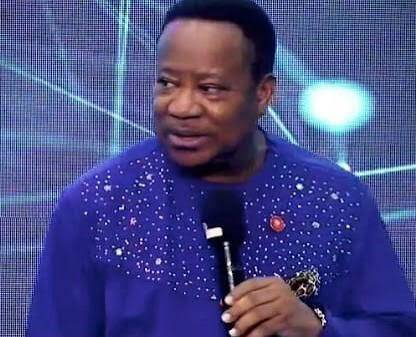
A prominent Nigerian cleric has sparked intense debate within religious and political circles after declaring that the church gained nothing from having Pastor Yemi Osinbajo serve as Vice President of Nigeria, while also accusing most pastors of being "completely ignorant" about politics and governance. The Presiding Pastor of Livingspring Chapel International, Pastor Femi Emmanuel, made the remarks during an interview on TVC News, where he urged church leaders to stop shouting from the pulpit and instead become actively involved in the political process. His comments, which have been widely reported across major Nigerian media platforms, have reignited discussions about the role of the church in politics and the practical value of religious representation in high office.
Emmanuel, who previously served as Deputy Speaker of the Oyo State House of Assembly between 1992 and 1993, did not mince words when addressing the long-running debate over Muslim-Muslim and Christian-Muslim presidential tickets. He argued that the religious identity of political office holders does not automatically translate into benefits for Christians or the church, citing the tenure of former Vice President Yemi Osinbajo under ex-President Muhammadu Buhari as a case in point. "All this talk of Muslim-Muslim, Christian-Christian, I ask them, in 2019 it was not just a Christian-Muslim ticket, it was a Christian pastor ticket. Our brother and friend, Pastor Yemi Osinbajo, very cerebral, very brilliant, very outspoken. But what did he bring to the body of Christ as a church?".
The cleric further argued that Nigeria's constitutional arrangement fundamentally limits the influence of the vice president, describing the office as "a spare tyre." According to Emmanuel, the focus on securing the vice presidency for a Christian misses the point entirely. "Our constitution says the vice president is a spare tyre. So what Christians are arguing for is, 'We want a vice president.' What would that bring to the church? Nothing. We are Nigerians," he declared, dismissing the notion that religious representation in the executive branch automatically advances the interests of the faith community.
Beyond his critique of Osinbajo's tenure, Emmanuel delivered a broader indictment of the Nigerian church's engagement with politics. He described many pastors as "completely ignorant" about governance and policymaking, despite their genuine passion for the country's progress. "My people, fellow pastors, fellow general overseers, they are very passionate about this country. They work hard, they believe in this country, they love this country. But when it comes to politics, they are completely ignorant," he said. The cleric argued that meaningful national change can only come through active participation in politics rather than commentary from outside government. "You are not where laws are made, you are not where policies are implemented, but you are shouting from the pulpit. That is shouting from the back of the fence," he stated.
Drawing from his own political experience, Emmanuel said his time in office exposed him to the realities of governance and fundamentally changed his perspective on the church's role in national affairs. He maintained that Christians should not shy away from politics but should instead seek to occupy positions where decisions are made. "Political fathers, their power is the ward. That's where you and I should go. That's where the corporate majority should go. That is where the youth should invade. That is where the church community should invade. If you don't change that, you can't change anything," he said.
The cleric also criticised the tendency of some pastors to present prayer and fasting as the only solutions to Nigeria's challenges, insisting that spiritual exercises must be complemented by active civic and political engagement. "If I didn't go into politics, I would probably be talking like them. Going into politics removed a veil from my eyes," he said. He also dismissed prophetic declarations by some pastors predicting election outcomes, describing many such pronouncements as products of ignorance rather than divine revelation. When asked about clerics who insisted they had heard directly from God, he replied, "They don't know. Ignorance. Anybody can claim to hear from God,".
Emmanuel's comments come at a time when Nigeria's political landscape is increasingly shaped by religious considerations, particularly as the 2027 general elections approach. The debate over Muslim-Muslim and Christian-Muslim tickets has been a recurring theme in Nigerian politics, with many Christian leaders advocating for religious balance in presidential tickets as a means of protecting the interests of the Christian community. However, Emmanuel's remarks challenge this assumption, arguing that the church must move beyond symbolic representation and engage meaningfully in the political process at all levels.
While some have praised Emmanuel for his candid assessment of the church's political engagement, others have criticised his remarks as dismissive of Osinbajo's contributions to national governance. Osinbajo, a senior pastor in the Redeemed Christian Church of God, served as Vice President from 2015 to 2023 and was widely regarded as one of the most prominent Christians in Nigerian political history. His tenure was marked by significant policy initiatives, including the establishment of the Social Investment Programmes and the creation of the National Economic Council's Ad-hoc Committee on the Revitalisation of the Health Sector.
Nevertheless, Emmanuel's argument that the office of the vice president is constitutionally limited is not without merit. Under Nigeria's presidential system, the vice president's powers are largely derivative, with the office primarily serving as a successor to the president in the event of death, resignation, or incapacity. This constitutional reality has led many political analysts to question the practical value of religious representation in the vice presidency, particularly when the president holds the dominant share of executive authority.
The reaction to Emmanuel's remarks has been swift and divided. Some social media users have applauded his honesty, with one user commenting, "Pastor Femi Emmanuel just said what many Christians have been afraid to say. Osinbajo was a brilliant man, but his presence in Aso Rock didn't change the church's reality in Nigeria." Others, however, have criticised his comments as unfair, arguing that Osinbajo's tenure brought visibility and credibility to the Christian community. A supporter of the former vice president wrote, "Yemi Osinbajo was not just a pastor in government; he was a voice of reason, integrity, and faith. To say he brought nothing is to ignore his contributions to Nigeria's development."
As the debate continues to unfold, Emmanuel's message to the church is clear: stop shouting from the sidelines and enter the arena where decisions are made. His call for Christians, young people and the wider public to become actively involved in grassroots politics resonates with a growing sentiment that Nigeria's problems cannot be solved from the pulpit alone. "Political power is where you and I should go," he said. "That is where the corporate world should go. That is where the youth should invade. That is where the church community should invade. If you don't change that, you can't change anything".
📩 Stone Reporters News | 🌍 stonereportersnews.com
✉️ info@stonereportersnews.com | 📘 Facebook: Stone Reporters News | 🐦 X (Twitter): @StoneReportNew | 📸 Instagram: @stonereportersnews
Add comment
Comments