

Reported by: Ijeoma G | Edited by: Oravbiere Osayomore Promise.
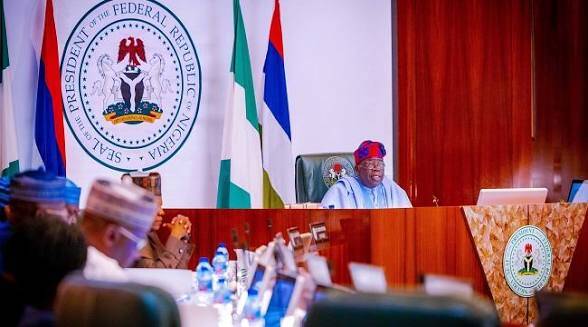
The National Economic Council (NEC) has approved the refinancing of Nigeria's $3.3 billion oil-backed loan through a new $4.5 billion facility, a move that will unlock an additional $3 billion in liquidity to strengthen the country's external reserves and support critical fiscal and infrastructure priorities. The decision was taken at the 159th meeting of the Council, held virtually on Monday, August 3, 2026, and chaired by Vice President Kashim Shettima, following a presentation by the Minister of Finance and Coordinating Minister of the Economy, Dr. Taiwo Oyedele, on the significance of the refinancing arrangement. The approval allows the Nigerian National Petroleum Company Limited (NNPCL) to refinance the outstanding balance of approximately $1.5 billion under the original 2023 facility, while unlocking the additional $3 billion in liquidity.
The new facility, named "Project Gazelle 2," replaces the original $3.3 billion Project Gazelle Pre-Export Finance Facility that was structured in 2023 as a pre-export finance facility secured against future crude oil sales. The original loan was designed to provide Nigeria with dollar liquidity to defend the naira and support foreign exchange market stability amid the sharp currency volatility that followed the administration's unification of exchange-rate windows. Speaking at a press briefing after the meeting, Oyedele explained that the refinancing has been structured on considerably more favourable terms than the original facility, including a substantial reduction in the volume of crude oil pledged to secure the loan. He explained that the volume of pledged crude oil has been reduced from 90,000 barrels of oil per day to approximately 78,750 barrels per day, representing a 12.5 per cent reduction. The reduction in pledged volume translates directly into more crude oil available for the federation to sell and retain revenue from outside the terms of the facility. Under the new arrangement, an additional 11,250 barrels of oil per day for the federation will be released, while there will be a reduction in the pledged crude volumes by NNPCL.
Oyedele described the refinancing as a dual achievement, improving liquidity access on better terms while simultaneously strengthening the country's overall financing structure. According to him, the arrangement is freeing up resources for strategic national priorities while strengthening the country's financing structures. The Council observed the significance of unlocking additional liquidity for the federation and pledged its support for the actualisation of the initiative. The approval was announced in a statement signed by Stanley Nkwocha, Senior Special Assistant to the President on Media and Communications in the Office of the Vice President, who revealed details of the approval and noted that the Council observed the significance of unlocking additional liquidity for the federation and pledged its support for the actualisation of the initiative.
In his opening remarks to the Council, Vice President Shettima called for the design of a responsive, scalable and data-driven social protection policy to confront multidimensional poverty in Nigeria, framing the challenge in vivid and deeply human terms. He argued that government policies are often heard before they are seen, speaking through the price of food, the condition of hospitals, the records in schools, the strain on families, the confidence of those who invest their labour in the nation's future, and the ambitions of state governments. Shettima urged Council members to ensure that every decision reached at NEC left ordinary Nigerians with confidence that their government was attentive and responsive to their daily struggles. "Every decision we make must assure the citizens that their government is paying attention to the pulse of the nation and is resolved to respond with competence, compassion and purpose," he said.
Project Gazelle was originally structured in 2023 as a pre-export finance facility secured against future crude oil sales, designed to provide Nigeria with dollar liquidity to defend the naira and support foreign exchange market stability amid the sharp currency volatility that followed the administration's unification of exchange-rate windows. The refinancing under Project Gazelle 2 extends and restructures that facility on improved terms, reflecting both the country's stronger position after recent reforms in the oil and gas sector and the government's determination to optimise borrowing costs while unlocking fresh liquidity for development. The approval marks another step in the government's efforts to strengthen public finances, improve foreign exchange reserves and create more room for investment in critical sectors of the economy. Officials believe the restructuring will attract greater investor confidence while supporting the country's long-term economic goals, as Nigeria continues to navigate a challenging fiscal environment while pursuing ambitious infrastructure and social protection programmes.
📩 Stone Reporters News | 🌍 stonereportersnews.com
✉️ info@stonereportersnews.com | 📘 Facebook: Stone Reporters News | 🐦 X (Twitter): @StoneReportNew | 📸 Instagram: @stonereportersnews
Add comment
Comments