

Reported by: Ijeoma G | Edited by: Oravbiere Osayomore Promise.
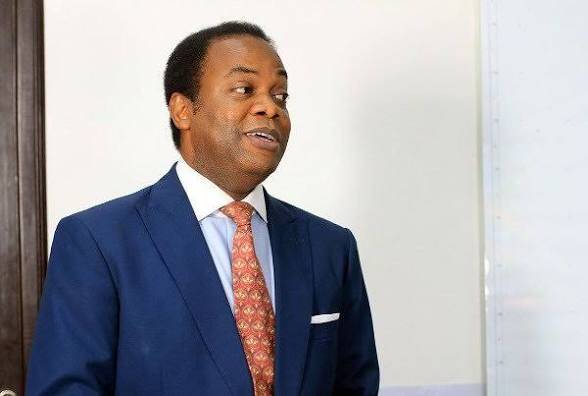
The presidential candidate of the Peoples Redemption Party (PRP), former Cross River State Governor Donald Duke, has delivered a withering critique of President Bola Tinubu's flagship Lagos-Calabar Coastal Highway project, declaring that Nigeria cannot afford the staggering N15 trillion undertaking and that the road, which he dismissed as an impractical "swamp" project, will not even reach beyond the Epe area of Lagos State. Appearing as a guest on Arise Television's 'Prime Time' programme on Tuesday, August 4, 2026, Duke argued that the government's expenditure should reflect the country's current economic realities and that some ongoing projects do not represent prudent use of scarce resources.
Duke, who is seeking the presidency on the platform of the PRP in the 2027 general elections, questioned both the economic and engineering logic of building a major highway along Nigeria's coastal belt from Lagos to Calabar. He argued that the country's current fiscal realities cannot support such a massive infrastructure undertaking, predicting that the project would stall before reaching significant milestones. "Nigeria cannot afford the Lagos-Calabar Coastal Highway. I don't think the road will go beyond Epe," Duke declared during the interview. "And I think the road serves other purposes because I drove once on the road, and all I saw was land reclamation and all that."
The former Cross River governor pointed to the geographical challenges of constructing a road along the coastline, particularly the swampy terrain of Bayelsa State, which he said would require an impractical number of bridges to traverse. "You cannot build a road on the coast from Lagos to Calabar. I mean, you can't even go through Bayelsa. Bayelsa is swamp. Even Yenagoa, the capital, is swamp. You'll probably have to build about 100 or 200 bridges to go through those swamps," Duke said. He noted that a road already exists between Lagos and Calabar and that the government should rehabilitate the existing infrastructure instead of embarking on an expensive new project. "There is already a road from Lagos to Calabar. I've driven from Lagos to Calabar several times. If the road is poor, fix it," he said.
Duke argued that funds earmarked for the project would be better invested in sectors with more direct impact on the lives of citizens, specifically electricity and healthcare. He described funding for the health sector as grossly inadequate, citing figures he attributed to the health minister regarding last year's capital budget allocation. "Last year, I think the capital budget that was released for health was barely 36 million naira, and this came from the minister himself," Duke said. "That's pathetic for a country of 230 million people. Not to talk of the schooling system that is hardly funded. So you prioritise, focus on your priorities, recalibrate your revenue system."
The PRP presidential candidate framed his critique within a broader pattern of misaligned government spending, urging authorities to redirect resources toward critical social infrastructure. He also called for reforms to Nigeria's revenue collection system, saying excessive reliance on taxing corporate profits encourages tax avoidance. According to him, expanding transactional taxes and improving revenue administration could significantly increase government earnings. He also identified affordable energy as the foundation for economic growth, urging the government to make electricity and other energy sources more accessible. "We are blessed with all the known forms of energy, from hydro to solar to gas to petroleum," he said. "I'm not saying give it free of charge, no, but make it available and very affordable because that is going to be a major stimulus for the productivity of your people."
The coastal highway project, estimated to cost about N15 trillion upon completion and recently renamed after President Tinubu, has been dogged by controversy since its commencement in March 2024. Critics have pointed to its astronomical cost, opaque procurement process, and questionable environmental and social impact, with concerns also raised over the demolition of properties along parts of the route. The project's per-kilometre cost of $15.7 to $17.9 million has been described as dwarfing the $1.65 billion budget for the 10,228-kilometre Cairo-Cape Town Highway, Africa's longest road, which stretches across ten nations at just $156,000 per kilometre.
Duke's intervention adds a credible opposition voice to concerns, challenging the administration's signature infrastructure project on both technical and fiscal grounds. As the former governor who transformed Cross River into a tourism destination through the Calabar Carnival and Obudu Ranch, Duke speaks from experience about what targeted investment can achieve. His argument for prioritising electricity over highways is grounded in his broader economic philosophy that "everything is energy" and that affordable energy is the essential stimulus for productivity. As the government defends the highway as a strategic economic corridor, the opposition perspective underscores the tension between long-term vision and present-day fiscal constraints. "Why build a new road through swamps when existing roads are crumbling, hospitals are underfunded, and electricity remains unaffordable for most citizens?" Duke wondered.
📩 Stone Reporters News | 🌍 stonereportersnews.com
✉️ info@stonereportersnews.com | 📘 Facebook: Stone Reporters News | 🐦 X (Twitter): @StoneReportNew | 📸 Instagram: @stonereportersnews
Add comment
Comments